


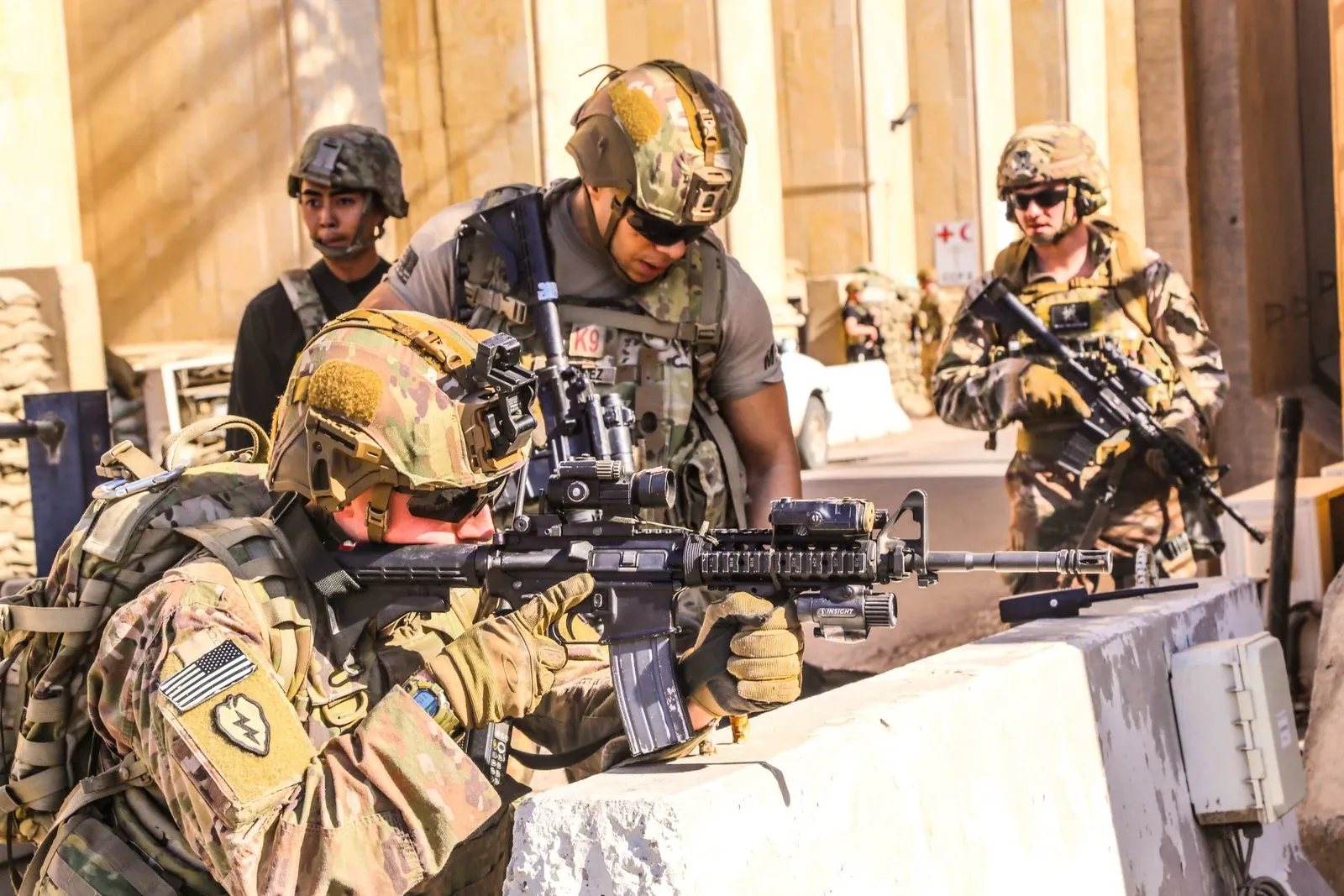
The United States military has completed the withdrawal of all American troops from Iraq, bringing an end to a 12-year mission that focused on defeating the Islamic State group and supporting Iraqi security forces.
Military officials confirmed that the final American troops departed from a base in Irbil in northern Iraq on September 30. The withdrawal was carried out under an agreement reached between Washington and Baghdad and marks a major turning point in the relationship between the two countries.
President Donald Trump welcomed the development and described the withdrawal as orderly. Speaking at the White House, he said the end of the mission closes a long chapter in American foreign policy.
Trump said the United States had spent many years involved in a difficult conflict and argued that the withdrawal represents a positive outcome for both the United States and Iraq. He also said the move reflects progress in the campaign against the Islamic State group.
The departure comes at a time of continuing tensions across the Middle East. Fighting between the United States and Iran has affected several countries in the region, including Iraq. Iran-backed armed groups have launched attacks against American positions, while the United States has carried out operations targeting militia networks linked to Tehran.
Despite these challenges, both Washington and Baghdad agreed that the mission had reached a point where Iraqi forces could take greater responsibility for national security.
Pentagon spokesperson Sean Parnell said the withdrawal marks the successful completion of a campaign that weakened the Islamic State group and reduced its ability to control territory.
He said the mission has now shifted from a coalition military operation to an Iraqi-led security effort supported by a more traditional partnership between the two governments.
Parnell added that the United States will continue to provide intelligence sharing and training support to Iraqi security forces when needed.
Iraqi Prime Minister Ali al-Zaidi attended the handover ceremony and described the moment as the beginning of a new phase for Iraq. He said the withdrawal reflects the country’s growing sovereignty, stronger institutions, and improved security capabilities.
According to al-Zaidi, Iraqi forces are prepared to continue operations against remaining Islamic State cells and other security threats. He also pledged to strengthen state control over weapons and improve national stability.
The withdrawal ends a military mission that began after the rise of the Islamic State group in 2014. At that time, Iraqi authorities requested international support after militants captured large areas of territory across Iraq and neighboring Syria.
The United States led an international coalition that helped Iraqi forces regain control of cities and reduce the group’s influence. Over time, the Islamic State group lost most of its territory and was pushed into isolated areas.
American troops had already withdrawn from most Iraqi bases before the final departure. In recent years, only a limited number of personnel remained in the Kurdish region of northern Iraq.
While many Iraqi officials welcomed the withdrawal, some leaders in the Kurdish region expressed concern. Kurdish authorities warned that security risks remain and said American military support has played an important role in regional defense.
Officials noted that the Kurdish region faced repeated drone and missile attacks during the recent conflict involving the United States and Iran. They also raised concerns about the removal of American air defense systems from the area.
The future of armed groups operating outside direct government control remains another major issue. Baghdad has sought to reduce the influence of militias and bring all weapons under state authority.
Progress has been limited. Some smaller groups have agreed to disarm, but several powerful organizations have rejected such plans or demanded conditions that remain difficult to achieve.
Iran-aligned factions celebrated the departure of American forces and described it as a victory for Iraqi sovereignty. However, some of those groups have continued to resist government efforts aimed at regulating weapons and military activities.
The effects of the withdrawal may take time to become clear. Iraqi security forces now face greater responsibility for maintaining stability, preventing extremist activity, and managing security challenges across the country.
As US troops leave Iraq, the move closes another chapter in a relationship shaped by conflict, cooperation, and political change. The success of Iraq’s next phase will depend on security conditions, government reforms, and the ability of state institutions to address challenges without direct American military involvement.
