


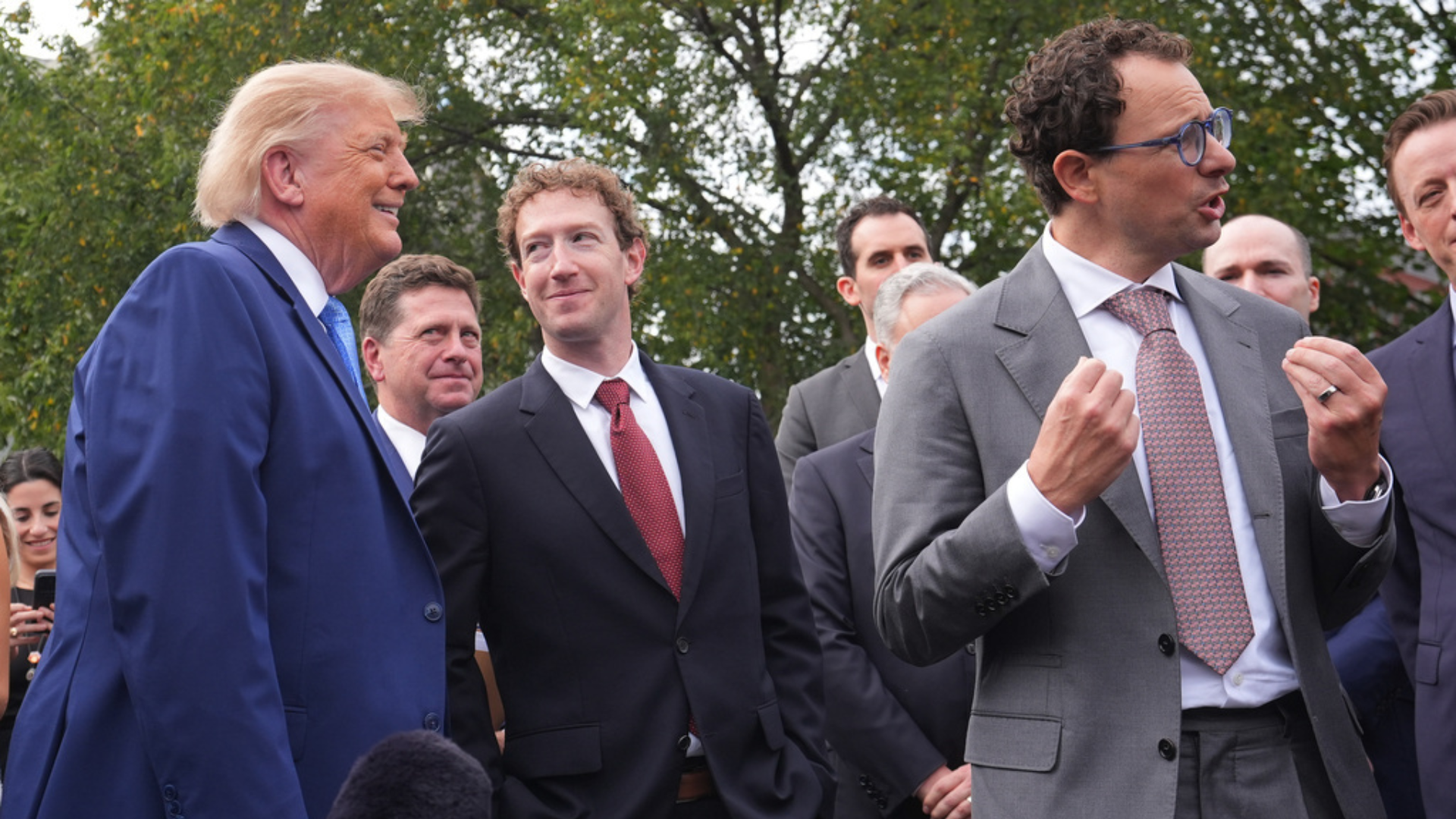
President Donald Trump and several leading technology executives have signed a voluntary agreement aimed at increasing oversight of artificial intelligence development in the United States. The move comes as AI continues to expand rapidly and public debate grows over its benefits, risks, and future regulation.
The agreement, described as an AI Industry Safety Accord, was announced during a White House meeting that brought together top executives from major technology companies. The gathering focused on addressing public concerns while supporting continued innovation in artificial intelligence.
Among those who signed the accord were Anthropic Chief Executive Dario Amodei, Google Chief Executive Sundar Pichai, Meta Chief Executive Mark Zuckerberg, OpenAI President Greg Brockman, Nvidia Chief Executive Jensen Huang, and Elon Musk, founder of xAI, which is now part of SpaceX.
Trump said the agreement reflects what he described as strong self-regulation by the industry. Speaking to reporters outside the White House, he said technology companies understand the need to monitor their own activities as AI systems become more powerful and influential.
The accord outlines several voluntary commitments for participating companies. Under the agreement, firms will establish stronger internal controls to oversee AI development and deployment. They will also work with independent external auditors to evaluate whether those safeguards are functioning effectively.
In addition, each company will create a board-level committee responsible for reviewing reports from both internal and external oversight teams. The goal is to improve transparency and strengthen accountability as AI technologies continue to evolve.
The agreement states that future laws or regulations could eventually build on these measures. However, for now, the commitments remain voluntary and are designed to encourage responsible practices without slowing innovation.
Trump praised the executives involved and said artificial intelligence has the potential to drive major economic growth. He pointed to large investments in data centers, computer infrastructure, and advanced technology systems as key contributors to economic activity and market expansion.
The administration views AI as a major driver of future competitiveness. Officials have repeatedly highlighted the technology’s role in boosting productivity, supporting business investment, and strengthening America’s position in the global technology sector.
At the same time, some participants acknowledged that artificial intelligence presents real challenges. Amodei said the technology carries significant risks and noted that discussions continue about the best ways to address those concerns.
Questions about safety, security, misinformation, and misuse have become central issues in the broader AI debate. Experts continue to discuss how governments and private companies should respond as AI systems become more capable.
Trump indicated that a separate oversight group may be created to monitor the implementation of the accord. He said a committee of roughly 10 people could be formed to help review progress and ensure companies follow through on their commitments.
While some researchers welcomed the effort, others expressed caution. Supporters argued that the agreement creates a framework that allows innovation while encouraging responsible development. They said flexible oversight can help companies improve safety without limiting technological progress.
Critics, however, questioned whether voluntary commitments alone are enough. Some experts argued that stronger legal requirements may eventually be needed to ensure accountability and protect the public from potential harms.
The White House event also featured the launch of America.gov, an artificial intelligence chatbot designed to help citizens access government services. Officials said the platform could eventually assist users with tasks such as passport applications and information requests.
Trump used the occasion to reaffirm his support for rapid AI development. He said the United States should continue leading the sector and avoid policies that could slow progress.
The president also addressed concerns surrounding the construction of new data centers. Communities across the country have raised questions about energy use, land development, and environmental impacts linked to large AI facilities.
Trump said technology companies are exploring ways to support local communities through investments and other initiatives. He expressed confidence that data centers will gain broader public acceptance as their economic benefits become more visible.
The AI Industry Safety Accord arrives as competition between the United States and China intensifies. Trump described artificial intelligence as a critical global race and stressed the importance of maintaining American leadership in the field.
As AI technology continues to advance, the agreement represents one of the most significant industry-led efforts to address safety concerns while supporting continued innovation and economic growth.
