


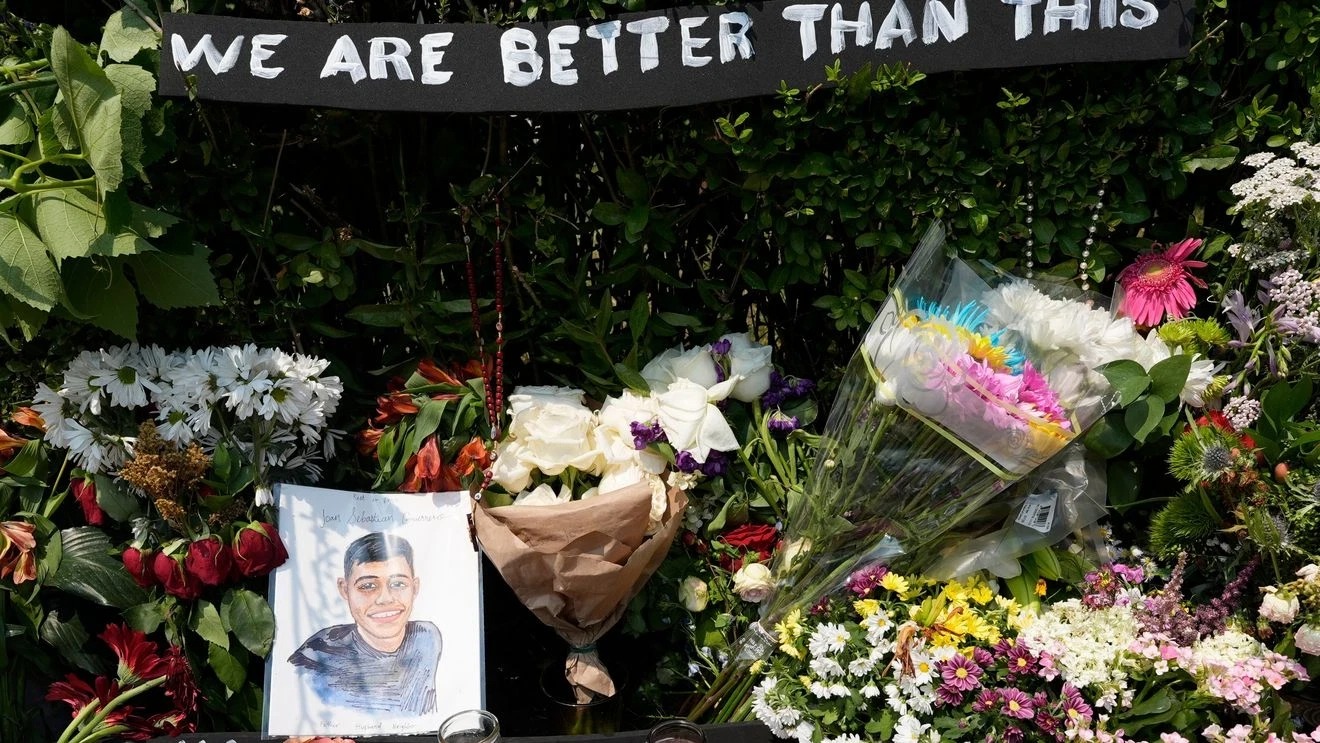
New details about the background of an Immigration and Customs Enforcement officer accused of fatally shooting a Colombian man in Maine have raised fresh questions about the agency’s hiring and training practices.
David Brouillette, an ICE officer from Gardiner, Maine, is accused of shooting 25-year-old Johan Sebastián Durán Guerrero during an immigration operation in Biddeford on July 13. Guerrero was inside a car when at least four bullets passed through its windshield. He died at the scene.
The Department of Homeland Security said the vehicle tried to flee and that the officer opened fire because he believed public safety was at risk. However, the agency has not publicly confirmed that Brouillette was the officer who fired the fatal shots.
Brouillette’s former wife, Ashley Brouillette, previously told CNN that he called her after the shooting and said he was the agent involved. She said he described the shooting as justified and claimed he had acted in self-defense. His family members have also identified him as the officer involved.
Guerrero’s family disputes the official account of the incident. They say he was legally living in the United States and had permission to work, along with a Social Security number. He was also the father of a young daughter. His wife, Karolina Rojas Alvarez, said they had hoped to grow old together.
A report published on November 11 detailed Brouillette’s history of workplace disputes, allegations of domestic abuse and reported mental health concerns. It also revealed emails from 2021 in which he made hostile comments about his sister’s Colombian partner, who was legally living in the United States.
In the emails, Brouillette reportedly told his sister that her partner should return to his own country. He also attacked the man’s family background and questioned whether he understood American freedom. In another message, Brouillette told his sister she was dead to him.
His mother, Susan Bedard, reportedly described him as dangerous and urged people to believe those who had accused him of abuse. His former wives made allegations of physical abuse in court documents, but Brouillette disputed the claims. The related protection cases did not result in criminal convictions.
The report also raised questions about Brouillette’s mental health history. His mother said he had been diagnosed with bipolar disorder and had been hospitalised several times. These statements have added to concerns about the background checks carried out before he joined a federal law enforcement agency.
Brouillette joined ICE in December 2025 during a major recruitment drive. According to the report, the agency allowed him to begin work before officials had completed a full review of his background. The check remained in a backlog when the fatal shooting took place.
He also reportedly did not complete ICE’s full training course. Instead, he took a shorter online programme because of his previous law enforcement experience. The findings have raised questions about whether the agency properly assessed his record before allowing him to carry a weapon and take part in field operations.
The Department of Homeland Security rejected claims that ICE had lowered its standards. A spokesperson said new officers were hired under existing policies and that all applicants had to meet federal screening rules. The department also defended its training system, saying officers were taught to use the minimum force needed and to prioritise public safety.
When asked about Brouillette’s individual training and conduct, DHS said it did not comment on personnel who were no longer with the agency.
Brouillette’s work history included several short periods in public service. He served in the Maine National Guard from 2007 to 2010 before joining the US Army, where he worked as a human intelligence collector from 2010 to 2015. He completed a nine-month deployment to Afghanistan and left the Army as a sergeant.
After military service, he worked as a corrections officer, a human services enforcement agent and a federal police officer at a Veterans Affairs medical centre. He also served briefly as a volunteer firefighter. A former fire chief reportedly described him as difficult to manage following an incident involving an alleged threat. Brouillette later sued a college over an injury that he said affected his memory and thinking. The case was settled.
Maine criminal court records show no criminal convictions apart from an old traffic violation. However, civil and family court records contain abuse allegations made by former partners. Those claims were not established through criminal convictions.
The Maine attorney general and the Department of Homeland Security inspector general are investigating Guerrero’s death. His family’s lawyer has called for a full review of the hiring, screening and training process. The lawyer also said the family had not received clear answers about possible disciplinary action or the progress of federal investigations.
The case has also drawn responses from elected officials in Maine. Congresswoman Chellie Pingree called for an independent investigation and demanded the release of Brouillette’s hiring and training records. Other state political leaders have called for accountability and changes to ICE operations.
The investigations will examine the circumstances of the shooting and the decisions that allowed Brouillette to serve as an armed federal officer. For Guerrero’s family, the central demand remains clear: answers about his death and accountability for those responsible.
