


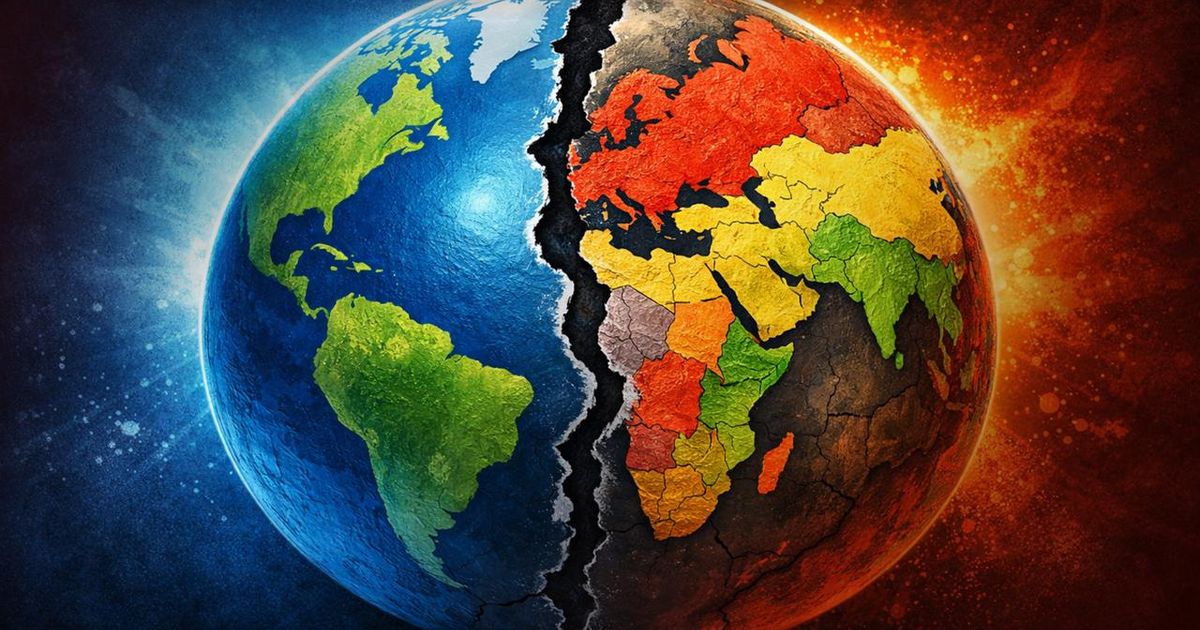
The post-Cold War era’s vision of a borderless, universalist global order is collapsing, giving way to a more nuanced international system. Europe, in particular, is grappling with a profound conflict between a progressive, borderless ideal and a pragmatic model embracing limits, regional differences, and political conditionality. This emerging framework, termed “cosmopolitan regionalism,” challenges the dangerous assumption that institutional convergence automatically leads to cultural convergence. Decades of top-down integration, as seen in the European Union, generated resentment by reshaping national life beyond mere policy coordination, pushing back against the idea of a universally imposed cosmopolitan lifestyle.
Cosmopolitan regionalism proposes that global cooperation should be built through regional convergence rather than universal imposition. It demands a clear distinction between truly cosmopolitan interests and those that remain regional, establishing barriers to entry for principles claiming universal status. This model recognizes that sustainable governance must integrate popular sentiment with industrial capacity and labor-market realities. A key institutional example is Donald Trump’s Board of Peace, which operates as a selective coalition with explicit conditions for participation, such as financial commitment and alignment with frameworks like the Abraham Accords. This contrasts sharply with the “hollow universalism” of traditional multilateral bodies, emphasizing compatibility with core procedural principles.
This new paradigm is evident in various geopolitical shifts. The Board of Peace’s structure illustrates three layers of governance: universal norms (diplomatic reciprocity, non-aggression), regional industrial policy (economic reconstruction, security coordination), and local cultural autonomy (family law, education). The Trump administration’s transactional approach, linking security commitments to economic interests, and NATO’s differentiated defense spending targets reveal the geographic and strategic fractures within Europe. While ideological globalists resist, arguing for cultural convergence and political integration, governments like Italy under Giorgia Meloni are instinctively experimenting with policies that link economic strategy to national identity and regional resilience, rejecting purely culturally neutral economic policy.
The failure of post-Cold War globalism stemmed from its attempt to universalize cultural content rather than procedural norms, leading to a predictable backlash. However, the alternative is not simple populism, which overlooks essential material foundations like industrial capacity and resource security. The future international order will not resurrect universal institutions but will instead emerge from overlapping regional frameworks with clear barriers and explicit conditions. The Board of Peace, NATO’s flexible commitments, and America’s transactional alliances are early indicators of this post-globalist architecture of selective cooperation. The critical challenge now is to delineate the precise boundary between cosmopolitan hospitality and regional self-determination, as this will define the new global landscape.
