


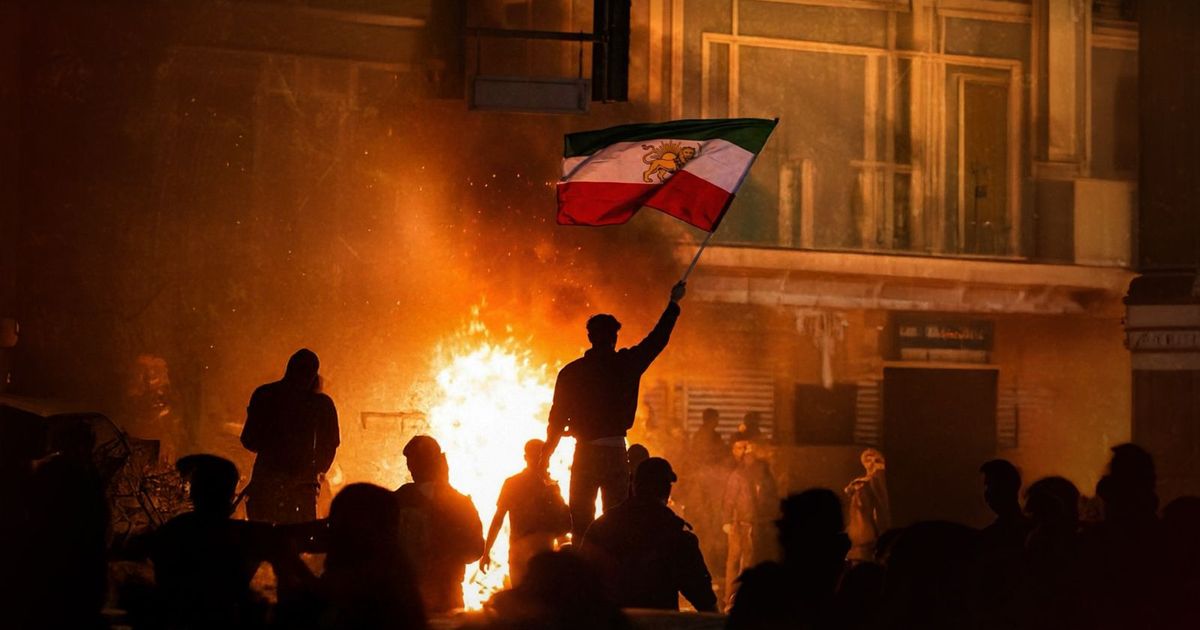
For decades, Western interpretations have framed Iranian protests as calls for reform within the Islamic Republic, clinging to the 1979 Islamic Revolution narrative. However, a profound shift is underway. What has emerged in Iran over the last decade is a movement increasingly asserting itself as a struggle to reclaim the nation-state’s sovereignty, which was fundamentally abrogated in 1979. This transformation transcends mere politics, delving into discursive and civilisational spheres, reflecting a reawakening of Iranian civic and national consciousness far beyond the regime’s ideological confines. This is the political phase of a burgeoning Iranian Movement of National Consciousness.
The modern Iranian state’s foundations were laid during the late 19th-century Persian Constitutional Movement, formalizing constitutional governance in 1906. This project matured under Reza Shah and Mohammad Reza Shah Pahlavi, establishing a modern state with institutions like a national army, universities, and an industrial economy, fostering an urban middle class. The Pahlavi era consolidated Iran as a modern Rechtsstaat, grounded in law, sovereignty, and civic liberty. This trajectory was shattered by the 1979 “Islamic Revolution,” which the text describes as an insurrection against the nation-state, installing an ideological “internal occupation” under velayat-e faqih, transferring sovereignty from the nation to clerical authority.
Post-1979, the ideological usurpation of the Iranian nation-state persisted largely unchallenged conceptually. Iran’s intellectual elite and political opposition often remained within the Islamic Republic’s framework, focusing on superficial reforms. Western circles, influenced by post-colonial and third-worldist thought, reinforced this by portraying the regime as an authentic anti-imperialist force, dismissing criticism as “Orientalist.” The regime’s “reformist” faction, promoted internationally, served as a safety valve, preserving the underlying “Islamofascist” mission. This illusion collapsed after the 2009 Green Movement suppression, prompting a new generation to fundamentally rethink the political narrative and increasingly appeal to Iran’s deeper national history and lost sovereignty.
Since the mid-2010s, protests reveal a dramatic shift in political language. Chants like “Iran is our homeland; Cyrus is our father” (2016) invoke pre-Islamic heritage. “Reza Shah, may your soul be blessed” (2017) honors the Pahlavi founder, a chief architect of modern Iranian statehood. After Mahsa Amini’s killing in 2022, “We are a great nation. We will take Iran back” encapsulates the movement’s spirit. These slogans signify a people reclaiming their identity as a historic nation, not subjects of revolutionary ideology. References to monarchy and figures like Crown Prince Reza Pahlavi carry symbolic and institutional weight, representing pre-1979 national statehood and a constitutional bulwark against extremism. This emerging patriotic discourse is fundamentally anti-fascist, a conscious revolt against ideological usurpation, articulating a coherent answer to the 1979 rupture and subsequent captivity.
