


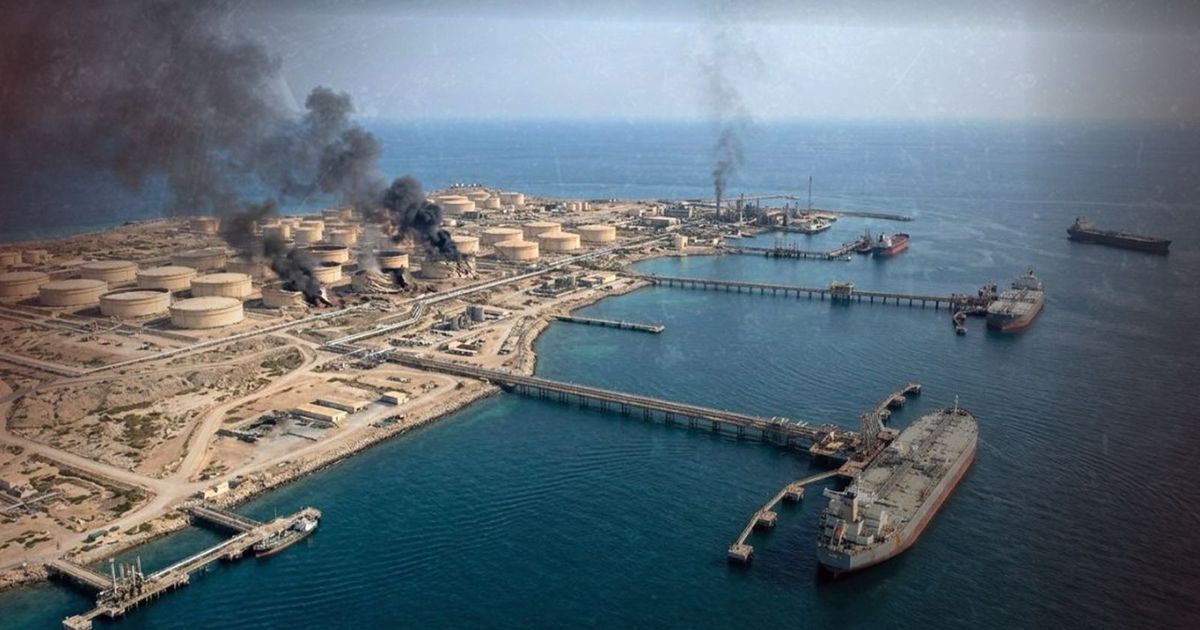
Despite conventional economic and military limitations, Iran holds immense geopolitical power due to its strategic location, primarily adjacent to the Strait of Hormuz. This narrow maritime passage is critical, channeling roughly one-fifth of the world’s daily oil supply. Iran’s position at the intersection of the Middle East, Central Asia, and South Asia, linking major energy production centers and trade routes, grants it structural influence far beyond traditional indicators, making it a crucial global hinge state.
The Strait of Hormuz serves as the vital export route for oil from major producers like Saudi Arabia and the UAE. Even perceived disruptions in this critical corridor significantly impact international oil prices, inflation, and global energy security. Within this crucial energy geography lies Kharg Island, Iran’s primary oil export hub. Its infrastructure represents the backbone of Iran’s petroleum economy, yet also a structural vulnerability, as any sustained disruption there could severely impair Iran’s oil revenue. Strategic military operations in the region have historically targeted defensive installations around Kharg Island, deliberately avoiding its export infrastructure to prevent global market destabilization.
Iran’s unique combination of geography, infrastructure, and regional connectivity elevates it to a pivot state, influencing multiple geopolitical systems including the Persian Gulf energy network, Central Asian corridors, and Middle Eastern security architectures. Since 1979, Iran’s foreign policy has been marked by tension with Western powers while forging ties with China and Russia. However, internal pressures and generational shifts hint at a potential future systemic transformation, possibly towards a constitutional monarchy, which would trigger a profound geopolitical realignment across the region and beyond.
Ultimately, Iran’s geopolitical significance stems from immutable structural conditions: its northern Persian Gulf anchor, proximity to the world’s most sensitive energy corridor, and critical infrastructure like Kharg Island. While its geography ensures its status as a vital regional actor, the nature of its internal political system will dictate how its power is expressed. A stable transition to a more pluralistic system could transform Iran from a source of systemic friction into a stabilizing regional actor, profoundly impacting energy security, alliances, and the geopolitical balance in the Middle East.
