


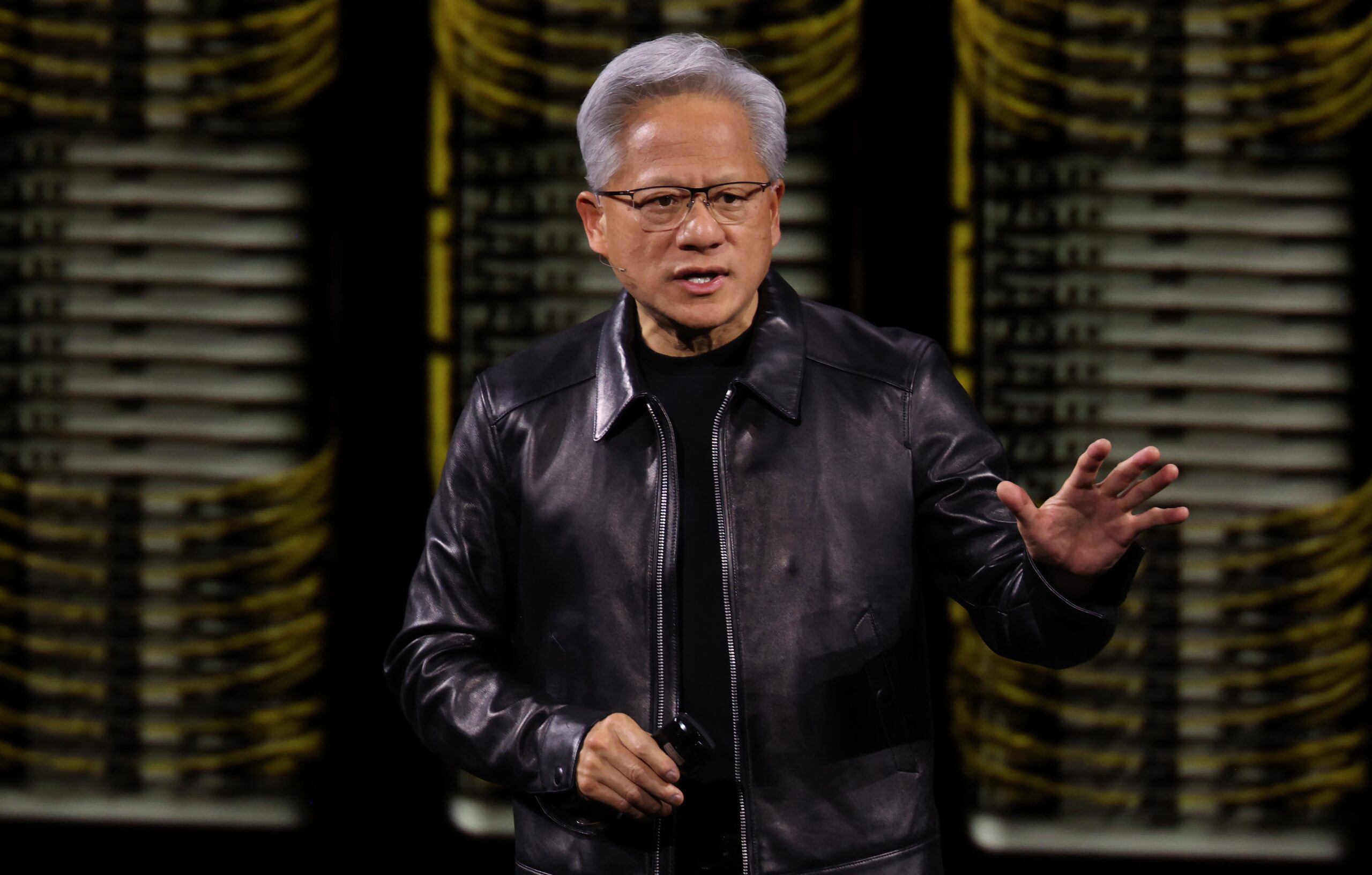
US President Donald Trump has confirmed that the Federal Bureau of Investigation (FBI) is examining allegations involving Nvidia chief executive Jensen Huang and a woman suspected of working for Chinese intelligence. Trump said he personally spoke with Huang on Monday and asked whether he knew about the woman’s alleged links to espionage.
Speaking to reporters at the White House, Trump said Huang denied knowing that the woman was a suspected spy. The president said he believed the Nvidia chief and described him as an honorable person. He also expressed confidence that Huang would be able to deal with the situation.
“I asked him that question, ‘Did you have any idea she was a spy?’ He said ‘I had no idea she was a spy’ and I really believe him,” Trump told reporters.
Trump added that the FBI was looking into the matter. However, he did not provide details about the investigation, including when it began or what specific activities were being examined. The FBI declined to comment on the case.
The allegations have created concern around Nvidia, one of the world’s most valuable technology companies. The company designs advanced computer chips that power artificial intelligence systems. Its products are also central to the growing technology competition between the United States and China.
The woman at the centre of the controversy has been identified as Alice Huang, also known as Huang Le. She is not related to Jensen Huang. According to reports citing US intelligence officials, she is suspected of having links to Chinese intelligence and sharing information with Beijing.
Alice Huang previously worked as managing director of Megaspeed, a Singapore-based company that had business dealings with Nvidia. US authorities have examined the company over concerns that advanced Nvidia chips may have been sent to Chinese customers in violation of American export restrictions.
A report said US Secretary of State Marco Rubio sent a warning memo to senior officials in Washington last spring. The memo reportedly raised concerns about Jensen Huang’s close relationship with a woman suspected of working for Chinese intelligence.
China has strongly rejected the allegations. Its foreign ministry described the claims as groundless and speculative. Beijing also accused those making the allegations of trying to damage China’s reputation.
Nvidia’s board of directors has launched an independent investigation into reports that its chief executive was targeted by a foreign intelligence operation. The review will be led by a committee of independent directors with help from outside legal advisers.
In a statement, the company said it had no reason to believe that Nvidia’s trade secrets or US national security had been compromised. The board also confirmed that Huang supported the investigation and would cooperate fully. It said the company remained confident in his leadership.
Statement from NVIDIA Board of Directors+1
The controversy has also affected Nvidia’s market value. Its shares fell by more than 4% on Monday, wiping about $250 billion from the company’s market capitalization. Investors have raised concerns about possible risks to the company’s leadership, business relationships and access to international markets.
Huang has admitted that he was unfaithful to his wife. He apologized to his family and acknowledged that his actions had hurt his wife and children. He also said he remained committed to protecting Nvidia and supporting US national security.
The company is facing growing pressure from lawmakers in Washington. Several congressional committee leaders have requested a closed-door briefing from Huang about Nvidia’s security measures and his reported interactions with Alice Huang.
The lawmakers want information about how the company protects sensitive technology from foreign intelligence operations. They are also seeking details about possible risks to US national security. It remains unclear whether Huang will attend the requested briefing.
The investigation comes at a sensitive time for Nvidia because its chips play a major role in the global AI industry. Washington has placed strict limits on the sale of some advanced semiconductors to China, arguing that the technology could strengthen Beijing’s military and surveillance systems.
Huang has previously opposed broad restrictions on chip sales to China. He has argued that allowing US companies to compete in the Chinese market would help American technology maintain its global position.
In January, the Trump administration allowed Nvidia to sell its H200 chips to approved Chinese customers under certain conditions. However, its most advanced products, including the GB200 Blackwell system, remain restricted from the Chinese market.
The latest allegations could increase pressure on the US government to examine Nvidia’s business links and enforce export controls. For now, both the FBI inquiry and Nvidia’s independent review remain ongoing. Neither investigation has established that company secrets or national security information were compromised.
