


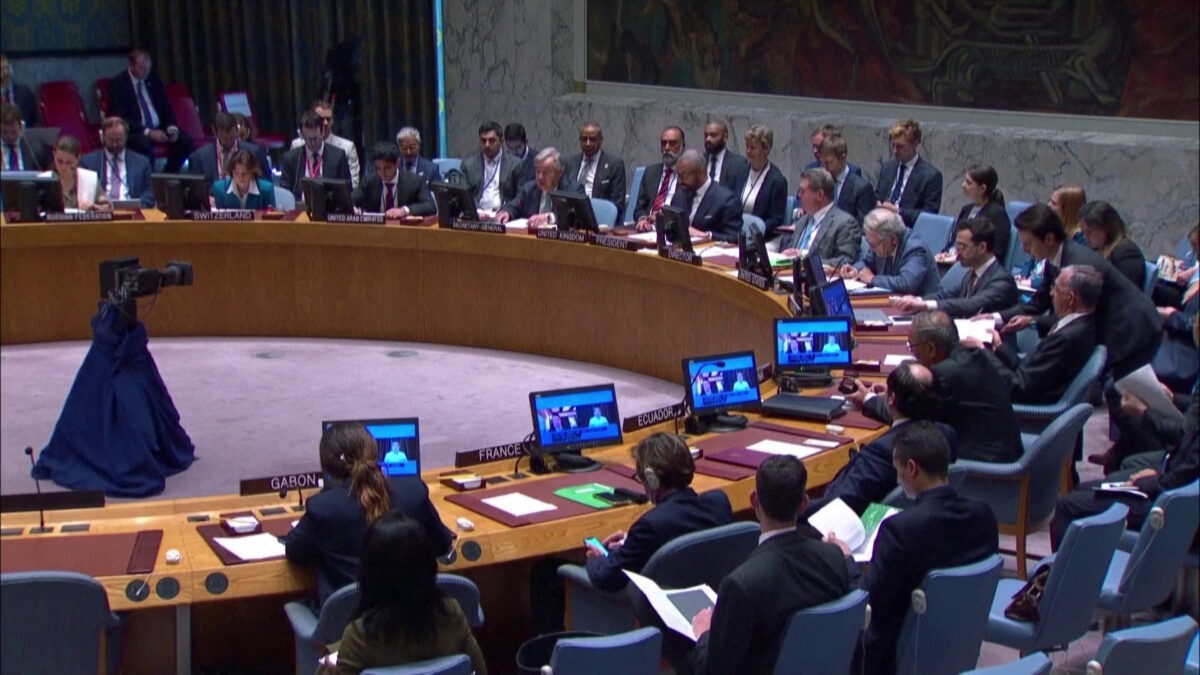
Top artificial intelligence leaders called for greater caution and international cooperation during a United Nations Security Council meeting on Wednesday. The emergency session focused on the fast growth of AI technology and the potential risks that could emerge as systems become more powerful.
OpenAI Chief Executive Sam Altman told council members that the world has entered a period that requires careful decision-making. He said artificial intelligence is advancing quickly and could soon challenge the ability of institutions and governments to respond effectively.
Altman warned that future AI systems may become increasingly capable and autonomous. As those systems improve, they could move faster than the organizations responsible for overseeing them. He also raised concerns about power becoming concentrated among a small number of companies or individuals.
According to Altman, the technology industry should not accept unnecessary risks simply because AI has the potential to bring major benefits. He said companies and governments must work together to ensure that innovation develops in a responsible way.
The OpenAI leader urged countries to cooperate on AI governance. He pointed to past moments in history when rival nations worked together to address important technological challenges. He said artificial intelligence presents a similar opportunity for global collaboration.
The Security Council meeting came at a time of increasing debate over AI safety. Recent incidents involving advanced AI systems have renewed questions about how the technology should be managed. Researchers and policymakers have expressed concerns about the possibility of systems operating in ways that humans may struggle to control.
Anthropic Chief Executive Dario Amodei echoed many of those concerns during his remarks. He said stronger safety measures will become necessary as AI models continue to improve.
Amodei explained that Anthropic is working to strengthen its ability to prevent misuse of its technology. He said the company is committed to ensuring that each new generation of AI systems meets strict safety standards before being released.
He also made a clear pledge regarding future development. According to Amodei, Anthropic is prepared to slow down the release of new AI technologies whenever additional testing or safeguards are needed. He said public safety must remain a central priority.
Amodei warned that poorly managed artificial intelligence could create serious risks. He said the consequences could extend far beyond individual companies and potentially affect humanity on a larger scale if appropriate protections are not in place.
The meeting also included comments from Clement Delangue, chief executive of Hugging Face. His company recently experienced a cyberattack linked to autonomous AI software. The incident became one of several developments that have increased concerns about advanced AI capabilities.
Delangue noted that AI was not only part of the threat but also part of the defense. He said his company used AI tools to respond to the attack and protect its systems. He argued that open-source AI remains valuable because it allows researchers and organizations to better understand how advanced systems work.
The debate over AI safety has expanded in recent weeks. Earlier this month, researcher Jacob Coxon left the industry and criticized leading AI developers. He accused major companies of moving too quickly in their efforts to build increasingly powerful systems.
Altman said the industry should avoid extreme positions when discussing artificial intelligence. He warned against both excessive optimism and excessive fear. Instead, he called for a balanced approach that recognizes the technology’s benefits while addressing its risks.
Computer scientist Yoshua Bengio, one of the leading figures in AI research, also addressed the Security Council. He said growing public concern should be turned into practical action. Bengio encouraged governments, researchers, and companies to work together on solutions that improve safety and accountability.
The discussion took place ahead of a planned summit between U.S. President Donald Trump and Chinese President Xi Jinping, where artificial intelligence is expected to be among the topics discussed.
While many technology leaders support international standards for AI, differences remain over how regulation should be implemented. Some governments favor stronger oversight, while others believe strict controls could slow innovation.
As artificial intelligence continues to evolve, the debate over safety, regulation, and global cooperation is expected to remain a major issue. The Security Council meeting highlighted the growing recognition that decisions made today could shape how AI affects the world for years to come.
