


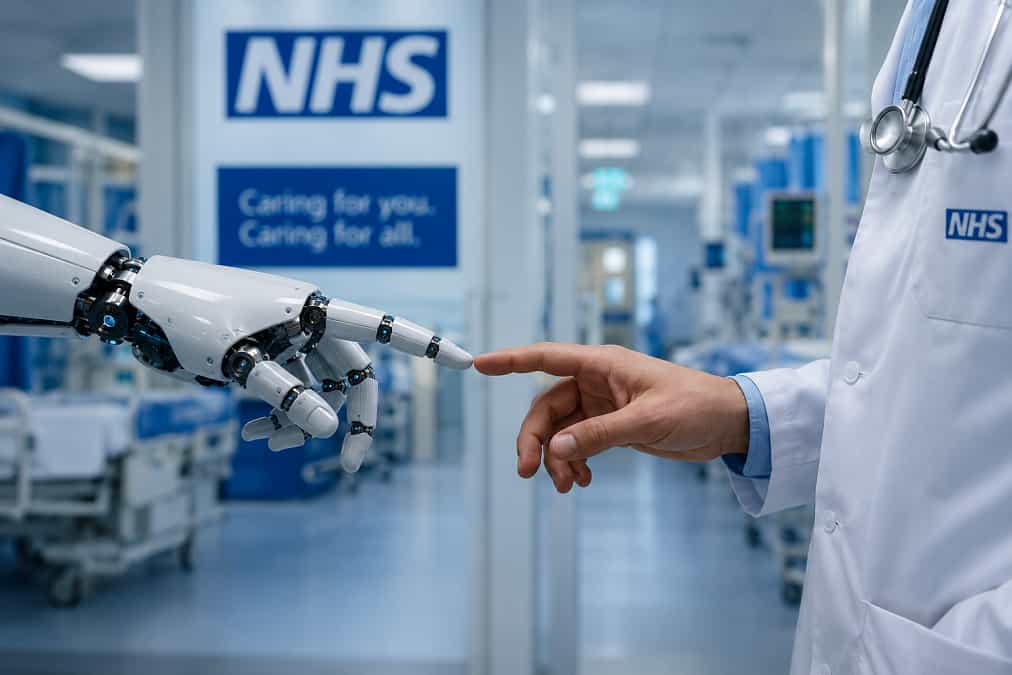
The National Health Service will begin using artificial intelligence through its NHS App to help patients find the right healthcare service more quickly. The new system will assess a patient’s symptoms and guide them to the most suitable care, such as a GP, a pharmacy, or an emergency department, depending on their medical needs.
The government said the AI-powered tool will first be introduced to around 200,000 patients over the next year. Officials plan to make it available to all NHS App users across England by April 2028 as part of a wider effort to modernize healthcare services.
The technology is designed to reduce pressure on GP practices and help patients receive faster care. Instead of everyone requesting a GP appointment, the system will assess symptoms and recommend the most appropriate service. Patients with minor health concerns may be directed to a local pharmacy, while those with more serious conditions could be advised to visit an accident and emergency department.
Improving access to GP appointments has been a major government priority. Reducing the rush for same-day appointments, often known as the “8am scramble,” was one of Labour’s key healthcare promises before winning the 2024 general election.
Officials said an early trial at Wealden Ridge Medical Partnership in Sussex showed encouraging results. According to the government, the number of patients waiting on phone lines for GP appointments fell by 29% after the AI system was introduced. The trial suggests that digital triage could improve access while reducing pressure on practice staff.
The rollout forms part of a £10 billion investment to improve NHS technology and digital systems. The funding aims to upgrade healthcare services, improve efficiency, and reduce waiting times by giving healthcare workers better digital tools.
The government also plans to expand the use of artificial intelligence to record patient consultations. Instead of doctors and nurses spending long periods writing notes, AI technology could create medical records during appointments. Health officials said a trial led by Great Ormond Street Hospital across nine London sites found that staff spent 25% more time speaking directly with patients while using the system.
Health Secretary James Murray said new technology has the potential to improve patient care and reduce paperwork for healthcare professionals. He said artificial intelligence could help patients reach the right service more quickly while allowing doctors and nurses to spend more time caring for people instead of completing administrative tasks.
Despite the planned expansion, healthcare experts have urged the government to introduce clear national guidance for the use of artificial intelligence across the NHS. They said AI offers promising opportunities but also raises important questions about safety, accuracy, privacy, and long-term effectiveness.
Some experts warned that artificial intelligence should support healthcare workers rather than create extra work. They said inaccurate information or poor system performance could increase administrative tasks if staff need to correct mistakes made by AI tools.
Patient privacy also remains a key concern. Healthcare leaders said people must be confident that personal medical information will remain secure and confidential when processed through digital systems. Strong safeguards and careful monitoring will be needed as AI becomes more widely used across the health service.
Experts also stressed the importance of making sure everyone can access NHS services, including people who are less comfortable using digital technology. They said patients should continue to have access to face-to-face and telephone services so that no one is left behind as healthcare becomes more digital.
The government believes artificial intelligence can play an important role in improving NHS services over the coming years. If the national rollout is successful, the technology could help reduce waiting times, improve patient access to care, and give healthcare professionals more time to focus on treating patients while modernizing one of the world’s largest public health systems.
