


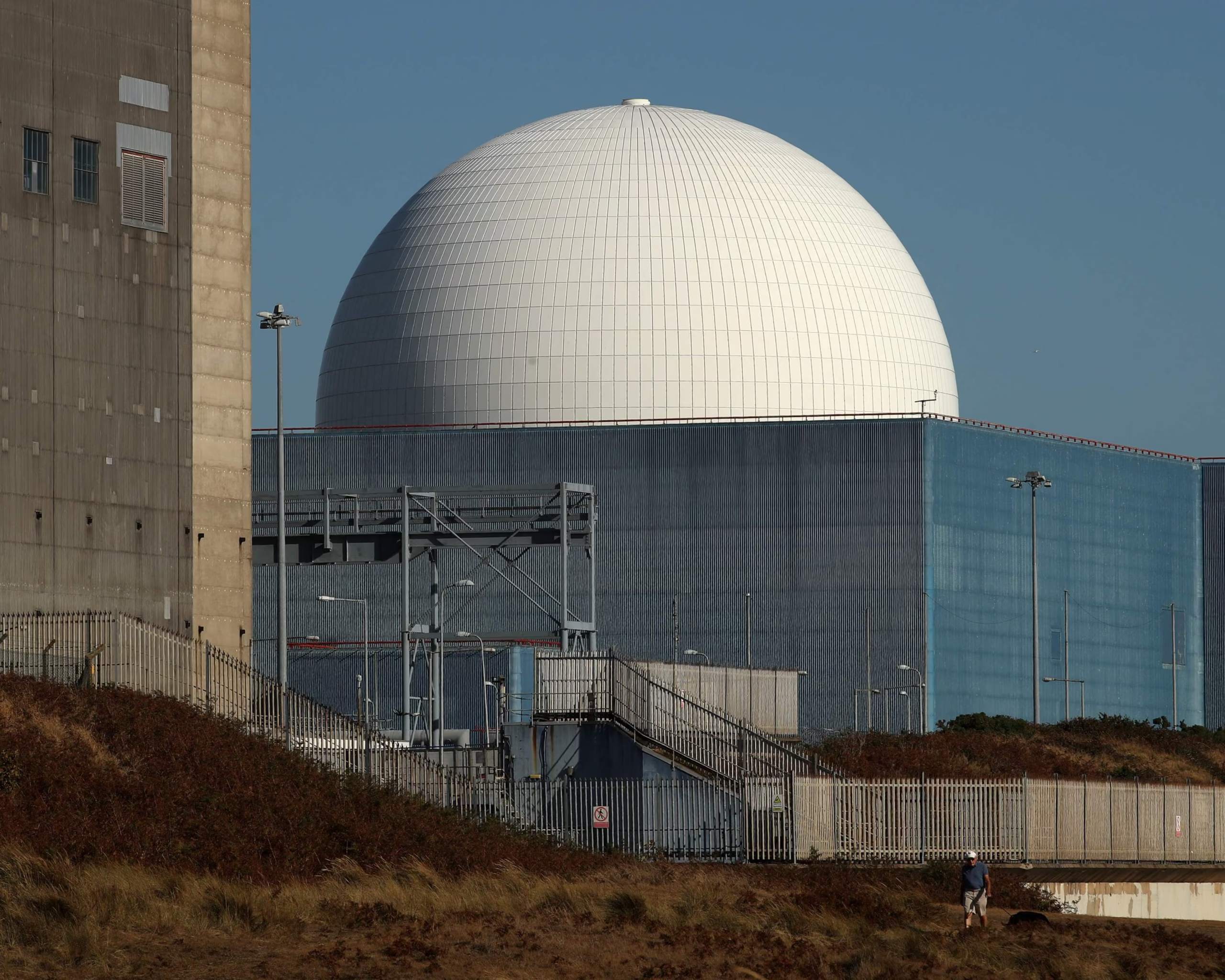
The UK government has approved a 20-year life extension for the Sizewell B nuclear power station, allowing the plant to continue generating electricity until 2055. The decision is part of the country’s wider plan to increase clean energy production and strengthen long-term energy security.
Sizewell B, located in Suffolk, first started producing electricity in 1995. Under its original operating schedule, the plant was expected to close in 2035. The new agreement extends its working life to 60 years, making it one of the country’s key sources of low-carbon electricity for decades to come.
The power station currently supplies about 3 percent of Britain’s electricity. It generates enough power to meet the equivalent annual demand of around 2.5 million homes. Officials say keeping the plant in operation will help meet rising electricity demand as more homes, businesses, and transport systems move toward cleaner energy.
The extension follows a proposal from the plant’s owner, EDF, which received government approval after technical and regulatory reviews. The agreement forms part of a broader strategy to expand nuclear energy while reducing carbon emissions.
Energy Secretary Ed Miliband said nuclear power remains an important part of the UK’s energy system. He said extending the life of Sizewell B will help provide reliable low-carbon electricity while supporting the country’s energy security goals.
Chancellor Rachel Reeves also welcomed the decision. She said the extension provides long-term certainty for workers and businesses connected to the nuclear industry. She added that the project supports skilled jobs in Suffolk and contributes to Britain’s clean energy future.
Under the agreement, EDF will receive a fixed payment of £70.50 for every megawatt-hour of electricity generated by Sizewell B from 2035 onward. Additional investment needed to maintain and operate the station during the extended period will be supported by Centrica, which owns a 20 percent share in EDF’s UK nuclear reactors.
Sizewell B joins several other UK nuclear plants that have received operating life extensions. Earlier agreements allowed Heysham 2 in Lancashire and Torness in Scotland to continue generating electricity until March 2030. Heysham 1 and Hartlepool are also expected to remain in service until March 2028.
The UK is also investing in new nuclear projects to replace older power stations over time. Hinkley Point C, currently under construction in Somerset, is expected to begin producing electricity in the early 2030s. Another major project, Sizewell C, is planned next to the existing Sizewell B site and is expected to begin operating before 2039.
In addition to large nuclear plants, the government is supporting the development of small modular reactors. These smaller reactors are designed to be built more quickly and at lower cost than traditional nuclear power stations. Officials expect the first of these projects to begin generating electricity during the 2030s.
The government’s long-term energy strategy combines nuclear power with expanded renewable energy. Plans include increasing onshore wind capacity, expanding solar power, and significantly growing offshore wind generation by the end of the decade.
As part of these efforts, ministers recently approved the construction of One Earth Solar Farm on the border of Nottinghamshire and Lincolnshire. The project is expected to generate enough electricity to supply more than 200,000 homes each year. It is one of several major clean energy projects approved in recent years.
Officials say using a mix of nuclear and renewable energy will help the UK reduce dependence on fossil fuels while meeting future electricity demand. Growing use of electric vehicles, low-carbon heating systems, and energy-intensive technologies such as artificial intelligence is expected to increase electricity consumption in the coming decades.
The approval of the Sizewell B life extension marks another step in the UK’s long-term energy transition. By keeping the plant operating until 2055, the government aims to provide reliable low-carbon electricity while supporting economic growth, improving energy security, and helping the country meet its climate targets.
