


The United States has ended a sanctions waiver that allowed Iran to sell oil after accusing Iran of attacking three commercial tankers in the Strait of Hormuz. The move marks a major change in U.S. policy and increases pressure on Tehran as tensions rise in the Gulf.
The U.S. Treasury Department announced on Tuesday that it had revoked “General License X,” which had temporarily allowed Iranian oil exports under a recent agreement between the United States and Iran. The waiver was introduced two weeks earlier as part of a 60-day memorandum of understanding aimed at reducing tensions and supporting talks over Iran’s nuclear program.
The Treasury said the previous waiver has now been replaced with a narrower authorization known as “General License X1.” Under the new rules, no new Iranian oil sales are allowed after Tuesday. A short grace period will remain in place until July 17 for transactions that were already approved before the waiver ended. Money from those sales will be placed in blocked, interest-bearing accounts.
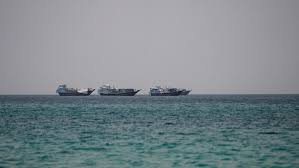
U.S. officials said the decision came after the Islamic Revolutionary Guard Corps allegedly attacked three commercial vessels in the Strait of Hormuz. The administration said the reported attacks violated the ceasefire terms included in the temporary agreement.
A U.S. official said the memorandum with Iran was always based on performance. The official said Iran would receive economic benefits only if it followed the agreement. According to the administration, the reported attacks on commercial shipping were unacceptable and would bring consequences. Officials also said negotiations toward a broader agreement are continuing.
Iran strongly criticized the U.S. decision. Deputy Foreign Minister Kazem Gharibabadi said the United States had violated the memorandum by ending the waiver. He warned that Iran would take steps to protect its national interests and security following the move.
The reported attacks also affected global energy markets. Oil prices moved higher after news of the waiver’s cancellation. Brent crude rose to about $75 per barrel, while West Texas Intermediate climbed to around $71 per barrel as traders reacted to concerns over future supplies.
Saudi Arabia also condemned the reported attacks on commercial ships. A spokesperson for the Saudi Embassy in Washington said Saudi and Qatari oil tankers were among the vessels targeted. The spokesperson described the incident as a threat to international shipping and global energy security.
The U.S. military’s Central Command said it carried out strikes inside Iran in response to the reported attacks on the tankers. Military officials described the incident as a clear breach of the ceasefire that had been agreed upon under the memorandum signed in June.
The Strait of Hormuz remains one of the world’s most important shipping routes. Around one-fifth of global oil supplies normally pass through the narrow waterway. Any disruption in the area can quickly affect energy markets around the world.
The temporary agreement signed in June was designed to reduce military tensions while both sides continued discussions over Iran’s nuclear program. The deal also required Iran to allow commercial ships to pass safely through the Strait of Hormuz. In return, the United States temporarily eased sanctions on Iranian oil exports.
The agreement helped calm global oil markets after months of uncertainty. Earlier this year, fears over supply disruptions pushed oil prices sharply higher. Damage to energy facilities across the Gulf also added pressure to global supplies and increased fuel costs in many countries.
Analysts are now watching to see how the latest U.S. action will affect global energy markets. China and India, which are among the largest buyers of Iranian oil, were expected to benefit most from the temporary waiver. The end of the exemption could reduce Iranian exports and tighten supplies if tensions continue.
Experts also warn that security concerns in the Strait of Hormuz may continue even if diplomatic talks resume. They say restoring confidence in one of the world’s busiest energy routes could take time. For now, the United States has made clear that future sanctions relief will depend on Iran’s actions, while global markets continue to monitor developments in the region.
