


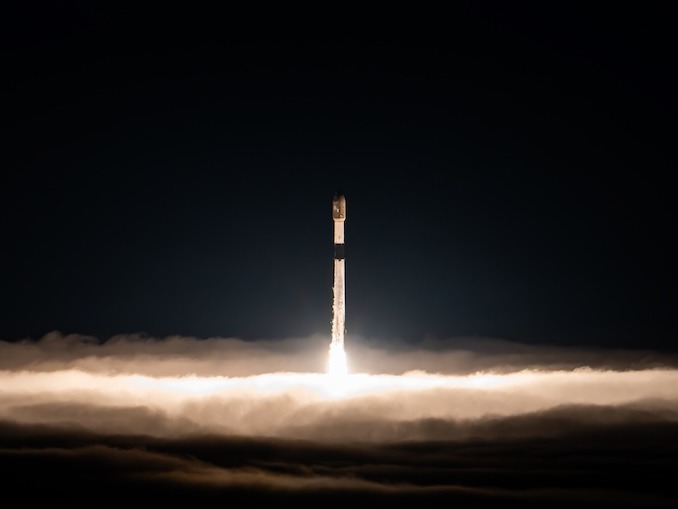
SpaceX has launched the final three satellites needed to complete the O3b mPOWER constellation for satellite operator SES. The mission also marked a major milestone for the company as it completed its 700th Falcon rocket launch.
The launch took place on Sunday afternoon from Cape Canaveral Space Force Station in Florida. A Falcon 9 rocket lifted off from Space Launch Complex 40 at 2:49 p.m. Eastern Time.
The mission carried three Boeing-built satellites known as F11, F12, and F13. They are the final additions to the O3b mPOWER network, a medium Earth orbit communications system designed to provide high-speed connectivity around the world.
With the deployment of these spacecraft, the constellation will reach a total of 13 satellites.
The launch represented another important chapter in the long relationship between SpaceX and SES. SES is one of SpaceX’s earliest commercial customers and has relied on Falcon rockets for multiple satellite missions over the years.
The mission also highlighted the rapid growth of SpaceX’s launch operations. The company’s 700 Falcon launches include 687 Falcon 9 missions and 13 Falcon Heavy flights.
Weather conditions created some uncertainty before liftoff. Forecasts showed only a moderate chance of favorable conditions at the start of the launch window.
Meteorologists monitored the possibility of showers and thunderstorms developing near the launch site as sea breeze activity increased along Florida’s east coast. Despite those concerns, conditions remained acceptable for launch.
The Falcon 9 rocket used for the mission featured first-stage booster B1080. The booster has become one of SpaceX’s most experienced launch vehicles.
Sunday’s flight marked its 29th mission.
Previous missions for B1080 included flights to the International Space Station, the European Space Agency’s Euclid observatory, SES’s Astra 1P satellite, and numerous Starlink launches.
Shortly after liftoff, the booster completed its planned return sequence.
More than eight minutes into the mission, B1080 landed successfully on the drone ship A Shortfall of Gravitas in the Atlantic Ocean.
The landing added another achievement to SpaceX’s growing record of reusable rocket operations. It was the 166th landing on that vessel and the 661st successful Falcon booster recovery overall.
The mission also marked a milestone for Space Launch Complex 40.
It became the 400th orbital launch conducted from the historic launch site. SpaceX has been responsible for most of those missions, accounting for 345 launches from the pad.
The launch complex has played an increasingly important role in SpaceX operations since upgrades were completed several years ago. Those improvements allowed the facility to support both cargo and crew missions using the Dragon spacecraft.
For SES, the mission completed a constellation years in the making.
The first O3b mPOWER satellites were launched in December 2022. Additional spacecraft followed in a series of launches during 2023, 2024, and 2025.
The constellation was originally planned with fewer satellites. However, engineers discovered an electrical issue affecting some early spacecraft.
The problem was found before the launch of satellites five and six. It reduced broadband capacity and shortened the expected operational life of certain satellites already in orbit.
To address the issue, Boeing modified later satellites and SES decided to expand the constellation with additional spacecraft.
The final three satellites were delivered to SES earlier this month before being prepared for launch.
Company officials said the completed network will help meet increasing demand from commercial customers, government agencies, and military users.
SES executives noted that the performance of the satellites already operating in orbit has confirmed the effectiveness of the system’s design.
The three new satellites were scheduled for deployment beginning about 34 minutes after launch. Each spacecraft was released separately with roughly seven minutes between deployments.
Following separation from the rocket, the satellites will begin a series of orbit-raising maneuvers and technical tests.
According to Boeing, the spacecraft are expected to enter full service by the middle of 2027 after completing commissioning activities.
Industry leaders say the completed O3b mPOWER network will strengthen SES’s position in the medium Earth orbit communications market.
With the final satellites now on their way to orbit, the project reaches a major milestone while SpaceX adds another landmark mission to its growing launch record.
