


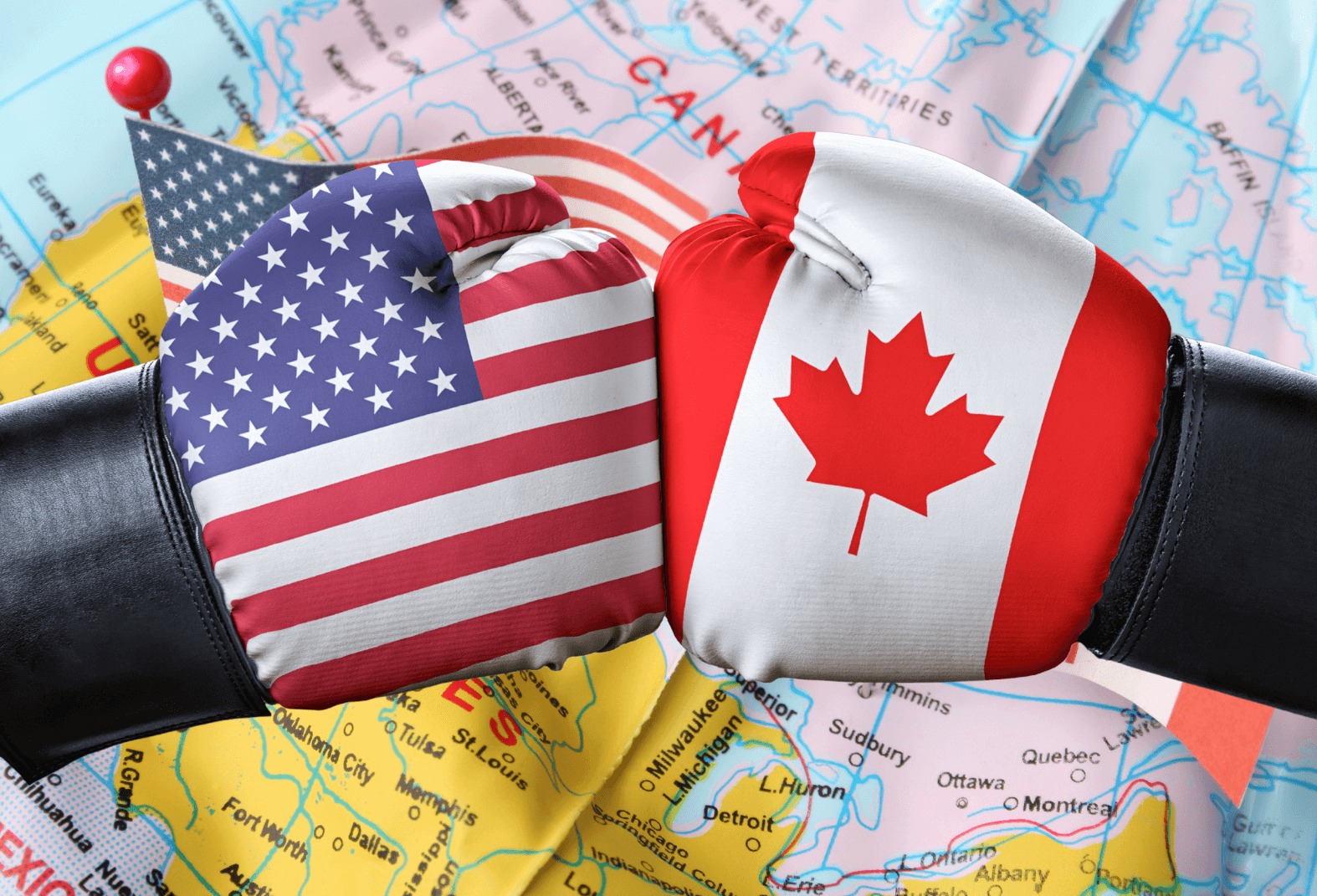
The latest round of the US Canada Tariff War is expected to affect major industries on both sides of the border, with businesses facing higher costs and growing uncertainty as trade tensions deepen.
The dispute has intensified after Canada announced new tariffs on a wide range of American products. The move came in response to fresh tariff threats from US President Donald Trump, continuing a trade conflict that has shaped economic relations between the two countries for months.
Experts say the biggest effects are likely to be seen in the automotive sector, housing construction, manufacturing, and employment. While consumers may notice some price changes, many analysts believe the wider impact could come from slower business activity and weaker job growth.
The automotive industry remains one of the most exposed sectors. Cars, trucks, and vehicle parts move across the US, Canadian, and Mexican borders every day. Production networks in North America are deeply connected, making tariffs especially costly for manufacturers.
Trump has threatened to raise tariffs on Canadian vehicles from 25% to 50% starting in 2027. If implemented, the increase could place additional pressure on automakers already dealing with higher production costs.
Economists say businesses have absorbed much of the cost from previous tariffs. However, that ability is becoming limited as expenses continue to rise. Industry observers expect manufacturers to focus more on higher-priced vehicles, such as luxury models, sport utility vehicles, and pickup trucks, where profit margins are stronger.
A reduction in affordable new vehicles could also increase demand in the used-car market, pushing prices higher for consumers looking for lower-cost transportation options.
Canada has not matched the proposed 50% vehicle tariff. However, a 25% tariff on selected American vehicles remains in place, adding to existing trade barriers.
Housing and construction may also face challenges. Canada has expanded tariffs on products such as steel, aluminum, plywood, and hardware used in building projects. These materials are important for residential and commercial construction.
Builders who rely on imported products may see costs rise. Many companies could pass those increases on to buyers, making homes more expensive. Higher construction expenses may also affect renovation projects and infrastructure development.
The United States imports large amounts of wood products from Canada each year. Industry groups have warned that tariffs on building materials can disrupt supply chains and create additional market uncertainty.
Household products are another target in the latest trade measures. Canada has applied tariffs to a broad range of goods, including furniture, refrigerators, washing machines, carpets, and kitchen items.
Economists believe many Canadian consumers may respond by purchasing domestic alternatives rather than paying higher prices for imported products. This strategy could reduce the impact on household budgets while encouraging support for local businesses.
Consumer behavior has already shifted in some areas. One of the most visible examples involves alcohol sales. Several Canadian provinces removed American alcohol products from store shelves after earlier tariff disputes.
The restrictions had a major effect on exports from the United States. Industry representatives reported a sharp decline in sales to Canadian buyers after the measures were introduced.
Although some provinces temporarily eased restrictions during trade discussions, renewed tensions could lead to further limits on American alcohol sales. At the same time, public campaigns encouraging consumers to buy Canadian-made products continue to gain support.
The broader concern for many economists is the effect on jobs and investment. Businesses that depend on cross-border trade face higher operating costs and increased uncertainty. These conditions can discourage expansion plans and delay hiring decisions.
Companies that export heavily to the United States may be particularly vulnerable. Higher tariffs can reduce demand, lower profits, and place pressure on employment in affected industries.
Trade tensions also raise questions about the future of North American economic cooperation. Canada and Mexico support extending the current regional trade agreement, while the United States has indicated it wants changes before any renewal.
Analysts say ongoing disputes could make future negotiations more difficult and increase uncertainty for companies that rely on stable trade rules.
While the immediate effect on American household budgets may be limited, economists warn that repeated tariff actions can create long-term economic challenges. Combined with broader global trade disputes, rising costs and reduced business confidence may continue to weigh on growth.
As the US Canada Tariff War enters a new phase, industries across North America are preparing for further disruption, with businesses, workers, and consumers all watching closely for the next move in the escalating trade battle.
