


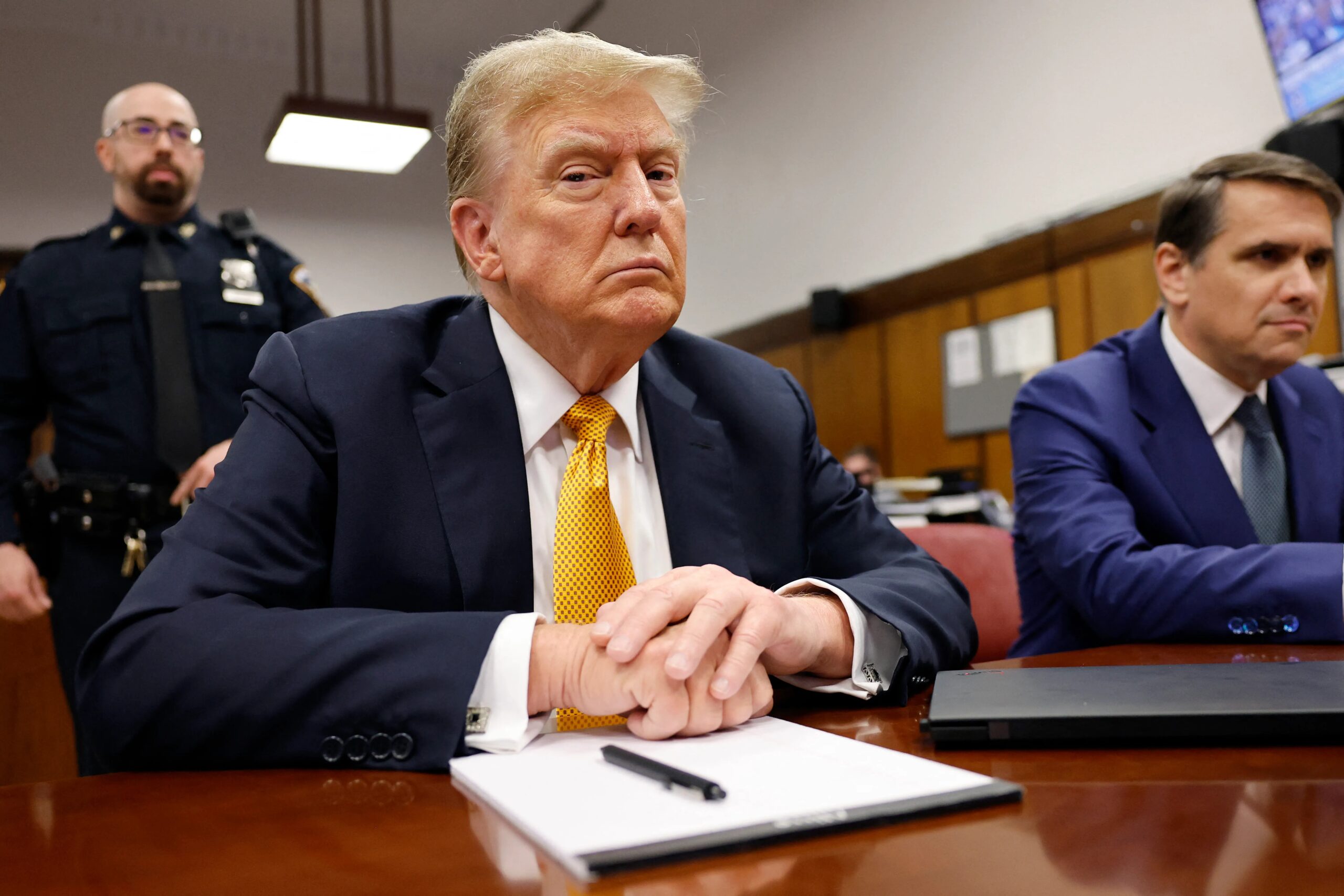
A federal judge has rejected President Donald Trump’s latest attempt to move his New York hush money conviction case to federal court. The decision keeps the case in the state court system and allows the ongoing appeals process to continue under New York law.
District Judge Alvin Hellerstein issued the ruling on Friday. He said the arguments presented by Trump’s legal team did not provide a valid reason to transfer the case. The judge concluded that the issues raised were not new and did not meet the legal standard required for removal to federal court.
The ruling follows months of legal debate over whether the case should be reviewed under federal authority. Trump’s lawyers have argued that the matter involves actions taken while he was president and should therefore receive protection under the Supreme Court’s presidential immunity decision.
Hellerstein disagreed with that position. In his written order, he stated that the conduct at the center of the case was personal and unrelated to the duties of the presidency.
The case stems from payments made to adult film actress Stormy Daniels before the 2016 election. Prosecutors argued that business records were falsified to conceal the true purpose of those payments. A New York jury later found Trump guilty on 34 felony counts linked to the records.
Trump has denied wrongdoing and continues to challenge the conviction through several legal channels.
In his latest ruling, Hellerstein wrote that discussions involving hush money payments and efforts to conceal a personal relationship could not be considered official presidential actions. He said such matters fall outside the responsibilities assigned to the president of the United States.
The judge also addressed claims that prosecutors relied on evidence connected to White House staff members during the trial. Trump’s legal team argued that the Supreme Court’s immunity ruling limits the use of evidence involving official presidential activities.
According to Hellerstein, that argument does not apply in this case. He stated that aides and assistants can perform personal tasks for a president that have no connection to government duties. As a result, he found no basis for treating the evidence as protected official conduct.
Trump’s attorneys quickly filed an appeal after the ruling was released. They argue that constitutional protections, presidential immunity, and existing legal precedent support their position. The legal team continues to seek dismissal of the conviction.
The issue gained new attention after the Supreme Court issued its landmark immunity ruling in 2024. That decision established broad protections for presidents regarding official actions taken while in office. It also limited the use of evidence tied to those official actions in criminal cases.
Following that ruling, a federal appeals court instructed Hellerstein to reconsider Trump’s request. The appeals court did not decide whether Trump was entitled to relief but directed the lower court to take another look at the matter.
After reviewing additional arguments from both sides, Hellerstein reached the same conclusion as before. He maintained that the prosecution concerns private conduct and therefore does not qualify for federal court protection.
The judge also pointed to the timing of Trump’s request. He noted that Trump’s lawyers first pursued a separate effort to overturn the conviction in state court before renewing their federal court bid.
Hellerstein described that approach as a strategic legal choice. He said the decision to seek relief elsewhere before returning to federal court did not justify the delay. In his view, the timing weakened the argument for transferring the case.
The Trump Federal Court Bid was viewed by legal observers as an important effort because federal court could provide a faster path toward review by the U.S. Supreme Court. A successful transfer might also have opened new arguments related to presidential immunity.
For now, the conviction remains under review in New York’s appellate system. The appeal could eventually reach the state’s highest court. If further legal questions arise, the dispute may later be considered by the U.S. Supreme Court.
The latest ruling keeps the case on its current course and represents another significant legal setback for Trump as he continues his fight to overturn the historic conviction.
