


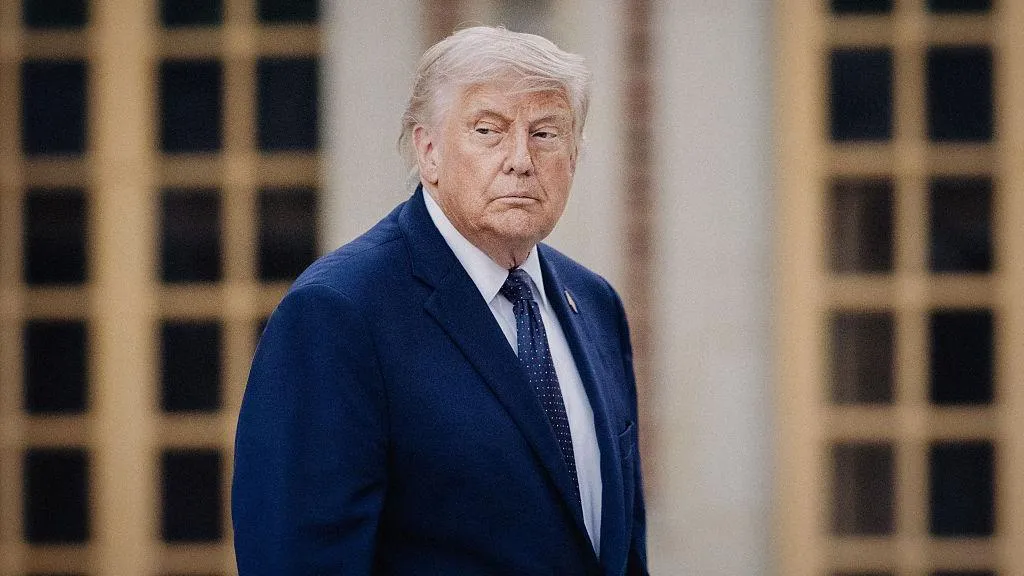
The United States Congress has approved a measure calling on President Donald Trump to end military involvement in Iran or seek formal congressional approval before continuing military operations. The vote marks a rare moment of opposition to Trump from members of his own Republican Party.
The Iran War Powers Vote passed the Republican-controlled Senate by a 50-48 margin on Tuesday after previously clearing the House of Representatives earlier this month. While the resolution is largely symbolic and does not carry the force of law, political analysts say it represents a significant message from lawmakers regarding presidential war powers.
The measure was approved as concerns continue to grow in Washington over the ongoing conflict involving Iran. The war has entered its fifth month despite a recent ceasefire agreement and ongoing diplomatic efforts between Washington and Tehran.
Trump strongly criticized the resolution shortly after the Senate vote. In a post on his social media platform, he described the measure as poorly timed and meaningless. The president argued that lawmakers were making it more difficult for his administration to manage the situation with Iran.
The Iran War Powers Vote is historically significant because it marks the first time both chambers of Congress have approved a concurrent resolution directing a president to end military action since the War Powers Resolution became law in 1973.
Unlike traditional legislation, a concurrent resolution does not go to the president for approval and does not become legally binding law. Instead, it serves as an official expression of congressional opinion.
Political experts say the resolution is unlikely to directly affect current military policy. However, many view it as an important signal that some lawmakers are increasingly willing to challenge the White House on national security matters.
Several Republican senators joined Democrats in supporting the measure. Those Republicans included Rand Paul, Lisa Murkowski, Susan Collins, and Bill Cassidy. Democratic Senator John Fetterman was the only member of his party to vote against the resolution.
The Iran War Powers Vote follows growing debate among lawmakers over Trump’s handling of the conflict and a recent memorandum of understanding reached between the United States and Iran. Some Republicans have expressed concerns that the agreement may not adequately address long-term security issues.
Constitutional law experts noted that presidents from both political parties have often resisted limits imposed by the War Powers Resolution. Legal scholars say the measure is more important politically than legally because presidents have frequently interpreted military authority broadly.
Analysts argue that the vote demonstrates an unusual willingness by Congress to challenge a president from its own party. Such actions have been rare during Trump’s second term, as Republican lawmakers have generally supported the administration’s agenda.
The House of Representatives approved the same measure earlier this month in a close vote. Four Republicans joined Democrats to support the resolution, highlighting divisions within the party over military policy and presidential authority.
The White House responded by arguing that there are currently no active hostilities requiring troop withdrawal because a ceasefire agreement was reached in April. Administration officials also noted that two Republican senators were absent during the Senate vote.
The Iran War Powers Vote comes at a politically sensitive time. Midterm elections are scheduled for November, and Republicans are seeking to maintain narrow majorities in both chambers of Congress. Some lawmakers may be attempting to show independence from the president while balancing support from Republican voters.
Federal law generally requires congressional approval for military engagements lasting longer than 60 days. However, administrations have often disputed how those limits apply in specific conflicts. The White House has argued that recent diplomatic developments changed the timeline governing military authorization.
At the same time, the Pentagon has requested approximately $80 billion from Congress, much of it linked to military operations involving Iran. The funding request has added to the debate over the future direction of U.S. policy in the region.
The United States and Iran are currently operating under a ceasefire and negotiating a broader agreement aimed at ending hostilities and addressing concerns surrounding Iran’s nuclear program. Both sides have agreed to continue talks under a framework established by a recent memorandum of understanding.
Although the Iran War Powers Vote may not immediately change military policy, it highlights growing congressional scrutiny of presidential authority and signals increasing debate over the future of U.S. involvement in the conflict.
