


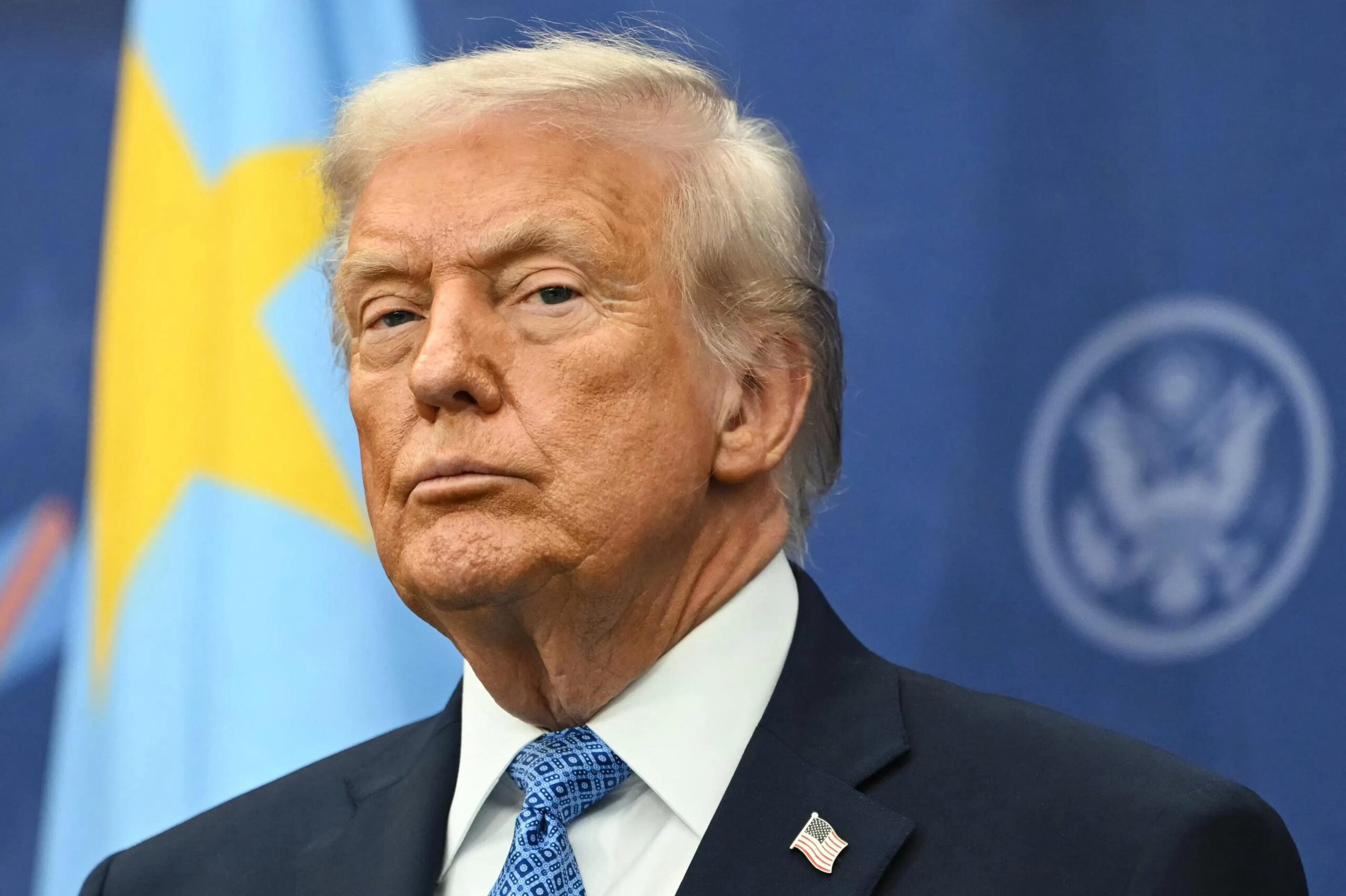
President Donald Trump is facing new political pressure after recent opinion polls showed his approval rating falling to a record low. The results arrive just weeks before voters head to the polls in midterm elections that will decide control of Congress.
A new national survey found Trump’s approval rating at 32%. The figure represents the lowest level recorded for the president during his current term. The poll also showed declining support among independent voters and Latino voters, two groups closely watched by both major political parties.
The latest numbers have increased concerns within Republican circles as the party works to defend its position in Congress. Midterm elections often serve as a public judgment on a president’s performance, making approval ratings an important measure ahead of Election Day.
Trump dismissed the poll findings while speaking to reporters before a trip to Nebraska on Monday. He expressed confidence in his standing with voters and rejected suggestions that support for his administration is fading.
The president also criticized media coverage after being asked about polling data that showed weaker support among Latino voters. Despite his response, recent surveys suggest that voter attitudes have shifted in several key areas.
One poll released over the weekend highlighted growing Democratic support among Latino voters. According to the survey, 59% of Latino voters prefer a Congress controlled by Democrats. That figure is significantly higher than levels recorded in recent years.
The same survey found that only 24% of Hispanic voters approve of Trump’s performance as president. Political analysts say the results point to a notable change among a voter group that has become increasingly important in national elections.
Latino voters play a major role in many states and congressional districts. Their growing influence means that changes in support can affect election outcomes across the country. Both parties have invested heavily in outreach efforts aimed at winning support from these communities.
The polling results come as Trump continues an active campaign schedule. In recent days, he has traveled to several states to support Republican candidates ahead of the midterm elections.
His campaign appearances are designed to energize supporters and encourage voter turnout. However, recent surveys indicate that some voters remain concerned about issues they connect to the administration.
The economy remains one of the most important topics for voters. Many Americans continue to express concern about financial conditions and the overall direction of the economy. Rising costs and economic uncertainty have remained central issues throughout the election season.
Foreign policy has also become a major factor in public opinion. The conflict involving Iran has drawn attention from voters who are closely following international developments. Some Americans have questioned how the administration has handled recent events overseas.
Political observers say concerns about both economic and foreign policy issues may be contributing to Trump’s declining approval numbers. When voters become dissatisfied with national conditions, those feelings can influence election decisions at every level.
At the same time, some Republican candidates have adjusted their campaign strategies. In several areas, candidates have placed greater focus on local issues rather than national debates. This approach is intended to appeal to voters who may be frustrated with developments in Washington.
Immigration has become another issue creating political challenges. While Trump continues to emphasize strong immigration policies, some Republican officials have adopted different messages tailored to their local communities.
These shifts reflect growing efforts by candidates to protect support in competitive races. With Congress at stake, every vote could prove important in closely contested districts.
Democrats have seized on the new polling data as they seek to expand their support. Party leaders argue that voter dissatisfaction creates an opportunity to gain seats and increase their influence in Congress.
Republicans, meanwhile, remain focused on mobilizing their supporters and highlighting policy achievements. Party officials believe strong turnout could help offset concerns raised by recent surveys.
Election experts caution that polling results can change as campaigns enter their final weeks. Public opinion often shifts in response to major events, campaign messages, and voter engagement efforts.
Even so, the latest numbers have intensified attention on the political landscape ahead of the midterms. The Trump approval rating drop has become a key topic as both parties prepare for one of the most important election tests of the year.
The outcome of the midterm elections will help determine the balance of power in Washington and offer a clear indication of how voters view the president’s leadership and policy agenda.
