


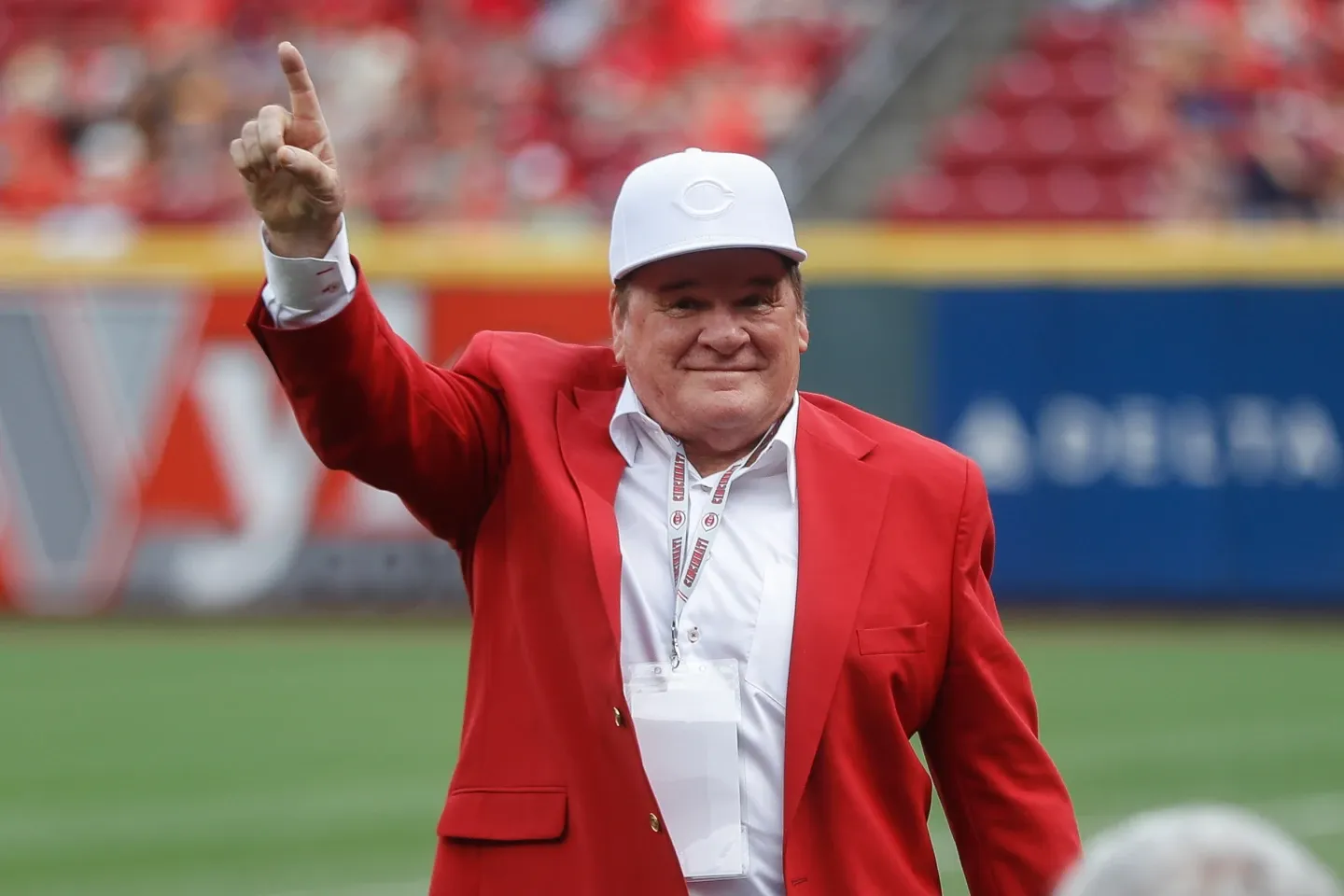
President Donald Trump has announced a posthumous pardon for Pete Rose, the former Major League Baseball star who remains the sport’s all-time leader in career hits. The decision came more than two years after Rose died and roughly a year after Major League Baseball restored his eligibility for Hall of Fame consideration. Trump described Rose as one of baseball’s great figures in a social media announcement, bringing renewed attention to a career that included extraordinary achievements as well as a long-running controversy over gambling. The pardon adds a new chapter to the debate surrounding Rose’s legacy and his place in American baseball history.
Rose finished his playing career with 4,256 hits, a record that has remained one of the most recognised achievements in professional baseball. During his time in the sport, he became a 17-time All-Star, won three National League batting titles and earned major awards, including the league’s Most Valuable Player honour in 1973. He was also named the Most Valuable Player of the 1975 World Series. His aggressive playing style and reputation for determination helped make him a popular figure among baseball fans, particularly in Cincinnati, where he spent much of his career.
His achievements were later overshadowed by an investigation into betting on baseball games involving the Cincinnati Reds. Rose agreed to a permanent ban from Major League Baseball in 1989 after an investigation concluded that he had repeatedly wagered on the team while playing for and managing it. In 1990, he pleaded guilty to filing false tax returns after admitting that he had failed to report hundreds of thousands of dollars in income. He served time in prison, paid a fine and later repaid the Internal Revenue Service. The gambling controversy prevented him from entering the Baseball Hall of Fame during his lifetime.
The presidential pardon follows a separate decision by MLB Commissioner Rob Manfred that restored the eligibility of people on the league’s permanently ineligible list after their deaths. That ruling opened a possible route for Rose to be considered for the Hall of Fame, although any induction would depend on the established selection process. The pardon does not erase the history of the gambling investigation or automatically guarantee him a place among baseball’s honoured figures. Instead, it has renewed discussion about how the sport should recognise a player whose statistics remain exceptional but whose actions damaged the integrity of the game.
