


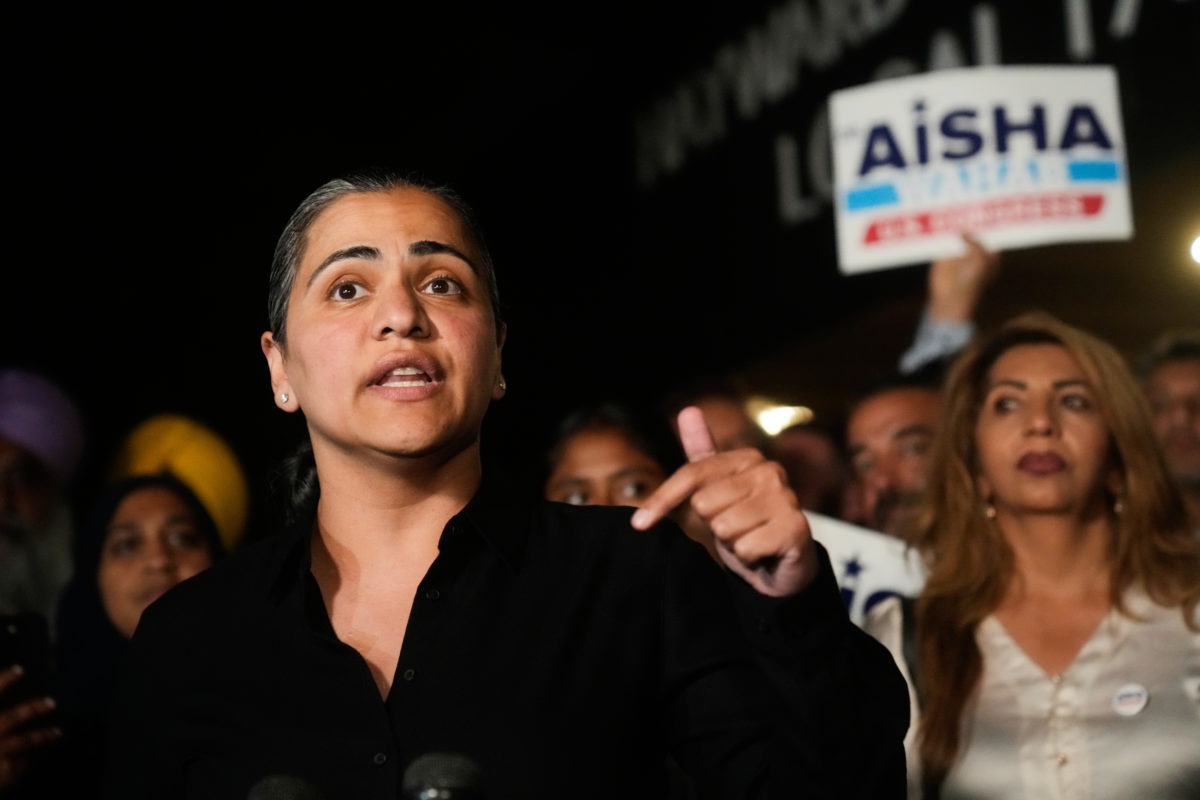
California state Senator Aisha Wahab has won a special election for a seat in the US House of Representatives.
Her victory makes her the first Afghan American elected to Congress. She will represent a district in the Bay Area that includes parts of the region near San Francisco and San Jose.
Wahab defeated fellow Democrat Melissa Hernandez in a closely watched race. With most votes counted, Wahab won more than 53% of the vote, while Hernandez received about 47%.
The election was held to fill the rest of former Representative Eric Swalwell’s term. Swalwell resigned from Congress earlier this year. He has denied allegations of sexual misconduct made against him.
Wahab’s victory carries wider meaning because of her background. She was born in New York to Afghan refugee parents. Her family later moved to California, where she grew up.
Her childhood was marked by major loss. Her father was killed when she was young. Her mother died soon after. Wahab and her sister then entered foster care before being adopted by an Afghan family in California.
Wahab later built a career in public service. In 2022, she won a seat in the California State Senate.
That victory also made history. She became the first Muslim and Afghan American elected to the California Senate.
Her new victory takes that progress to the federal level.
The race also attracted national attention because of outside spending. Groups linked to the pro-Israel lobby spent millions of dollars in the contest.
Much of that money was used to support Hernandez and oppose Wahab. The spending helped make the race much closer than early results had suggested.
Wahab has taken strong positions on the war in Gaza. She has called for an end to US military aid to Israel and has criticized Israel’s military campaign.
Her views made her a target for groups that support stronger US backing for Israel.
Despite the spending against her, Wahab won the election. Her campaign stressed local issues and her personal connection to the district.
She also presented her background as part of her political message. Her path from foster care to the California Senate and now Congress has become a central part of her story.
The special election does not give Wahab a full two year term. She will first serve the remaining months of Swalwell’s term.
She and Hernandez will then face each other again in November. That election will decide who holds the seat for the next full term.
The November contest could therefore become another major political fight in the district.
For now, Wahab has secured an important victory. She has also added a new voice to Congress at a time when debates over immigration, foreign policy and social issues remain intense.
Her win is part of a wider rise in the number of Muslim and Afghan American candidates seeking national office.
The result also highlights changes within the Democratic Party. Wahab is part of its progressive wing and has taken positions that differ from many traditional Democratic lawmakers.
Her campaign showed that those views can still attract strong support in a competitive district.
The amount of outside spending also made the race a test of grassroots political power. Wahab’s campaign argued that voters could not be won simply through large advertising budgets.
Her victory gives that argument more weight.
The election also adds another Afghan American voice to US politics. Wahab’s arrival in Congress is likely to draw attention from Afghan communities across the country.
Her story may also inspire more young people from immigrant families to enter public service.
The immediate focus now moves to Washington. Wahab will take her House seat and begin serving the rest of the current term.
But another campaign is already ahead. The November election will decide whether she remains in Congress for the full term.
For Wahab, Friday’s result is both a personal victory and a historic moment.
Her journey from foster care to elected office has now reached the US Capitol. Her next challenge will be turning that election victory into a lasting political career.
