


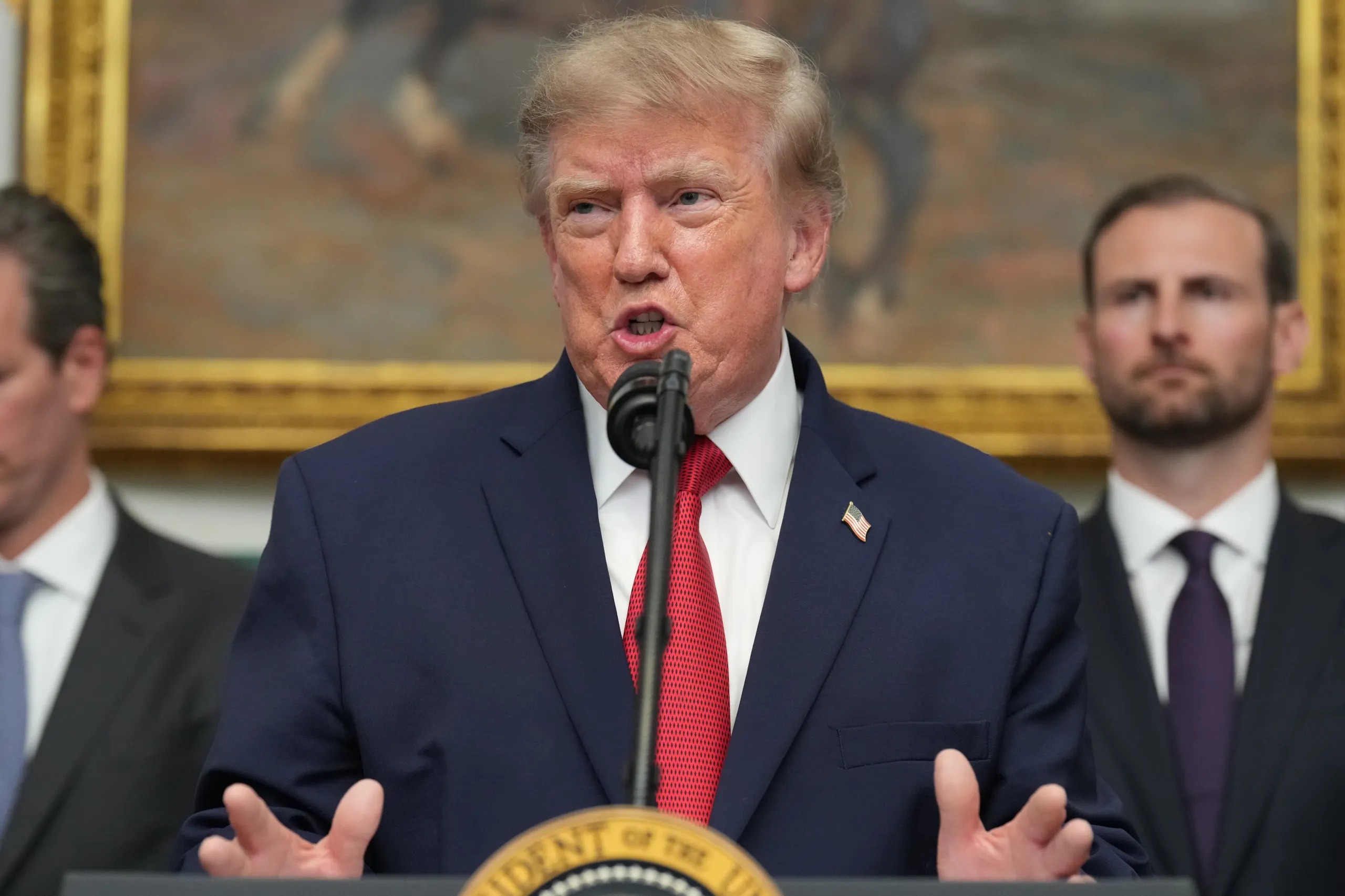
President Donald Trump has announced a temporary plan to ease tariffs on some imported ground beef as the US tries to deal with high food prices.
The plan would allow up to 300,000 metric tons of ground beef to enter the United States under lower tariff rules for 90 days. Trump says the move will help reduce prices for American shoppers.
The plan comes as beef prices remain near record levels. The average price of ground beef reached $6.89 per pound in July, according to data cited in recent reports.
High meat prices have become a major issue for US households. Food costs remain a key concern as the country heads toward the November midterm elections.
Trump said imported beef would be sold at prices about 25% below current market levels. His administration says the move could give consumers some relief at grocery stores.
The plan has also created anger among US cattle producers.
Ranchers say cheaper imported beef could hurt American farmers. They argue that the policy could make it harder for domestic producers to rebuild cattle herds after years of drought and high costs.
The US cattle herd is now at its smallest level in decades. The limited supply has helped push beef prices higher.
Ranchers say the best way to solve the problem is to increase domestic production. They worry that more imports could reduce the incentive for American farmers to raise more cattle.
The administration sees the issue differently. Officials want to bring more beef into the market quickly. They believe more supply can help reduce prices.
The plan is expected to be put into effect through an executive order within two weeks. The exact countries that will supply the extra beef have not yet been fully detailed.
The measure is temporary. It will last for 90 days.
That means it is not designed to solve the deeper problems facing the US cattle market.
The country has faced years of drought in major cattle areas. Dry conditions have made it harder and more costly for ranchers to keep large herds.
The US has also faced problems with imported cattle from Mexico. Those issues have further reduced the supply available to American meat producers.
Some meat plants have also closed as companies deal with high livestock costs.
The result has been a difficult market for both farmers and consumers.
Beef demand remains strong in the United States. But the supply of cattle has fallen. That gap has helped drive prices higher.
Trump’s new plan is aimed at the supply side of that problem.
However, critics say the amount of extra beef is too small to make a major difference. The planned 300,000 metric tons would represent only a small share of total US beef use.
That has led some analysts to question how much prices will actually fall.
The plan has also caused concern among some Republican lawmakers. They argue that helping foreign producers could hurt American ranchers who supported Trump.
The policy is therefore creating an unusual political split.
Trump wants lower food prices for consumers. Ranchers want stronger prices and better conditions for domestic producers.
Both groups are important to the US economy and politics.
The administration has also taken other steps to address the cattle shortage. It has worked to reopen some cattle trade with Mexico and support smaller meat processing plants.
Officials have also looked at competition in the meat industry.
The larger goal is to increase beef supply while keeping prices under control.
For shoppers, the key question is whether the plan will lower prices at stores. That may depend on how quickly imported beef reaches the market and how suppliers price it.
For ranchers, the concern is what happens after the 90-day period ends.
If imports fall again, the supply problem may return. If more cattle are raised in the US, prices could become more stable over time.
The beef plan therefore offers a short term response to a long term supply problem.
Trump’s decision shows how important food prices have become for his administration. It also shows the difficult choices facing the US food market.
Consumers want cheaper beef. Ranchers want stronger support for local production.
The next few months will show whether the temporary tariff relief can lower prices without creating deeper problems for American cattle producers.
