


The US Justice Department has filed criminal charges against 15 activists in Minnesota, accusing them of involvement in what officials described as “antifa” activities connected to protests against federal immigration enforcement operations. The case marks a new escalation in the Trump administration’s crackdown on protest movements linked to resistance against immigration raids.
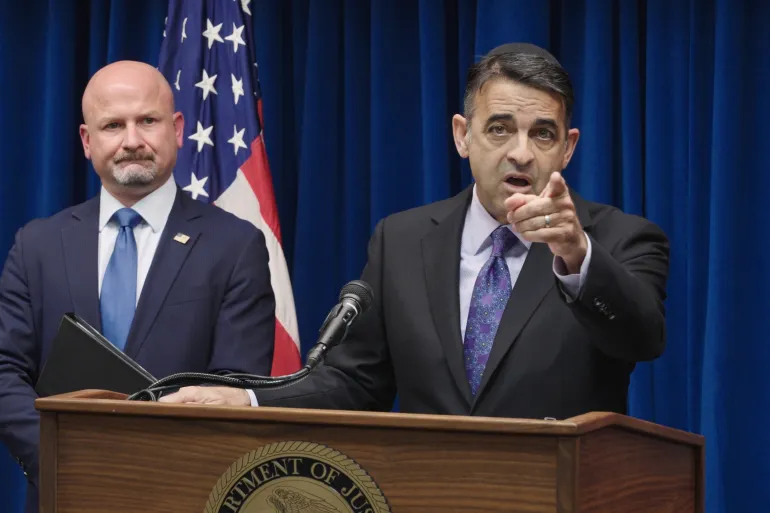
US Attorney Daniel Rosen announced the charges at a news conference, saying the defendants were part of a coordinated effort to obstruct federal law enforcement actions. He said the charges stem from a broader directive from President Donald Trump aimed at countering domestic political violence and what the administration describes as organized extremist activity.
According to prosecutors, the 15 defendants face a range of serious federal charges, including conspiracy to impede or injure federal officers, solicitation to commit violence, interstate threats, interstate stalking, assault on federal agents, and destruction of government property. Officials said 12 of the accused were arrested on Tuesday morning, two remain at large, and one was already in custody.
Authorities linked the defendants to a group called Direct Action Minnesota, formerly known as Twin Cities Direct Action. The group had been active in protesting immigration enforcement operations in Minnesota between December and February. Officials say the protests were aimed at disrupting federal immigration raids and detentions carried out under an operation known as Operation Metro Surge.
The administration’s immigration enforcement campaign in Minnesota has already drawn criticism from state officials and civil rights groups. Critics have accused federal authorities of using excessive force and aggressive tactics, including entering homes without warrants. The operation also became controversial after two US citizens were killed in January during enforcement-related actions, prompting widespread public backlash.
Minnesota Governor Tim Walz criticized the federal government’s approach, calling the crackdown politically motivated and an attempt to intimidate states that oppose the Trump administration’s policies. He said Minnesotans had shown resistance to what he described as authoritarian behavior by federal authorities.
Prosecutors, however, rejected claims that the charges are related to free speech or political expression. US Attorney Rosen said the defendants are not being prosecuted for their views, but for their alleged actions. He stated that the case involves coordination to interfere with lawful immigration enforcement operations through force and organized disruption.
Rosen also said that the charges are based on evidence that the group organized blockades, monitored federal vehicles, and trained protesters in tactics to resist law enforcement activity. He argued that such actions go beyond peaceful protest and fall under criminal conspiracy.
The 94-page indictment also references online statements and organizing efforts attributed to some defendants. One cited example included a social media post suggesting that militant action was necessary for political change. Prosecutors say such communications support their claim that the group coordinated efforts to obstruct federal operations.
However, legal experts and civil rights observers have raised concerns about the broader implications of the case. Some argue that the use of the term “antifa” is politically charged and does not refer to a single organized group, but rather a loose label used to describe various anti-fascist movements. Critics say this raises questions about how the government is defining and prosecuting domestic extremism.
The Trump administration has previously taken steps to classify antifa as a domestic terrorist organization, a move that has been widely debated by legal scholars. Opponents argue that such designations risk criminalizing political dissent and peaceful protest activity.
The Minnesota case is not the first legal action linked to protests against federal immigration enforcement. Earlier indictments were filed against individuals involved in demonstrations at federal facilities, with some cases later dismissed due to insufficient evidence or procedural issues.
Officials say the current prosecution is part of a continued effort to hold accountable those who interfere with federal law enforcement operations. The case is expected to proceed in federal court, where prosecutors will present evidence supporting claims of coordinated illegal activity.
The outcome of the Minnesota antifa charges could have wider implications for how protest activity is treated under federal law, particularly in cases involving immigration enforcement and political demonstrations.
