


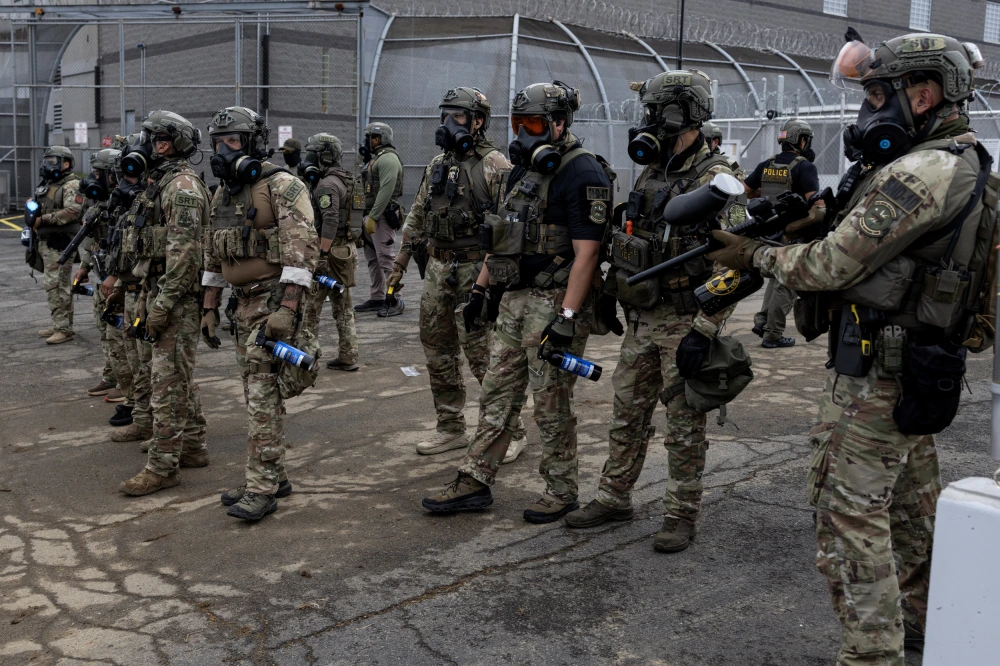
U.S. Immigration and Customs Enforcement (ICE) is moving forward with plans to expand detention capacity through several new facilities across the country.
According to a public solicitation document, the agency intends to sign contracts for detention centers within its Seattle, Philadelphia, Miami, and Denver jurisdictions. Together, the proposed facilities would be able to house approximately 5,500 detainees.
The move represents one of the latest efforts by ICE to increase its detention and enforcement capabilities as immigration remains a major policy focus across the United States.
The proposed expansion comes as federal immigration authorities continue increasing arrests and enforcement operations in several regions.
Officials have argued that additional detention space is needed to manage a growing number of individuals being processed through the immigration system.
The new facilities would significantly increase ICE’s ability to hold detainees while immigration proceedings and other legal processes move forward.
According to the solicitation document, the agency is seeking private or public partners capable of providing detention services that meet federal requirements for housing, security, healthcare, transportation, and administrative operations.
The planned contracts cover four major geographic regions that play important roles in immigration enforcement efforts.
Seattle serves as a key hub for operations in the Pacific Northwest. Denver oversees a large area across the western United States. Miami remains one of the agency’s busiest jurisdictions because of its proximity to international travel routes, while Philadelphia supports operations throughout much of the Northeast.
The combined capacity of 5,500 beds would represent a notable increase in available detention space.
The announcement comes during a period of heightened attention on immigration enforcement practices.
ICE has expanded arrest operations in recent months as part of broader federal efforts to strengthen immigration enforcement and address concerns related to unauthorized migration.
Supporters of expanded detention capacity argue that additional facilities help ensure individuals remain available for court appearances and immigration proceedings.
They also contend that increased capacity can reduce overcrowding at existing facilities and improve operational efficiency.
Critics, however, have raised concerns about the growing use of immigration detention and the conditions within detention centers.
Advocacy groups have frequently called for alternatives to detention, arguing that community-based monitoring programs can be more effective and less costly in some cases.
The proposed expansion is also receiving attention because it follows recent incidents involving ICE officers that generated national discussion.
In recent weeks, two fatal shootings involving ICE personnel have drawn scrutiny from community groups, lawmakers, and legal advocates.
Those incidents prompted renewed questions about enforcement practices, officer training, and accountability measures within federal immigration operations.
While the detention facility proposal is separate from those investigations, the timing has increased public interest in ICE’s broader activities and future plans.
Federal officials have not publicly detailed when the new facilities will open or how quickly the additional detention beds could become available.
The contracting process is expected to involve reviews of potential sites, operational requirements, and compliance standards before final agreements are completed.
Any selected facilities would be required to meet federal detention guidelines and undergo oversight procedures established by the agency.
Immigration policy continues to be one of the most closely watched issues in national politics, with ongoing debates over border security, asylum processing, detention practices, and enforcement priorities.
As those discussions continue, the ICE Detention Expansion Plan signals that the agency is preparing for increased operational demands and seeking additional infrastructure to support its detention network.
The proposal remains in the contracting stage, and further details are expected as ICE moves forward with selecting facilities and finalizing agreements in the coming months.
