


The United Nations refugee agency is continuing discussions with the United States following reports that the Trump administration may end funding for the organization and withdraw from its executive committee.
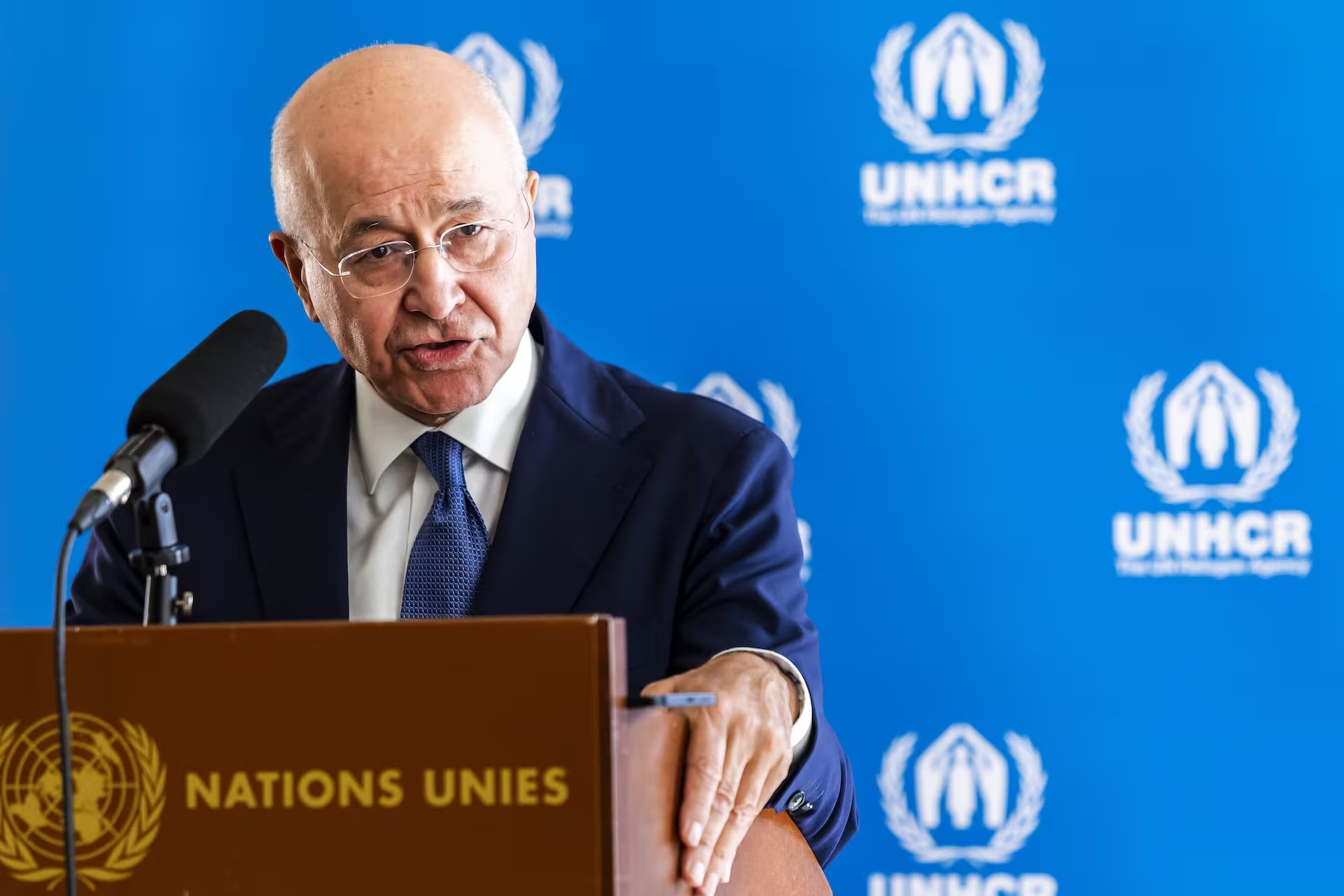
Speaking in Geneva on Wednesday, United Nations High Commissioner for Refugees Barham Salih said the agency remains in contact with American officials as conversations continue over the future of the long-standing partnership.
Salih made the comments after an event marking the 75th anniversary of the 1951 Refugee Convention, a landmark international agreement that outlines the rights of refugees and the responsibilities of countries that offer protection.
“The United States has been a very important, vital partner to UNHCR for decades and that partnership remains as vital as ever,” Salih told reporters during the event.
The remarks came after reports suggested that Washington is considering major changes to its relationship with the refugee agency. According to reports, the administration may eliminate financial support for UNHCR and leave the organization’s executive committee, a move that could have significant consequences for refugee programs around the world.
The United States remains the largest donor to UNHCR. American contributions account for roughly one-fifth of the agency’s overall budget, making Washington the most important source of financial support despite reductions in aid over the past year.
The agency has already faced serious financial pressure following cuts in international assistance. Last year, UNHCR reduced its workforce by approximately 5,000 positions, representing about one-quarter of its employees worldwide. Additional reductions are expected as the organization works to address ongoing budget challenges.
Humanitarian officials have expressed concern that further funding losses could affect the agency’s ability to respond to growing global displacement. The number of people forced to leave their homes because of conflict, violence, and persecution has reached record levels in recent years, increasing demand for humanitarian assistance and protection services.
UNHCR plays a central role in coordinating refugee support across multiple regions. The organization provides shelter, emergency aid, legal assistance, education support, and protection services for millions of displaced people around the world.
Reports indicate that the latest tensions between Washington and the refugee agency may be linked to a leadership appointment within the organization. According to reports, United Nations Secretary-General António Guterres and High Commissioner Barham Salih selected senior American diplomat Tressa Rae Finnerty as deputy high commissioner.
The decision reportedly differed from the preference of the White House, which had supported Simon Hankinson, a policy analyst known for his criticism of aspects of the international asylum system and global refugee policies.
Neither UNHCR nor US officials have publicly indicated that the appointment dispute is the sole reason behind the reported funding discussions. However, the issue has attracted attention because of its potential impact on relations between Washington and the organization.
The reported review of UNHCR funding also comes as the Trump administration reassesses support for several international organizations. Earlier this month, the United States confirmed plans to end funding for the International Labour Organization, the World Health Organization, and the United Nations Educational, Scientific and Cultural Organization, commonly known as UNESCO.
Those decisions reflect a broader examination of US involvement in international institutions and funding commitments. Supporters of the policy argue that financial contributions should align closely with American priorities and interests. Critics warn that funding reductions could weaken international cooperation on major global challenges.
The uncertainty surrounding UNHCR funding has prompted concern among humanitarian groups and refugee advocates. Many organizations rely on cooperation with the agency to deliver services to displaced communities affected by conflict and instability.
For now, UNHCR officials say discussions with the United States remain ongoing. Salih emphasized the importance of maintaining cooperation with Washington and highlighted the long history of support the agency has received from the United States.
As negotiations continue, humanitarian organizations, governments, and refugee communities are closely watching developments. The outcome could shape the future of one of the world’s largest refugee assistance programs and influence international efforts to respond to growing displacement crises in the years ahead.
