


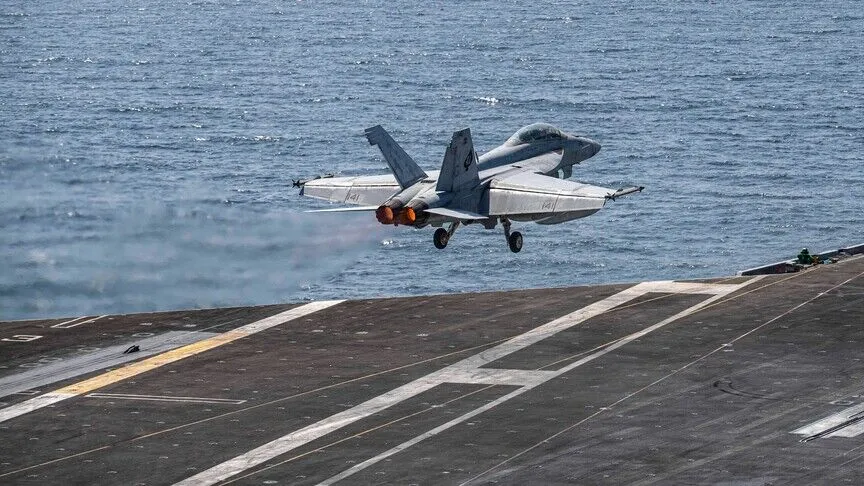
A reported US airstrike near the western Iranian city of Piranshahr has raised fresh concerns about regional stability as tensions between Washington and Tehran remain high.
Iranian state broadcaster IRIB reported on Wednesday that an airstrike targeted an area in West Azerbaijan province, close to the Iraqi border. The broadcaster said the attack was reportedly carried out by the United States.
Officials did not immediately provide details about the exact target of the strike. There were also no immediate reports of casualties, injuries, or significant damage following the incident.
The reported strike occurred near Piranshahr, a city located in northwestern Iran. The area lies close to the border with Iraq and has strategic importance because of its location near regional transportation and security routes.
Neither US officials nor Iranian authorities immediately released additional information confirming the circumstances surrounding the reported attack. As a result, details about the target and the purpose of the operation remained unclear in the hours following the report.
The development comes during a period of continued uncertainty in the Middle East. While major military exchanges have decreased in recent days, tensions between the United States and Iran remain elevated after weeks of confrontation.
A fragile calm has largely held since Friday following a series of military actions and retaliatory responses that increased fears of a wider regional conflict. Analysts have warned that even isolated incidents could quickly raise tensions and complicate ongoing diplomatic efforts.
The latest cycle of hostilities intensified after attacks on tankers in the Strait of Hormuz. Washington blamed Tehran for the incidents, while Iran rejected accusations linking it to the attacks.
Following the escalation, President Donald Trump announced on July 8 that a ceasefire was no longer in effect. The statement marked another turning point in relations between the two countries and increased concerns about further military action.
During the conflict, the United States conducted several operations inside Iran. According to US Central Command, known as CENTCOM, the strikes targeted military infrastructure, missile and drone facilities, coastal surveillance systems, naval assets, and logistical support locations.
US officials said the operations were intended to reduce military capabilities viewed as threats to American interests and regional security. The strikes represented one of the most significant periods of direct military action involving the United States and Iran in recent years.
Iran responded with attacks targeting what it described as American military facilities and equipment located in several Arab countries. Iranian officials said the actions were carried out in response to US operations and were aimed at defending national interests.
The exchange of attacks heightened fears that the conflict could spread across the region. Governments and international organizations repeatedly called for restraint as concerns grew over the potential impact on global energy markets, international shipping routes, and regional stability.
The Strait of Hormuz remained a central focus during the crisis. The waterway is one of the world’s most important energy transit routes, with a significant share of global oil shipments passing through the narrow channel each day.
The latest tensions emerged despite diplomatic efforts aimed at reducing hostilities. In June, Washington and Tehran signed a memorandum of understanding that called for an end to fighting and the start of negotiations on a broader agreement.
The proposed talks were intended to address the conflict that began after Israeli and US attacks launched on February 28. Officials from both sides expressed support for discussions, although major disagreements remained over security issues and future regional policies.
Observers say the reported strike near Piranshahr could place additional pressure on diplomatic efforts if further escalation occurs. At the same time, analysts note that limited information about the incident makes it difficult to assess its broader significance.
Regional governments continue to monitor developments closely as they seek to prevent another round of large-scale military exchanges. International attention remains focused on whether recent diplomatic efforts can withstand new challenges and help maintain stability.
As authorities gather more information about the reported strike, questions remain about its impact on relations between the United States and Iran and whether the fragile calm seen in recent days can continue.
