


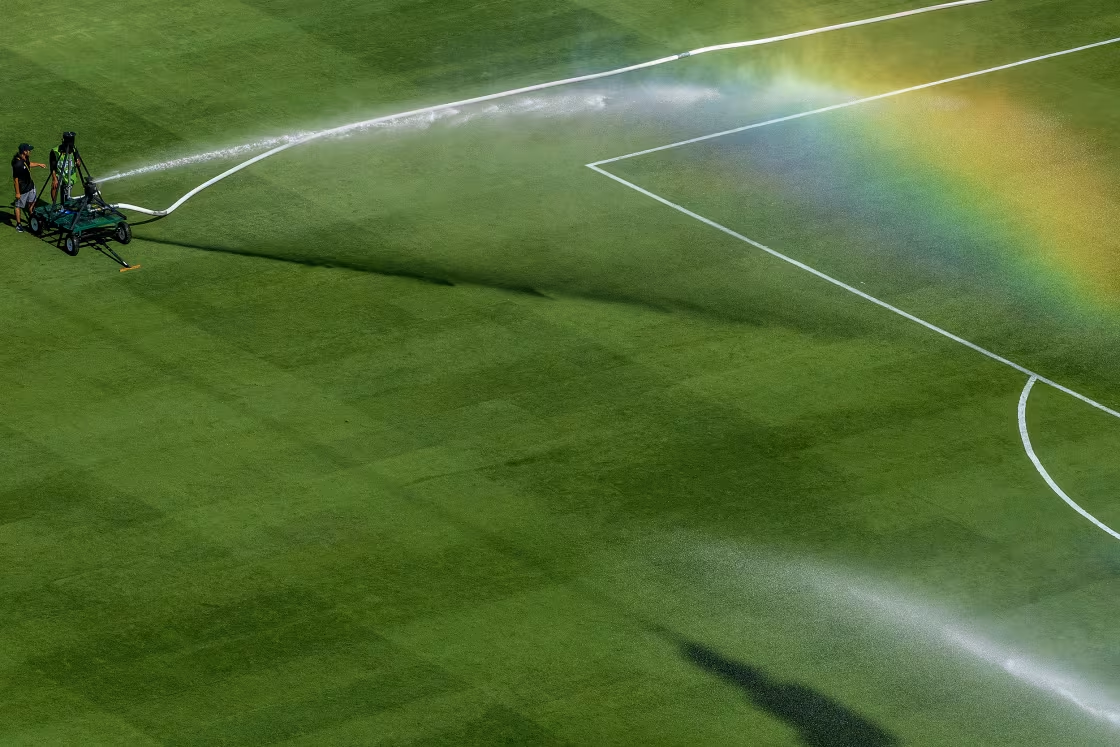
The natural grass fields used for the upcoming World Cup across North America have sparked a fresh debate in American football, with NFL players questioning why their own league continues to rely heavily on artificial turf. The discussion has grown louder as FIFA-required stadium upgrades show what modern, high-quality grass surfaces can look like when fully funded and carefully maintained.
For the tournament, all 16 host stadiums in the United States, Mexico, and Canada were required to install or maintain natural grass surfaces. FIFA set strict standards to ensure consistency, safety, and performance. Years of research and millions of dollars were invested to create fields that meet international competition requirements, even in venues that normally use synthetic turf.
Several NFL stadiums were temporarily converted to natural grass for the tournament, including MetLife Stadium in New Jersey, which will host key matches and the final. The transformation has impressed many NFL players, who regularly compete on the same venues under very different playing conditions during the football season.
New York Giants offensive lineman Jermaine Eluemunor said the difference between grass and turf is clear to players. He explained that natural grass feels better on the body and reduces soreness compared to artificial surfaces. He also noted that many NFL players have long pushed for safer playing conditions but have had limited influence on league-wide decisions.
According to an NFL Players Association survey of more than 1,700 players, around 92 percent prefer natural grass over synthetic turf. Players argue that grass surfaces reduce strain on joints and lower the risk of injuries, especially for those in high-contact positions. Some athletes say the difference can be felt immediately after games, with turf often linked to higher levels of physical discomfort.
Despite this preference, the NFL continues to allow teams to choose their own playing surfaces. The league argues that stadiums must balance multiple uses, including concerts and other events, which makes maintaining natural grass throughout an entire season more complex. League officials also say that all fields must meet specific safety and performance standards regardless of surface type.
FIFA’s approach to the World Cup has highlighted what is possible when resources and planning are fully dedicated to grass fields. Experts involved in the project said the playing surfaces were developed over five years through research partnerships with universities, including Michigan State University and the University of Tennessee. The grass was specially grown, harvested, and transported using advanced methods to ensure quality and durability.
The installation process involved growing turf on controlled surfaces, cutting it into sections, and transporting it in refrigerated trucks to stadiums across three countries. Once installed, the grass was laid over carefully engineered drainage systems designed to maintain stability and performance during heavy use.
Some turf experts believe that similar systems could be used in the NFL with enough investment. However, they also warn that maintaining consistent grass quality across a long, multi-event season would be difficult. Stadiums often host concerts and other non-sporting events, which can damage natural surfaces and require costly repairs or replacements.
NFL officials argue that the league already works closely with players’ representatives to maintain safe playing conditions. They say surface quality is continuously monitored and improved through joint committees and technical standards agreed upon with the players’ union.
However, the NFL Players Association believes the World Cup has proven that high-quality grass fields are achievable in major stadiums. The union has argued that players who compete in these venues deserve the same level of surface quality as international soccer athletes.
The debate has also highlighted differences in how sports leagues approach investment in playing conditions. FIFA fully funded its temporary grass installations for the World Cup, while NFL teams independently decide whether to invest in natural or synthetic surfaces.
Some NFL owners have already moved toward grass-based solutions. The Miami Dolphins, for example, invested in their own sod farm to improve control over field quality at Hard Rock Stadium. The Las Vegas Raiders use a retractable grass field system that can be moved in and out of their stadium depending on events.
International NFL games have also influenced player opinions. Matches held in Europe have exposed players to high-quality grass pitches used by soccer clubs, reinforcing their belief that better playing surfaces are possible in American football as well.
As the World Cup approaches, the contrast between FIFA’s grass-first approach and the NFL’s mixed-surface strategy has become more visible. Players argue that safety and performance should take priority, while the league emphasizes logistical and financial challenges.
The discussion is likely to continue as both sports expand globally and share more stadium infrastructure in the future.
