


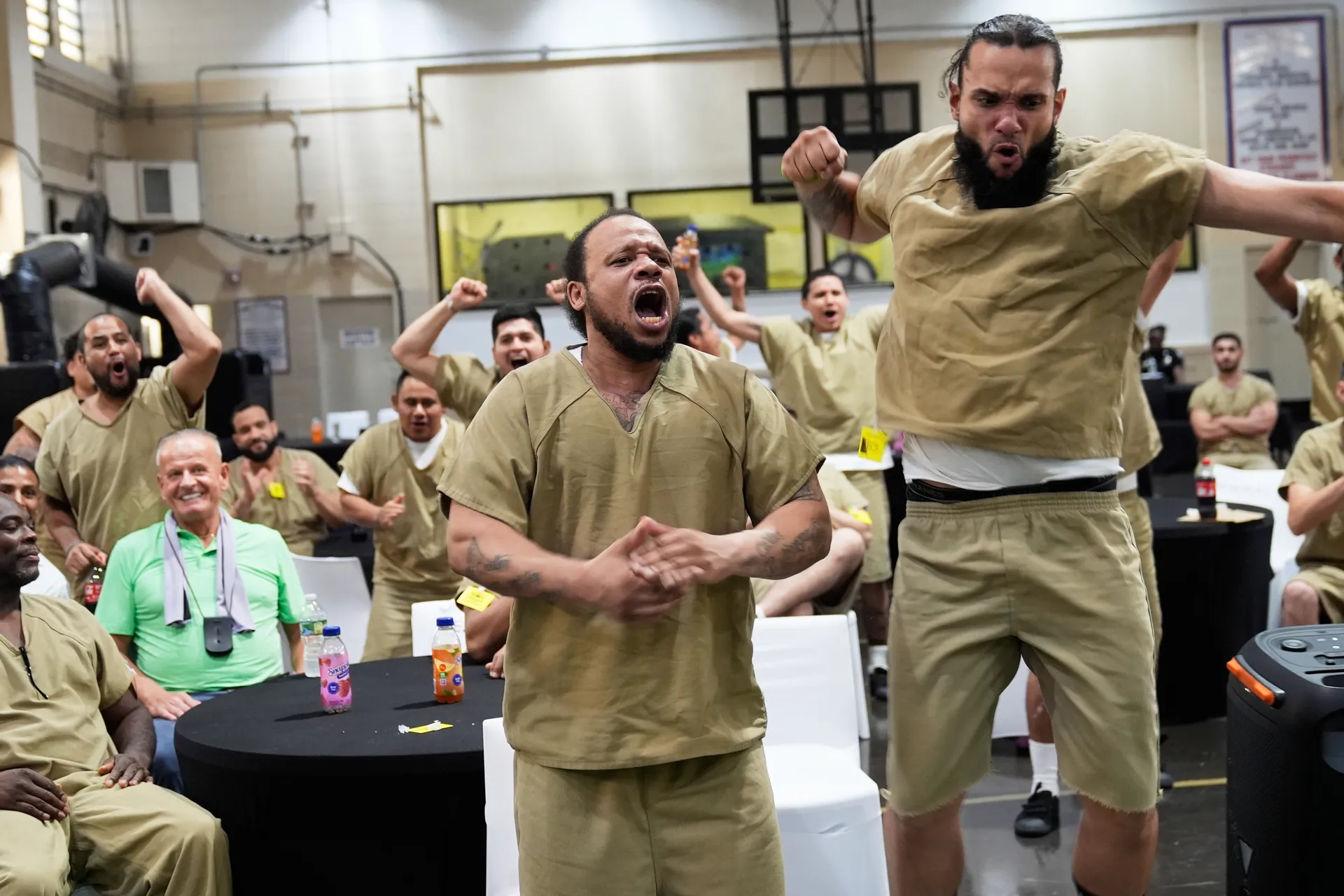
More than 100 inmates at New York City’s Rikers Island jail complex gathered on Wednesday to watch the FIFA World Cup semifinal between England and Argentina as part of a behavior-based incentive program. The special viewing event was organized by correction officials, who said similar activities are designed to encourage positive conduct while improving the overall environment inside the facility.
The event took place inside a gymnasium where a large projection screen was set up for the match. Inmates who qualified through good behavior were invited to attend the watch party, creating an opportunity to enjoy one of the world’s biggest sporting events in a supervised setting.
Correction officials said the World Cup viewing was one of about 90 similar events held since the tournament began last month. According to the city’s Department of Correction, nearly 4,500 of the approximately 6,600 inmates housed at Rikers Island have participated in at least one watch party during the competition.
Officials explained that participation was based on eligibility requirements linked to inmate behavior and institutional safety. The program is intended to encourage positive choices while giving participants access to structured recreational activities.
Stanley Richards, New York City’s correction commissioner, said programs that recognize positive behavior can help create a safer environment within correctional facilities. Richards, who previously served time at Rikers before later becoming commissioner, said activities that acknowledge inmates as individuals can contribute to better relationships between staff and those in custody.
Mayor Zohran Mamdani briefly visited the event and described the World Cup as a moment that has brought communities across New York City together. He noted that many people currently held at Rikers will eventually return to their communities, making rehabilitation and positive engagement important parts of the correctional system.
The World Cup has attracted large audiences throughout New York, with parks, public squares, and community venues hosting free public screenings during the tournament. The viewing event at Rikers reflected an effort to allow eligible inmates to share in the international sporting occasion under controlled conditions.
The atmosphere inside the gymnasium contrasted sharply with the broader challenges that continue to affect the jail complex. Rikers Island has faced years of criticism over safety concerns, overcrowding, staffing shortages, and conditions inside the facility.
In response to those ongoing issues, a federal judge previously appointed an independent official to oversee reforms at the jail. The oversight aims to improve operations and address long-standing concerns about inmate safety and management practices.
This week, the federal monitor submitted a new reform plan that highlighted continuing problems within the correctional system. The report described several serious incidents that raised concerns about security and day-to-day operations.
According to the report, inspectors found one housing unit filled with smoke caused by fires that had been started inside the facility. The report also described alarms sounding throughout the area while inmates struck cell doors during the disturbance.
Another incident outlined in the report involved inmates moving through an unsecured door after a correction officer reportedly left a post unattended. The situation led to a physical altercation involving multiple prisoners.
The report concluded that violence remains a significant challenge at Rikers Island and stated that several basic correctional practices continue to require improvement. It also noted that officials must continue working to address conditions that have been criticized in previous court proceedings.
Despite those concerns, correction officials believe structured programs can play a role in supporting safety inside the jail. Recreational activities, educational opportunities, counseling services, and incentive-based programs are often used in correctional facilities to encourage positive behavior and reduce tension.
Supporters of these initiatives argue that constructive activities help improve daily life inside correctional institutions while preparing inmates for eventual reentry into society. Critics, however, continue to emphasize that broader reforms remain necessary to address the systemic issues affecting the jail complex.
The World Cup viewing event represented one small part of those broader efforts. While the program does not address the larger operational challenges facing Rikers Island, officials hope that activities linked to positive behavior will continue contributing to a safer and more stable environment for both staff and inmates.
