


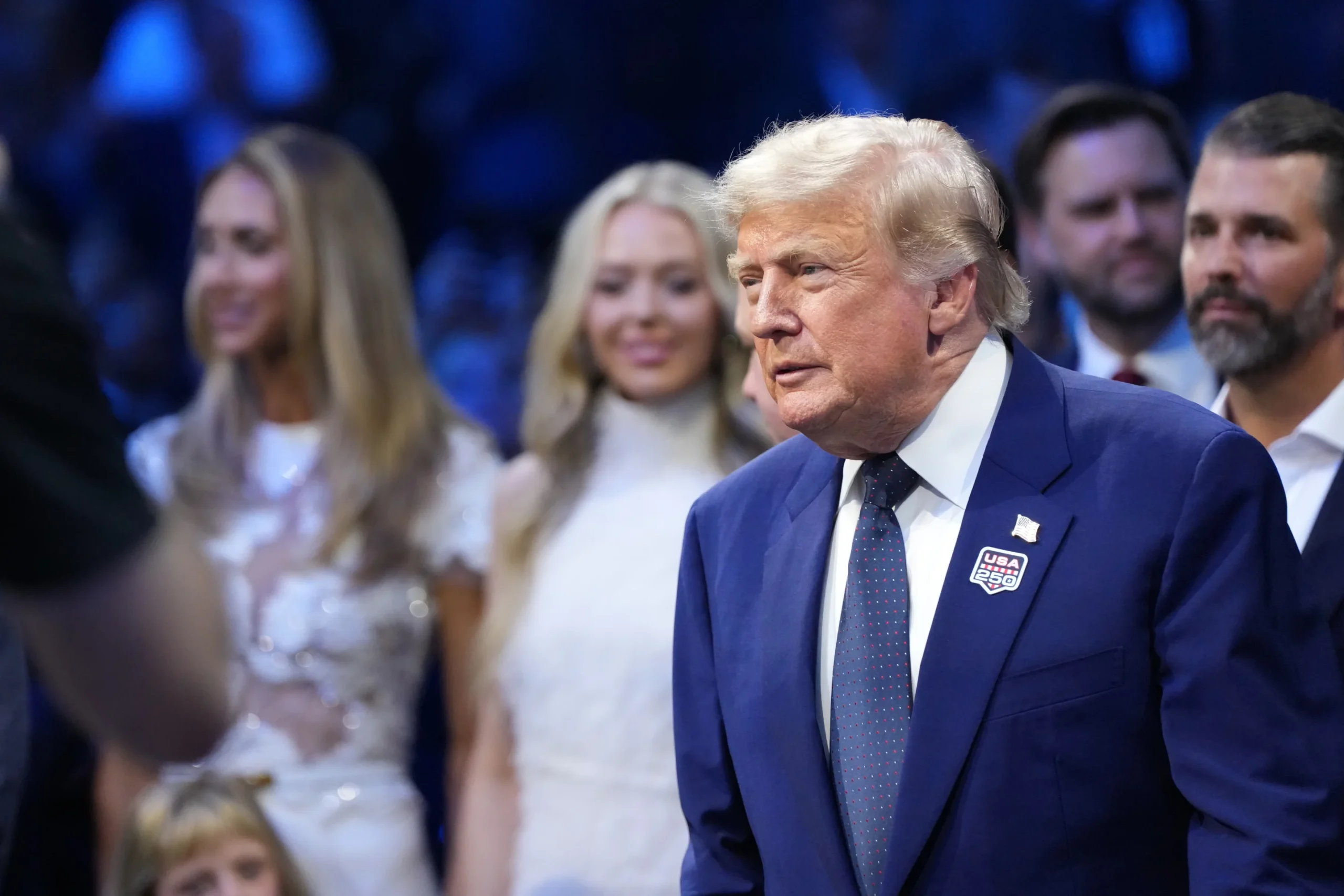
President Donald Trump is heading to France for the G7 summit with renewed political momentum after announcing what he described as a major agreement aimed at ending the US conflict with Iran. The timing of the announcement comes just as world leaders prepare to meet in Évian-les-Bains in the French Alps.
The US president said the deal would mark the end of the war and restore global oil flows through the Strait of Hormuz, a key shipping route that carries a large share of the world’s crude oil. His comments suggested that the United States would begin easing restrictions that had disrupted global energy markets during the conflict.
Trump’s announcement, made on social media, called for shipping to resume operations and for oil transport to restart. He framed the agreement as a turning point, saying it would allow global trade to recover after months of disruption.
However, key details of the agreement remain unclear. Neither the White House nor Iranian officials have released the full text of the deal. Mediators involved in the talks have indicated that additional technical discussions will follow, including a 60-day negotiation phase focused on Iran’s nuclear program.
Iranian officials have also signaled that restrictions on the Strait of Hormuz will remain in place until the agreement is formally signed. This has raised questions about the timing and enforcement of any reopening of the vital waterway.
The announcement is expected to influence the tone of the G7 summit. Trump is arriving at a time when tensions among global leaders remain high over how the US has handled the Iran conflict. Some European allies have previously criticized Washington for limited consultation during the escalation of the war.
The summit, hosted by French President Emmanuel Macron, will bring together leaders from Canada, France, Germany, Italy, Japan, the United Kingdom, and the United States. Several leaders are expected to press for clarity on the Iran agreement and its impact on global security and energy markets.
Macron has also invited additional countries, including Egypt, Qatar, and the United Arab Emirates, to join discussions focused on Middle East stability. Iran is expected to be a central topic during these sessions.
A key issue on the agenda is the long-term security of the Strait of Hormuz. The White House has indicated that discussions may include demining operations in the waterway, which is essential for restoring safe commercial shipping. Britain and France have expressed interest in supporting such efforts.
Shipping activity in the region has been heavily disrupted during the conflict, with many commercial vessels avoiding the area due to security risks. Clearing potential mines and restoring confidence among shipping operators is seen as a critical step toward reopening trade routes.
Trump’s trip also comes amid renewed political tensions with European leaders over trade and tariffs. In comments before departure, he warned that the United States could impose significant tariffs on French wine if France does not remove its digital tax on American technology companies.
Beyond the Iran issue, Trump is expected to hold discussions on other global conflicts, including the ongoing war in Ukraine. Ukrainian President Volodymyr Zelenskyy is also attending the summit and is expected to meet with G7 leaders during a working session.
Trump recently held separate phone calls with both Zelenskyy and Russian President Vladimir Putin ahead of the summit. According to Russian officials, the discussions focused on ending hostilities and exploring possible diplomatic solutions.
On Ukraine, Zelenskyy said he briefed Trump on battlefield developments and expressed optimism about Ukraine’s position. He also confirmed plans for further talks during the G7 meeting.
Meanwhile, questions continue to surround the Iran agreement itself. Critics in the United States have raised concerns about how sanctions relief and economic incentives for Tehran will be structured. Some lawmakers have also questioned how compliance with the deal will be verified and enforced.
Opponents of the agreement argue that previous nuclear deals failed to fully prevent Iran from advancing its nuclear capabilities. Supporters of Trump’s approach say the new framework could bring faster results, but details remain limited.
As Trump arrives in France, the G7 summit is expected to be shaped heavily by the Iran deal announcement. Whether the agreement stabilizes global tensions or raises new political questions will likely become clearer as leaders begin formal discussions in the coming days.
