


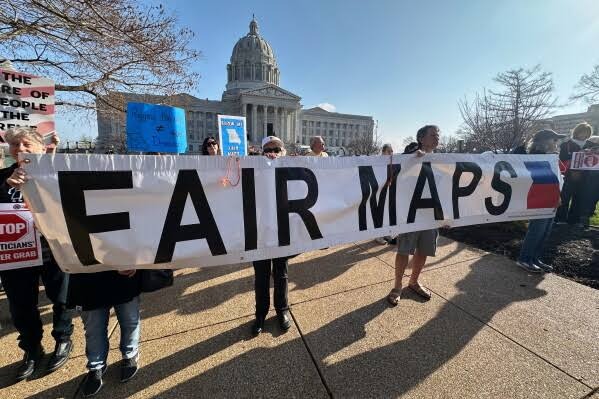
Missouri’s ongoing fight over congressional district boundaries has entered a new and uncertain stage after state and federal courts issued conflicting rulings just weeks before the November election. The legal battle has raised questions about which map will be used by voters and has increased pressure on election officials facing critical deadlines.
The dispute focuses on a Republican-backed redistricting plan that could strengthen the party’s position in the state’s congressional delegation. Political observers say the map could help Republicans gain an additional seat in the U.S. House of Representatives, making the outcome important for both parties.
The latest developments began when Justice Brett Kavanaugh rejected an emergency request from Republicans seeking to block a recent Missouri Supreme Court decision. That ruling had restored older district boundaries and directed that voters be allowed to decide the future of the newer map through a statewide vote.
Kavanaugh’s decision represented a setback for supporters of the Republican-backed plan. As the Supreme Court justice responsible for emergency matters from Missouri’s federal circuit, he reviewed the appeal but declined to intervene. No explanation accompanied the ruling, and the issue was not referred to the full Supreme Court.
Despite that decision, the legal landscape changed almost immediately. Chief U.S. District Judge Stephen Clark issued a temporary restraining order that effectively paused the impact of the state court ruling. His order allowed Missouri officials to continue using the congressional districts that were already in place during the state’s August primary elections.
The federal ruling quickly shifted momentum in favor of Republicans who support the newer map. Because primary contests were conducted under those district lines, supporters argue that keeping the same boundaries for the general election would provide consistency for voters and candidates.
Democratic organizations challenging the map moved swiftly in response. They filed an appeal with the 8th U.S. Circuit Court of Appeals and requested emergency action to stop Clark’s order while the appeal process continues. The groups also sought additional relief from both federal and state courts.
According to Democrats, election confusion has resulted from actions taken by Republican leaders and state officials. They argue that voters should have the chance to weigh in on the redistricting proposal and that the Missouri Supreme Court’s decision should remain in effect.
The conflicting rulings have created a difficult situation for local election administrators. County officials have spent months preparing for different outcomes as the legal fight moved through the courts. Because there was no certainty about which map would ultimately be approved, election offices developed plans for multiple scenarios.
The timing of the court decisions has added to the challenge. The rulings arrived only hours before a major deadline for election officials to make changes to ballots. Final ballot preparation must be completed before voting materials are sent to eligible voters later this month.
Following the federal court order, Missouri Secretary of State Denny Hoskins instructed election officials to proceed with preparations using the district map employed during the August primaries. The directive signaled that state officials intended to follow the federal ruling unless another court issued a different order.
Supporters of the newer map say changing district lines after primary elections have already taken place could create confusion and legal concerns. They argue that candidates campaigned and voters participated based on those boundaries, making a late change difficult to manage.
Judge Clark agreed that the plaintiffs who challenged the state court ruling were likely to succeed on constitutional claims. His decision pointed to concerns involving representation and equal treatment under federal law.
Democrats maintain that the state court acted properly and that election procedures should follow its ruling. They continue to argue that the legal process should allow voters to decide the future of the redistricting plan.
The dispute has also drawn national attention. President Donald Trump publicly criticized the Missouri Supreme Court ruling and voiced support for using the map that was in effect during the primary election. His comments highlighted the broader political significance of the case.
As appeals continue, uncertainty remains over which congressional districts will appear on November ballots. With election deadlines approaching rapidly, candidates, voters, and election officials are waiting for the next court decision that could finally determine the future of Missouri’s congressional map.
