


Kaylub Giamanco had no plan to visit Silver Rail Elementary School on October 15. The 36-year-old carpenter had dropped off his two daughters that morning, then left for a job site near Bend, Oregon. But a change in his lunch plans brought him back near the school just as a teenage gunman began an attack.
Giamanco had packed lunch in his truck but chose to return home to eat leftover tacos with his wife. He considered making a few stops along the way but decided to skip them. As he turned onto Brentwood Avenue, only four blocks from home, he saw someone carrying a long gun near the school.
In an interview with OPB, Giamanco described how a series of small choices placed him at the scene at about 12:58 p.m. He said he noticed the armed teenager, followed him toward the school and later shot and killed him.
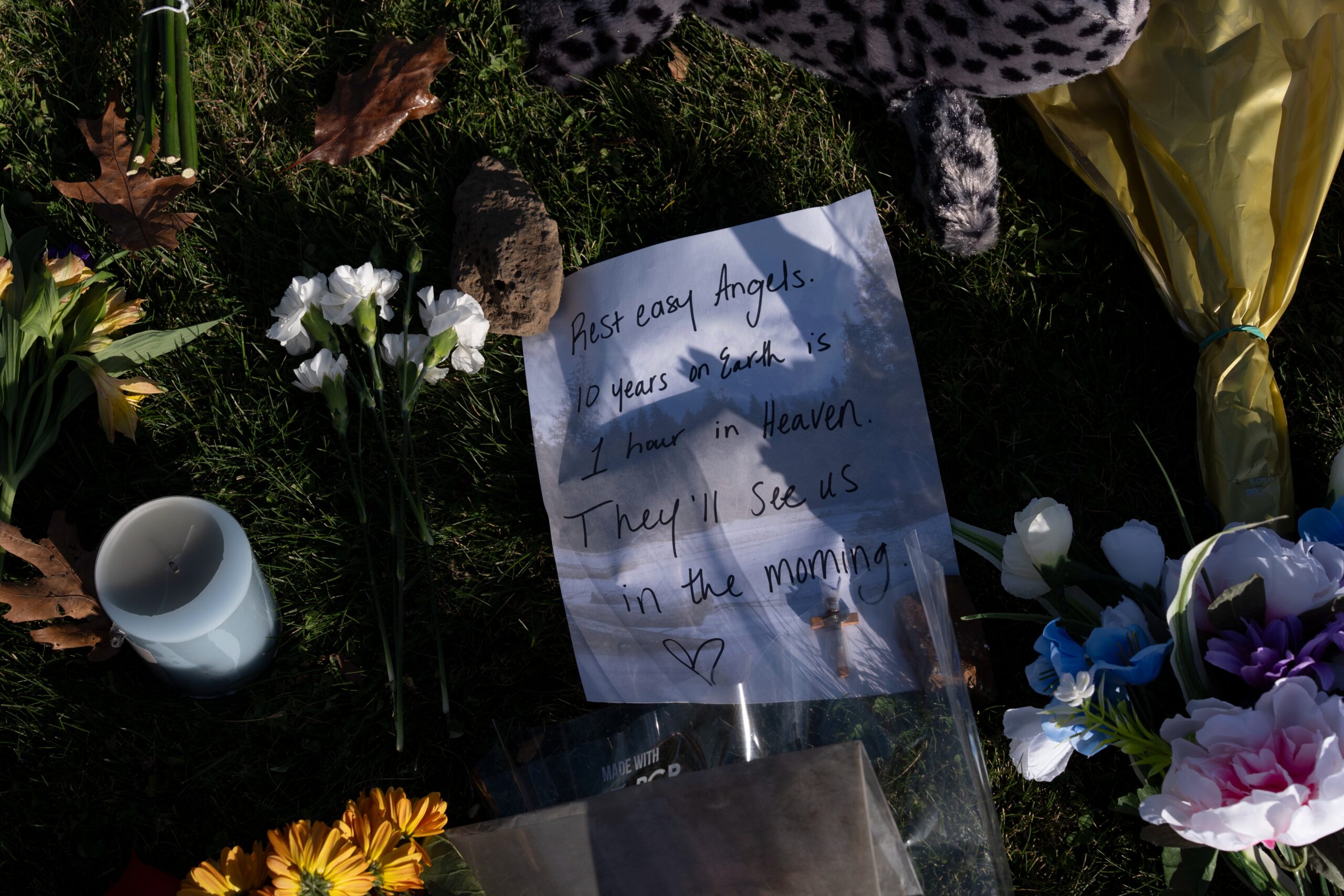
The 16-year-old had fired shotgun rounds into a special education classroom. The attack killed three children, aged 5, 8 and 11, and a 25-year-old teacher. Two other people were seriously injured. Police credited Giamanco’s actions with helping save lives at a school attended by more than 400 children.
A Chance Encounter Turns Into a Rescue
At first, Giamanco thought the armed person might be taking part in a prank or carrying a BB gun. Then he saw the person fire twice at a red pickup truck. The teenager turned toward the school grounds and fired again at a woman mowing the lawn.
When the gunman threw the weapon over the school fence and climbed after it, Giamanco realized the danger was real. He opened the center console of his truck to look for his handgun.
He said he rarely used the .40-caliber pistol and worried for a moment that it might not be there. He found it, retrieved the magazine from another compartment and drove into the school parking lot.
Giamanco watched the gunman cross the grounds and told his phone’s voice assistant to call 911. But he did not remain on the call because he believed children were in immediate danger.
He told the dispatcher he had to go inside because people could die.
Giamanco climbed over the fence and followed the teenager from a distance. He moved along the side of a wallball court, trying to stay out of sight as the gunman reached the school’s glass double doors.
He told OPB that he heard two shots hit the doors. He then ran toward the building and lowered himself to the ground, moving on his hands and knees beside the windows.
As he approached, he heard children pleading for their lives. Gunfire followed. He said he began crawling faster and believed he might not survive what he was about to do.
A Lifetime of Experiences
Giamanco believes events throughout his life helped prepare him for the moment. He grew up as the oldest of seven children and spent years helping his single mother care for the family.
He also recalled a motorbike accident in which he used a makeshift tourniquet to help save his brother’s life. In addition, he had received informal military training from Iraq War veterans.
Those experiences did not mean he expected to face a school shooting. But he believes they helped shape how he reacted when he saw children in danger.
Before the attack, Giamanco described himself as an ordinary carpenter from Bend. He said he had long wanted to make a difference but often felt too small to change the world.
After the shooting, he said he felt a responsibility to use his voice to help make society better. His comments reflected the personal impact of an event that turned an ordinary school day into a tragedy.
A Community Faces the Aftermath
The shooting left families grieving and a community trying to understand how a teenager could attack an elementary school. The victims included three young children and a teacher, while two other people suffered serious injuries.
Giamanco’s actions drew attention because he was a parent passing by rather than a member of law enforcement responding to a call. His decision to enter the school came as the attack was unfolding and as he heard children in danger.
The incident also highlights the split-second choices people may face during a violent emergency. Giamanco had no warning that his route home would bring him into the middle of a school shooting. He had simply changed his plans for lunch.
His account offers a personal view of the events leading up to the confrontation and the fear he felt as he moved toward the building.
For Giamanco, the experience has changed how he sees his role in the community. He has said that if the event gives him a stronger public voice, he intends to use it to encourage change.
The attack at Silver Rail Elementary remains a tragedy for the families who lost loved ones. Giamanco’s account also describes how an ordinary decision to head home placed one parent near the school at a critical moment, when he believed children needed help.
