


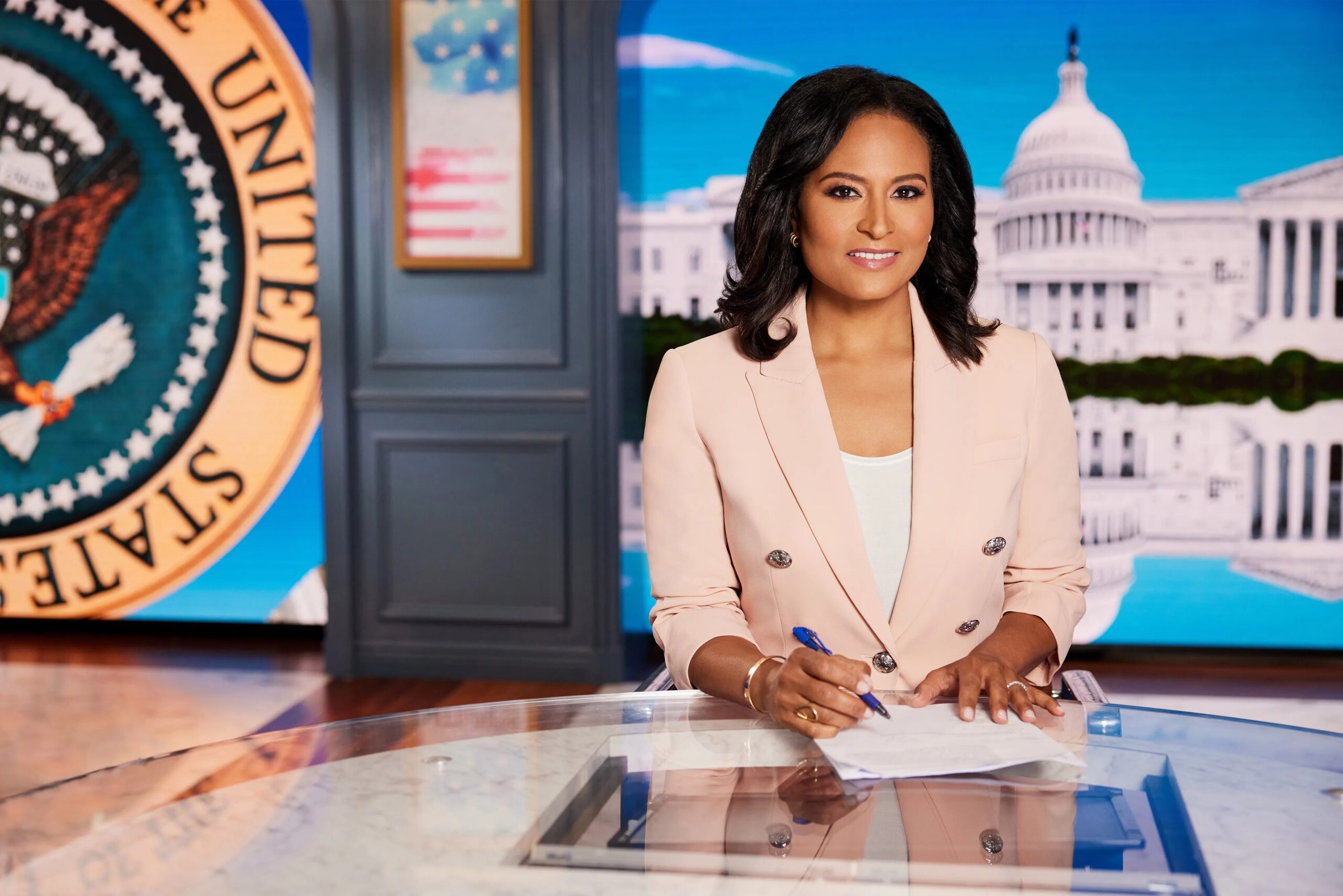
President Donald Trump renewed his criticism of the news media on Sunday, calling for federal action against NBC journalist Kristen Welker over comments he disputed about his political endorsement record.
The latest dispute has placed fresh attention on the relationship between the White House, the Federal Communications Commission, and major media organizations.
In a series of social media posts, Trump argued that Welker had presented inaccurate information during a discussion about his endorsements in political primary races. He claimed her remarks misrepresented the success of candidates he had supported.
Trump said Welker should be reported to the Federal Communications Commission for what he described as a deliberate inaccuracy. He also criticized media coverage of political polling and accused some surveys of being misleading.
The comments marked one of Trump’s strongest public calls for regulatory action against a journalist.
The president focused his criticism on remarks regarding the performance of candidates he endorsed during recent elections. Trump argued that his endorsement record remained highly successful and rejected suggestions that his recent results had been mixed.
His comments followed media reports that highlighted victories by many Trump-backed candidates while also noting losses by several others during recent primary contests.
Welker’s remarks were made while discussing political developments and upcoming programming. The comments reflected reporting that examined both successful and unsuccessful endorsements linked to the president.
The Federal Communications Commission regulates parts of the communications industry, including broadcast television and radio. However, the agency traditionally does not oversee the editorial opinions expressed by journalists or news organizations.
Current and former communications experts have often noted that the commission is limited in its ability to intervene in disputes involving news content and political viewpoints.
The debate intensified because Trump directly referenced the commission and suggested it should respond to what he viewed as unfair reporting.
The FCC has not announced any action related to Welker or NBC.
Brendan Carr, who serves as chair of the commission and was appointed by Trump, did not immediately comment on the president’s remarks.
The issue has also sparked discussion among supporters of press freedom.
Anna Gomez, the commission’s Democratic member, responded publicly to the controversy. She said the FCC does not have authority to punish journalists because of reporting that government officials dislike.
Gomez warned that efforts to pressure news organizations could create concerns about press freedom and the role of independent journalism in a democratic society.
The comments added another chapter to a long-running debate about the relationship between political leaders and the media.
Trump has frequently criticized major news organizations during his political career. He has often accused journalists of unfair coverage and has challenged reporting that he believes misrepresents his policies, actions, or political performance.
At the same time, he has continued to participate in media interviews and public discussions with journalists from a wide range of outlets.
NBC defended Welker following the controversy.
A spokesperson for the network expressed support for the veteran journalist and praised her work. The network stated that it stood behind her reporting and professional record.
The disagreement also drew attention because it centered on a broader debate about election endorsements.
Political endorsements are often viewed as a measure of influence within a political party. Analysts regularly track whether endorsed candidates win or lose in primary races as a way to assess political strength.
Recent election results have produced differing interpretations. Supporters of the president point to numerous victories by Trump-backed candidates, while critics highlight losses in several competitive races.
The discussion expanded beyond television news coverage. Public figures and commentators have also debated Trump’s endorsement record in recent weeks.
The issue resurfaced during a television discussion involving comedian and commentator Bill Maher. Maher later acknowledged that he had overstated aspects of Trump’s endorsement performance after reviewing additional information.
The exchange reflected the wider public debate surrounding political influence and election outcomes.
As the controversy continues, it has once again highlighted tensions between elected leaders, federal regulators, and major media organizations.
For now, the Trump FCC Media Criticism dispute remains focused on questions of press freedom, political accountability, and the limits of government involvement in news reporting. The discussion is likely to continue as both political leaders and media organizations defend their positions in an increasingly polarized public environment.
