


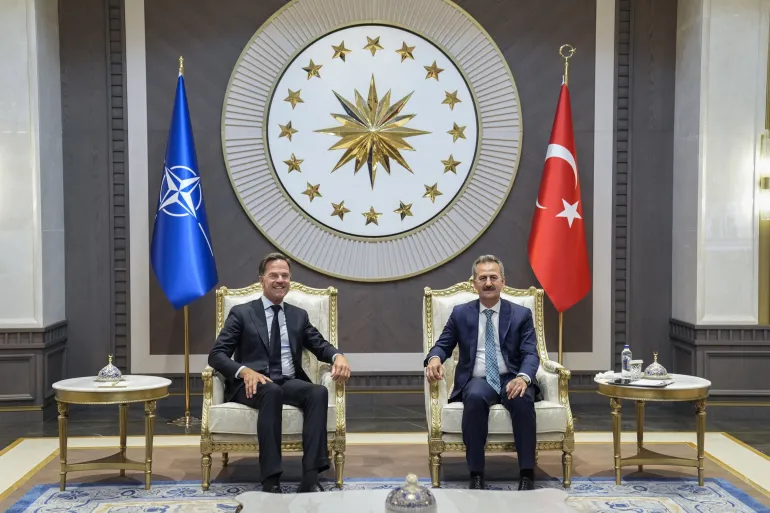
Leaders from the 32 member countries of NATO have gathered in Ankara, Türkiye, for a two-day summit that is expected to shape the alliance’s future security plans. The meeting comes as member states face growing pressure to strengthen their defenses, continue support for Ukraine, and respond to changing global security challenges.
United States President Donald Trump is attending the summit alongside leaders from every NATO member nation. Ukrainian President Volodymyr Zelenskyy and South Korean President Lee Jae-myung are also taking part in meetings even though their countries are not members of the alliance.
Several partner nations are represented by defense or foreign ministers. These include Australia, Japan, New Zealand, Bahrain, Kuwait, Qatar, and the United Arab Emirates. Their participation highlights the growing international interest in NATO’s security discussions.
One of the biggest topics at the summit is defense spending. During last year’s NATO meeting, member countries agreed to raise their long-term defense target to 5 percent of gross domestic product. Under the agreement, 3.5 percent would be spent directly on military forces while another 1.5 percent would support broader security needs by 2035.
This year’s meeting is focused on turning those financial promises into practical military improvements. NATO leaders are discussing how increased funding can strengthen military readiness, improve defense industries, and expand the alliance’s overall capabilities.
Trump has repeatedly argued that European allies should spend more on their own defense. Since his first presidential campaign, he has maintained that the United States has carried too much of the alliance’s financial burden. His administration continues to urge NATO members to accelerate defense investments rather than wait until the agreed deadline.
Many European governments are expected to announce billions of dollars in new military contracts during the summit. These investments are designed to modernize armed forces, increase weapons production, and improve military readiness across the continent.
Defense analysts note that while higher spending is important, building stronger military capabilities takes time. New equipment, advanced technology, and trained personnel cannot be developed overnight. As a result, many of the benefits from today’s investments may not be fully realized for several years.
Support for Ukraine remains another major issue. Although Ukraine is not a NATO member, President Volodymyr Zelenskyy is holding meetings with alliance leaders, including a scheduled discussion with President Trump.
Ukraine continues to request additional military support as Russian attacks on its cities continue. Recent missile and drone strikes have increased pressure on Kyiv to strengthen its air defense systems. Ukrainian officials are expected to seek additional Patriot air defense systems and continued military assistance from NATO countries.
Alliance members believe long-term support for Ukraine remains important for European security. Many leaders are expected to discuss ways to maintain military aid while ensuring Ukraine can defend itself against future attacks.
Another important topic is the future role of the United States within NATO. The U.S. has announced plans to gradually reduce some military assets stationed in Europe, including certain aircraft, naval vessels, and submarines. While American officials say the United States remains committed to NATO, the move has raised questions about how European allies will fill any future capability gaps.
Several leaders have stressed that stronger European defense investments are necessary regardless of future American military deployments. They argue that greater self-reliance will strengthen the alliance while maintaining close cooperation with the United States.
The summit also provides an opportunity for leaders to hold separate bilateral meetings. President Trump is expected to meet Turkish President Recep Tayyip Erdogan as well as Ukrainian President Zelenskyy during his visit to Ankara. These discussions are expected to cover regional security, defense cooperation, and ongoing international conflicts.
Beyond military spending and Ukraine, alliance leaders are also focused on presenting a united front. While member countries sometimes disagree on policy, NATO officials say maintaining unity remains essential as global security challenges continue to grow.
The outcome of the Ankara summit will likely influence NATO’s priorities over the coming years. Decisions on defense investment, military cooperation, and continued support for Ukraine will be closely watched around the world. As leaders complete their meetings, many observers will be looking for signs that the alliance can remain united while adapting to an increasingly complex international security environment.
