


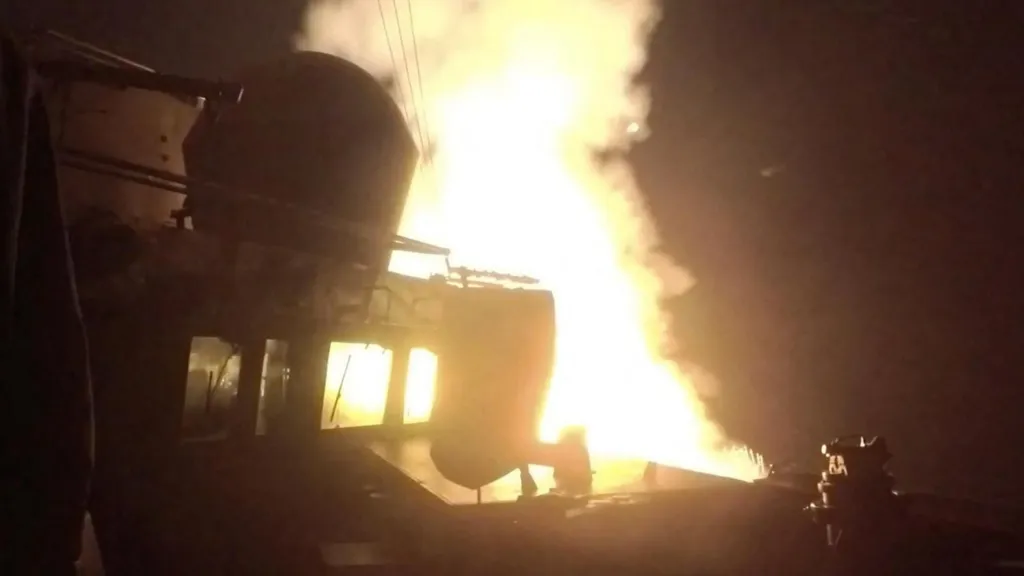
US and Iranian forces exchanged another round of military strikes across the Middle East, increasing tensions and raising fresh concerns about regional stability. The latest attacks came despite a ceasefire agreement reached in April that had reduced large-scale fighting but failed to stop periodic clashes.
US Central Command said it carried out a series of self-defense strikes against military, surveillance, and radar sites in southern Iran. American officials described the operation as a response to ongoing security threats and said the targets were linked to military activities.
The strikes followed strong comments from US President Donald Trump, who said American forces would continue to respond firmly. He also stated that Iranian leaders had taken too long to reach a permanent agreement aimed at ending the conflict.
Iran answered with a new wave of attacks on US military assets across the region. According to Iranian state media, the Islamic Revolutionary Guard Corps launched ballistic missiles toward a US command center in Jordan while additional strikes targeted military bases in Bahrain and Kuwait.
Authorities in Bahrain activated air raid sirens overnight as a safety measure. Kuwait’s military reported that its air defense systems intercepted hostile aerial targets and confirmed that the country temporarily closed its airspace during the attacks.
The latest exchange has increased fears that the conflict could spread further across the Middle East. Regional governments are closely monitoring the situation as military activity continues in several locations.
Iranian state media also reported that two oil tankers passing through the Strait of Hormuz had been hit and claimed the important shipping route was completely closed to all vessels. However, US Central Command said commercial ships were still moving through the waterway and that normal transit operations were continuing.
The uncertainty surrounding one of the world’s most important energy routes quickly affected global markets. Brent crude oil prices climbed to around $95 per barrel after rising by roughly two percent as investors reacted to concerns over possible supply disruptions.
US Defense Secretary Pete Hegseth said Iran had been given opportunities to negotiate but had failed to reach an agreement. He added that American operations would continue against key facilities if necessary.
President Trump also warned that further military action could follow if a lasting peace deal is not secured. His comments signaled that Washington is prepared to maintain pressure while diplomatic efforts remain stalled.
Iranian President Masoud Pezeshkian responded by saying his country would stand firm against pressure and threats. Iran’s foreign ministry also criticized the United States, accusing Washington of sending mixed messages that have damaged diplomatic progress.
The current tensions follow a ceasefire reached in April that was originally intended to last two weeks. Although the agreement reduced major military operations, both sides have continued to exchange limited strikes in the months since, preventing a full return to stability.
Recent efforts to restart negotiations have made little progress, while military incidents have become more frequent. Earlier this week, a US helicopter was brought down in an attack blamed on Iran, leading to additional retaliatory operations across the region.
The growing conflict has drawn international concern. United Nations Secretary General António Guterres warned that the Middle East is moving deeper into crisis and said the existing ceasefire is becoming increasingly fragile.
He urged all sides to pursue diplomacy instead of further military action, stressing that continued attacks increase the risk of a wider conflict that could affect regional security, global energy markets, and international stability.
