


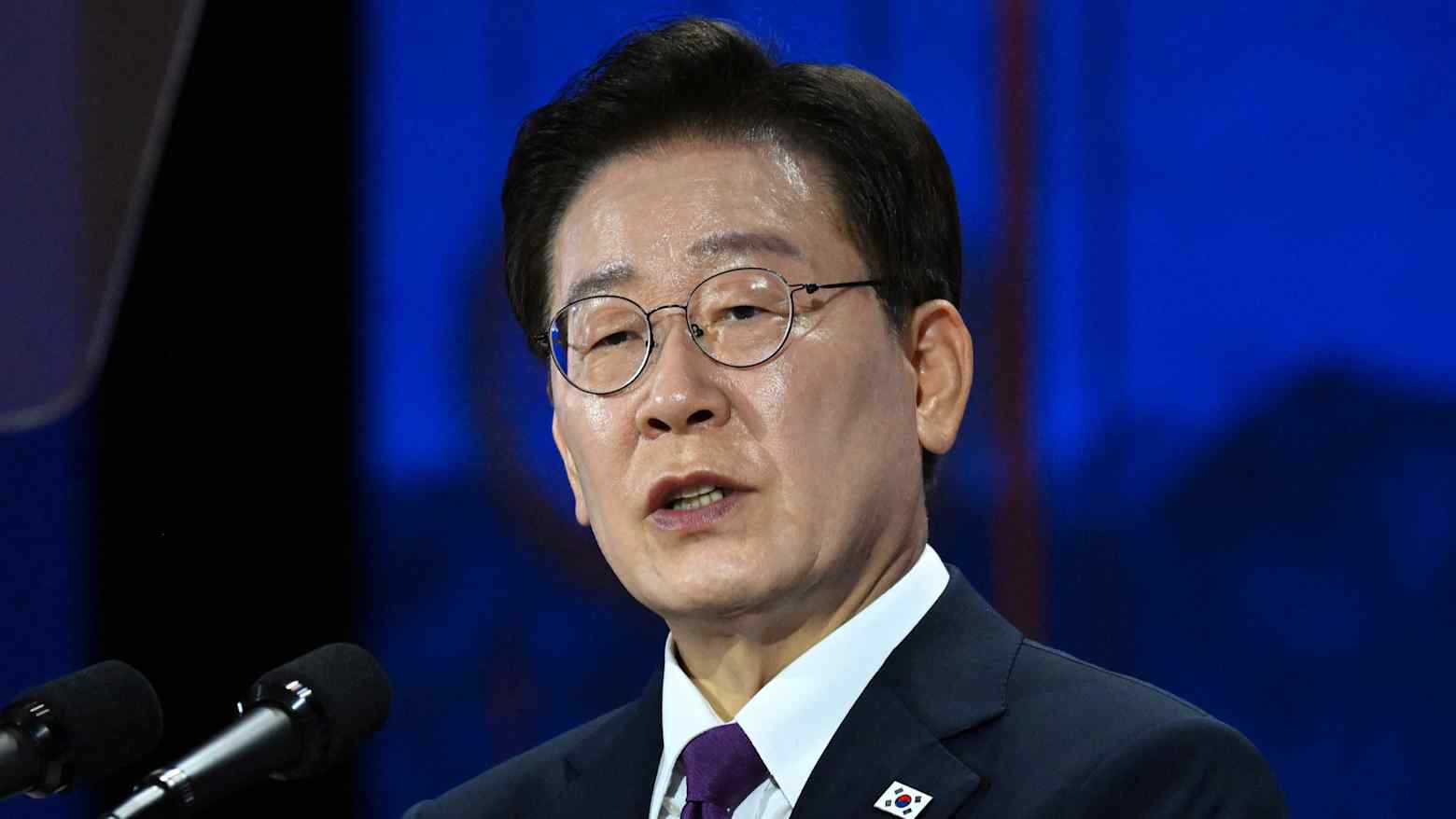
South Korean President Lee Jae Myung has brought together global artificial intelligence leaders and major business executives at the South Korea AI Summit in San Francisco. The event focused on expanding AI cooperation and strengthening South Korea’s role in the global technology industry.
President Lee said South Korea aims to help lead a new era of artificial intelligence through partnerships with global technology companies. He highlighted the country’s growing AI ecosystem and said it could support wider use of industrial and personal AI systems around the world.
Before the summit, Lee held separate meetings with leaders from some of the world’s top AI and technology companies. Discussions included Nvidia CEO Jensen Huang, OpenAI CEO Sam Altman, Anthropic CEO Dario Amodei, and Broadcom CEO Hock Tan.
Several of South Korea’s top business leaders also attended the event. Samsung Electronics Executive Chairman Jay Y. Lee, SK Group Chairman Chey Tae-won, Hyundai Motor Group Executive Chair Euisun Chung, and Naver founder Lee Hae-jin joined discussions on the future of AI technology.
During the summit, President Lee introduced the San Francisco AI Declaration. The plan outlined South Korea’s goals for AI development and called for stronger technology cooperation between South Korea and the United States.
Lee said international cooperation would be important to building the next stage of AI development. He presented South Korea as a key partner in creating new AI systems and expanding access to advanced technology.
The summit comes as global demand for AI chips and computing power continues to grow. Technology companies are looking for stronger supply chains as they develop more powerful AI models. South Korea’s semiconductor industry has become increasingly important because of its leadership in memory chip production.
About 150 executives, investors, researchers, and startup founders attended the gathering, according to South Korean officials. The event showed Seoul’s effort to attract international investment and build stronger links with leading technology companies.
One of the biggest announcements came from Nvidia and SK Group. The companies revealed a plan worth more than $500 billion focused on large-scale AI data centers and next-generation memory technology.
Under the agreement, SK Telecom plans to build a 2-gigawatt AI data center. The facility will use Nvidia’s Vera Rubin chips and SK Hynix’s HBM4 high-bandwidth memory chips. The center is expected to begin operations in 2027.
SK Group Chairman Chey Tae-won said AI companies are demanding much more memory than previously expected. He pointed to discussions with Nvidia, Anthropic, OpenAI, and Broadcom as evidence of rising demand for advanced computing resources.
Chey said future memory needs could become even larger than current estimates. He suggested that AI companies may continue increasing their demand as they build more advanced systems and expand their services.
Anthropic CEO Dario Amodei also announced that the company has signed supply agreements with Samsung Electronics and SK Hynix. He did not provide additional details but highlighted the importance of reliable chip supplies for AI development.
The demand for AI computing has increased as companies compete to create more advanced models. Anthropic’s Claude AI system has gained attention, and the company is exploring ways to strengthen its computing resources.
Reports have suggested that Anthropic may consider developing its own chips in the future. The company said it continues to explore different technology options and uses a variety of chips to support its AI systems.
Earlier this year, Anthropic raised funding at a valuation of $965 billion. The company identified Samsung Electronics, SK Hynix, and Micron as important technology partners because of their role in producing memory, storage, and logic chips.
South Korea’s AI push is also connected to a wider industrial strategy. Last month, President Lee announced major government-backed projects focused on semiconductor production, physical AI systems, and AI data centers.
The projects involve more than $576 billion in planned investment and are designed to make South Korea a central part of the global AI supply chain.
President Lee is also expected to meet with US venture capital firms in Silicon Valley to encourage investment in South Korean startups. The effort reflects Seoul’s goal of attracting global funding and technology partnerships.
The South Korea AI Summit highlights the growing competition among countries to lead the next generation of artificial intelligence. With major investments in chips, data centers, and research, South Korea is positioning itself as a major player in the future AI economy.
