


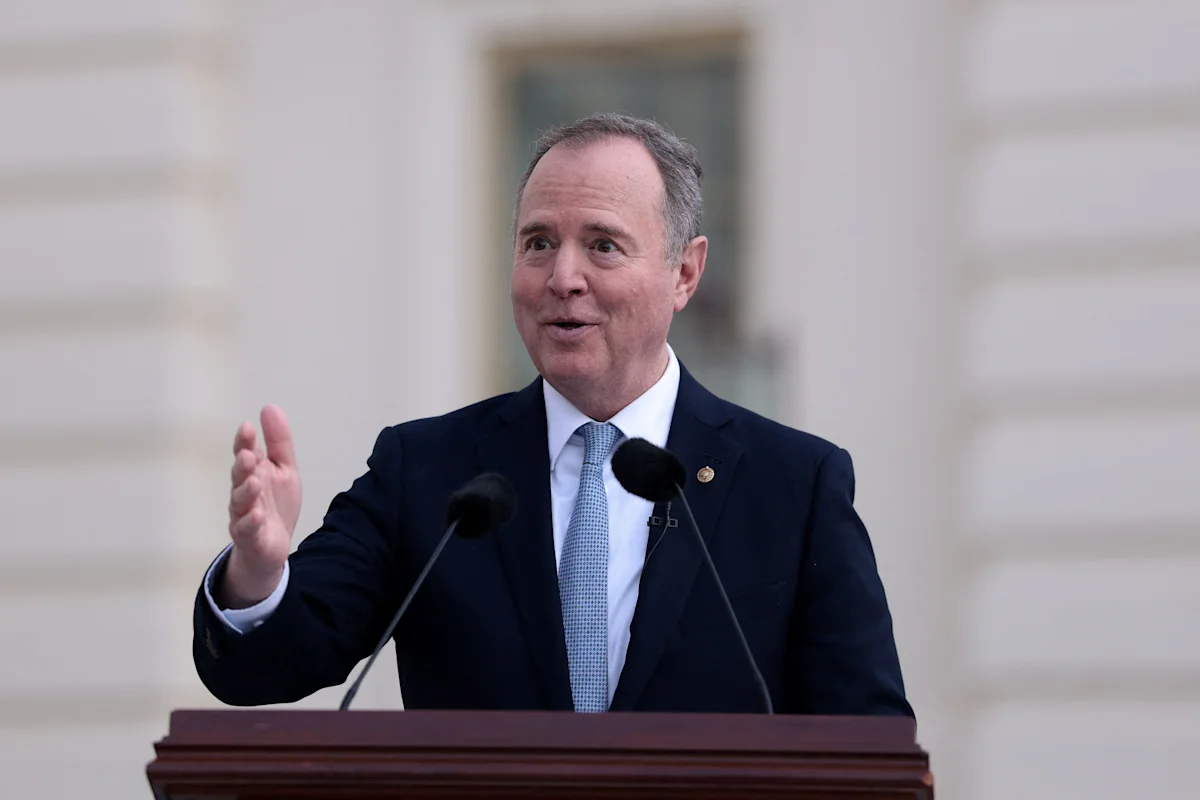
US Senator Adam Schiff has introduced new legislative efforts aimed at blocking what he calls a controversial Trump administration funding mechanism known as the “anti-weaponization fund.” The proposal is expected to intensify political tensions in Washington over government payouts and legal settlements.
Sen. Adam Schiff Adam Schiff is pushing two separate bills designed to restrict how the fund operates and who can benefit from it. The initiative focuses on limiting the use of taxpayer-backed legal settlement payments linked to lawsuits involving senior government officials.
The dispute centers on a reported $1.8 billion allocation described by critics as the “anti-weaponization fund,” which is intended to cover legal claims and settlements involving government actions. Schiff and other Democrats argue the structure could create conflicts of interest and allow improper financial benefits.
One of the proposed bills would block payouts made through the congressionally approved Judgment Fund when lawsuits are filed by the president or vice president. The measure would apply retroactively to January 2025, expanding its scope to cover recent and ongoing cases.
The second bill seeks to expand restrictions further by preventing payments from the fund to a wide group of officials and political actors. This includes the president, vice president, members of Congress, congressional staff, political appointees, senior executive branch officials, and campaign employees.
The proposals are expected to be formally introduced in Congress next week. Lawmakers could also attempt to attach the measures as amendments to a broader Republican-backed immigration enforcement bill, according to people familiar with the strategy.
The White House and Republican leaders have not yet issued detailed responses to the proposed legislation. However, the issue is already shaping up to be another point of conflict between Democrats and Republicans over government spending and accountability.
Schiff has strongly criticised the fund, describing it as a potential vehicle for self-dealing and misuse of public money. He has argued that stronger safeguards are needed to prevent political figures from benefiting financially from legal disputes involving the government.
He warned that without tighter rules, the system could be abused in ways that undermine public trust. His comments reflect broader Democratic concerns about transparency in how federal compensation systems are managed.
Supporters of the proposal say it aims to protect taxpayers and ensure that government funds are not used in politically sensitive or self-serving cases. They argue that clearer restrictions would strengthen accountability in federal financial decisions.
Critics, however, are expected to argue that the measures could limit legitimate legal settlements and interfere with established compensation systems used by the federal government.
The debate highlights ongoing divisions in Congress over how to regulate government payouts and manage legal risks involving top officials. It also reflects broader tensions around executive authority and congressional oversight.
If advanced, the bills could become part of a larger legislative fight over immigration enforcement and federal spending priorities. Lawmakers on both sides are preparing for further negotiations and amendments in the coming weeks.
The outcome of the proposal will depend on congressional support, where partisan divisions remain strong and consensus on financial oversight issues is limited.
For now, the debate over the so-called anti-weaponization fund is expected to remain a key political flashpoint as lawmakers continue to clash over accountability, funding, and executive power in Washington.
