


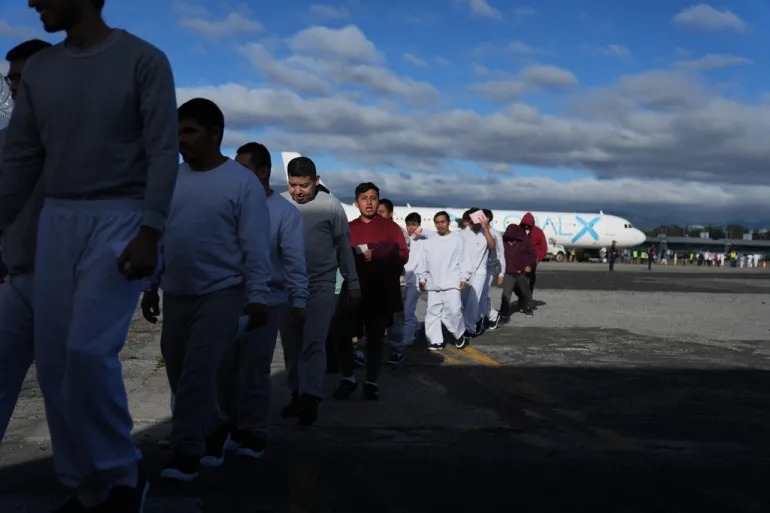
The United States has deported nearly 2,300 Mexican migrants to Guatemala, despite objections from the Mexican government. The move is part of a wider US effort to send migrants to countries other than their own.
The Trump administration has made mass deportation a key part of its immigration policy. The latest action shows that the policy is also reaching people who are not citizens of the country receiving them.
The migrants were sent to Guatemala after being removed from the United States. Their transfer has raised new questions about the use of third countries in US deportation plans.
Mexico has objected to the move. The Mexican government has long pushed for its citizens to be returned to Mexico when the US removes them from its territory.
Sending Mexican citizens to Guatemala changes that process.
The US says third country deportations can help it carry out its immigration policy. The approach can also reduce the number of people returned directly to countries such as Mexico.
The Trump administration has promised the largest deportation drive in US history. It has increased efforts to find and remove migrants who are in the US without legal status.
The use of Guatemala adds another part to that plan.
Guatemala has already become an important partner in US migration policy. The country has accepted people removed from the United States who are not Guatemalan citizens.
The latest move shows how that role can expand.
For migrants, being sent to a country they may not know can create major problems. They may have no family, home or work there. They may also face legal and travel problems after arrival.
For Mexico, the case raises a separate concern. Mexican officials want control over the return of their own citizens. A third country transfer can make that process more complex.
The move also comes as the US seeks to make deportation faster and wider. Trump has placed immigration at the center of his second term. His administration has used detention, removal flights and new deals with other countries to increase the number of deportations.
The use of third countries is not new in US immigration policy. But the scale of the current effort has drawn more attention.
The US has faced a major challenge in removing migrants to their home countries. Some nations may not quickly accept large numbers of people. Others may lack the systems needed to receive them.
Third country deals can give US officials another way to carry out removals.
But they can also lead to disputes with governments whose citizens are moved elsewhere.
The Mexican case could add to pressure on relations between Washington and Mexico City. The two countries share a long border and work closely on trade, security and migration.
Migration has often been a source of tension between them. Trump has pushed Mexico to do more to stop people from reaching the US border. Mexico has also sought to protect its citizens and manage the return of migrants.
The new deportation move adds another issue to those talks.
It is not yet clear how long the migrants will remain in Guatemala or what will happen to them after arrival. Their final status may depend on talks between the countries involved.
The case also raises wider questions about the rights of deported migrants. Sending people to a country where they have no clear ties can affect their access to work, housing and legal help.
For the US government, however, the policy is part of a clear goal. Officials want to remove more migrants and make it harder for people without legal status to remain in the country.
The transfer of nearly 2,300 Mexicans to Guatemala shows how far that policy is reaching.
It also shows that US deportation policy is no longer focused only on sending migrants back to their home nations. Third country transfers are becoming a larger part of the system.
That shift could bring more talks and more disputes with other governments. Mexico’s objection may be an early sign of the problems that could follow as the US expands the policy.
