


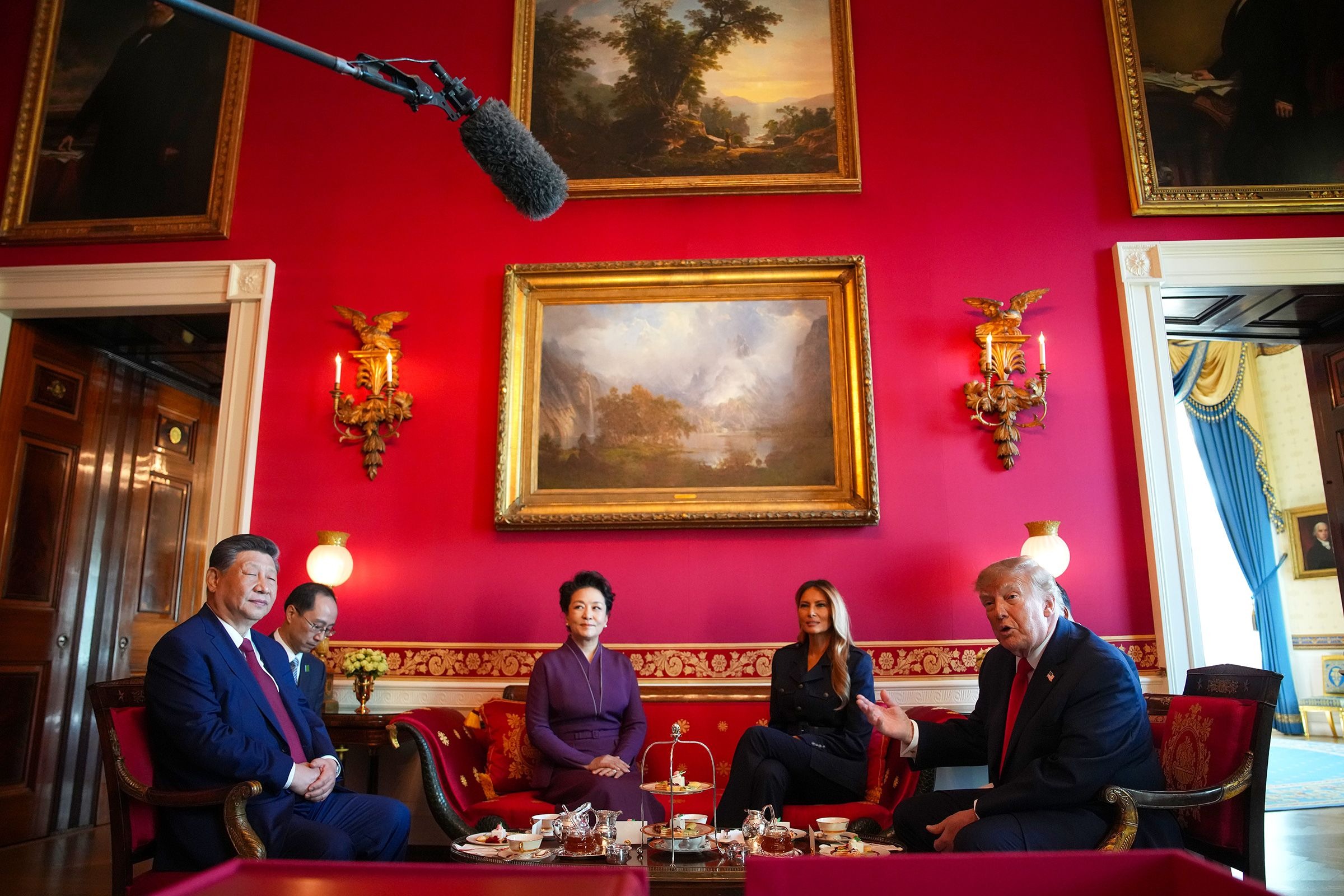
President Donald Trump’s state visit with Chinese President Xi Jinping drew attention this week for both its diplomatic symbolism and a dispute over media access that affected coverage of the event.
The visit marked the first formal state visit by a Chinese leader to the United States in more than a decade. The White House organized several ceremonial events designed to highlight relations between the world’s two largest economies and showcase the importance of the summit.
Trump spent months preparing for Xi’s arrival. The visit included military ceremonies, formal receptions, a state dinner and appearances at some of Washington’s most historic locations. The White House also arranged special events intended to demonstrate the significance of the occasion.
However, a dispute involving media access became a major talking point during the summit. The controversy followed the administration’s decision to restrict access for several news organizations, including CNN, Politico and MS NOW.
The move affected television pool coverage during the first day of Xi’s visit. Pool coverage is a system used by news organizations to share video and reporting from events where space is limited. Because of the dispute, television coverage from some parts of the visit was significantly reduced.
The situation created concern among officials and observers who viewed media exposure as an important part of the summit. Public appearances by world leaders are often carefully planned because they allow governments to communicate messages to domestic and international audiences.
Chinese officials have traditionally placed strong emphasis on media coverage during overseas visits. Diplomatic events involving Chinese leaders are often designed to highlight China’s global role and international relationships.
According to reports, representatives from the Chinese Embassy contacted several American television networks to discuss how the media restrictions could affect coverage of the summit. Chinese officials were said to be concerned that fewer images and broadcasts would reach audiences in the United States.
Wu Xinbo, an adviser to China’s foreign ministry, described the limited television coverage as unfortunate. He said broader public exposure could have contributed to a more positive atmosphere in relations between the two countries.
The White House defended its handling of media access. Communications Director Steven Cheung said television networks had opportunities to cover the visit and argued that other media outlets and digital platforms helped distribute information to the public.
Administration officials also pointed to online broadcasts and alternative forms of media coverage that attracted large audiences during the summit.
The television pool resumed operations on Friday after CNN’s access to the White House was restored. That allowed networks to broadcast several events involving Trump and Xi, including a tea meeting at the White House and a visit to the National Archives.
Despite the controversy, the summit continued with a series of high-profile events. Trump and Xi participated in ceremonial activities, diplomatic meetings and public appearances throughout the visit.
Observers noted that the summit placed a strong focus on symbolism and public presentation. While discussions covered a range of issues, expectations for major policy breakthroughs were relatively limited before the visit began.
Foreign policy experts said both governments appeared focused on maintaining stable relations ahead of important political and economic developments. The visit also provided an opportunity for both leaders to demonstrate continued engagement between their countries.
Trump praised his earlier trip to Beijing and sought to provide a similarly high-profile welcome for Xi in Washington. The state visit included military honors, official receptions and a formal dinner attended by business leaders and invited guests.
The media dispute, however, remained part of the conversation throughout the week. Some analysts argued that the controversy distracted attention from the broader goals of the summit and reduced focus on the diplomatic message both sides hoped to present.
Others noted that public events involving world leaders often depend on extensive media coverage to reach audiences around the globe.
As the visit concluded, attention shifted back to the relationship between the United States and China. While the summit produced extensive discussion about diplomacy and international relations, debate over media access became one of the most widely discussed aspects of the event.
The Trump Xi state visit ultimately combined high-level diplomacy, ceremonial events and a public debate over press access, making it one of the most closely watched international meetings of the year.
