


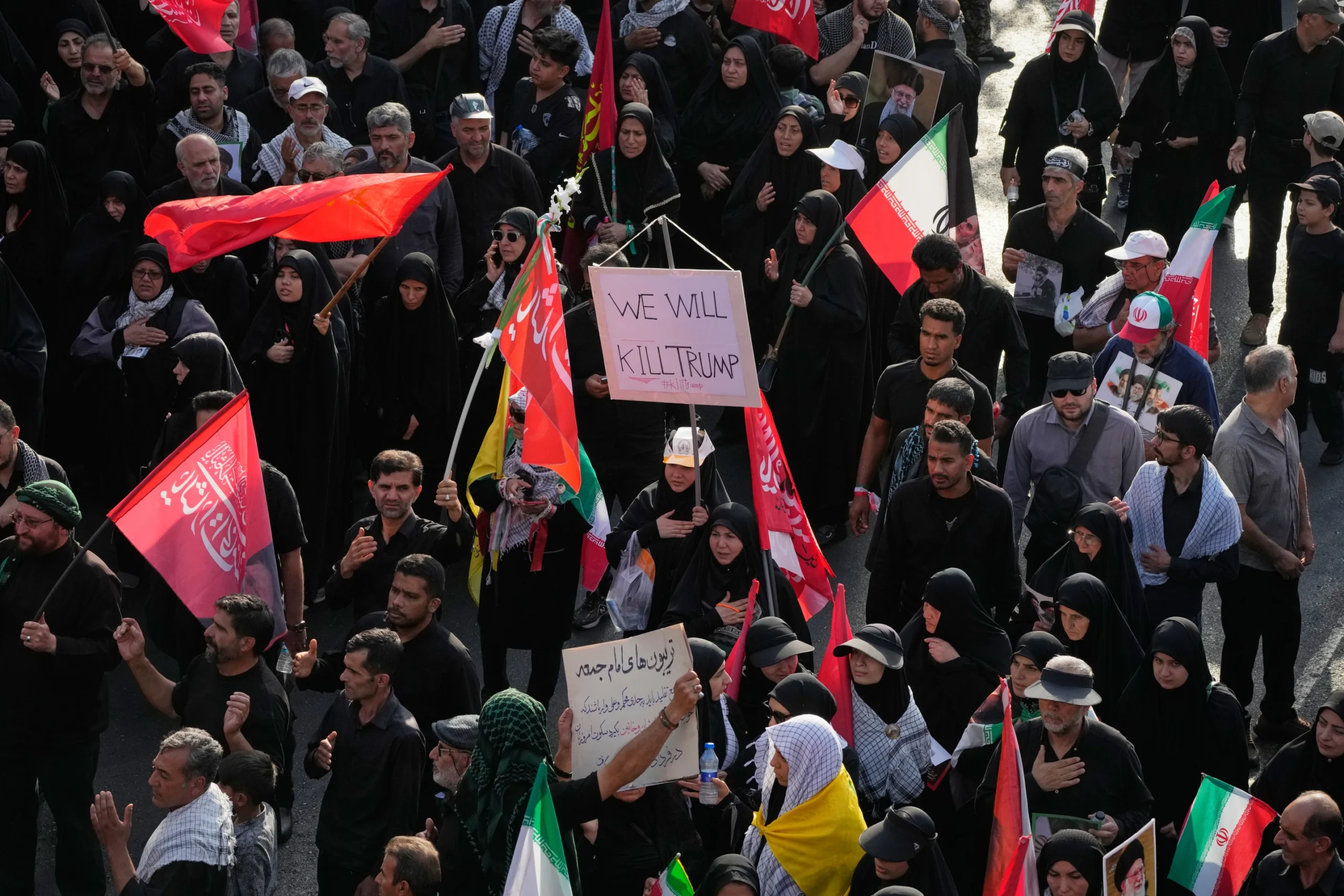
President Donald Trump said the United States would respond with overwhelming military force if Iran carried out any assassination attempt against him. His comments have sparked renewed discussion about presidential authority, national security, and how military decisions would be handled if such an event occurred.
Trump made the remarks in a post on his social media platform. He said he had instructed the US military to be prepared for a powerful response if Iran acted on what he described as long-standing threats against him. He added that the response would be greater than anything Iran had previously experienced.
National security experts noted that the United States does not operate with an automatic military retaliation system tied to the death of a president. Any major military action would still require decisions by the nation’s constitutional leadership rather than an automatic process.
Under the US Constitution and the Presidential Succession Act, Vice President JD Vance would immediately become president if a sitting president died in office. As commander in chief, Vance would have full authority to decide whether to follow previous military plans, modify them, or pursue a different course of action.
Legal and security experts said there is no mechanism that automatically launches military operations without approval from the nation’s leadership. Instead, continuity of government procedures are designed to ensure that constitutional authority transfers smoothly during a national emergency.
The United States maintains detailed continuity plans for major national emergencies, including large-scale attacks. These plans help preserve government operations but do not authorize immediate military retaliation without decisions by the new commander in chief.
Trump’s latest comments came as tensions between Washington and Tehran remain high. Relations have been strained by recent military exchanges and continued disputes over regional security. Officials from both countries have exchanged strong public statements in recent days.
Iranian leaders have repeatedly stated that they seek accountability for past actions involving senior Iranian officials. Following recent memorial events in Iran, senior figures repeated calls for revenge while stopping short of announcing any specific operational plans.
The White House did not immediately provide additional details about Trump’s comments or clarify how any previously issued military instructions would be handled under existing constitutional procedures.
Security analysts said threats against senior American leaders are treated seriously regardless of their source. Current and former US officials have said intelligence agencies continue monitoring potential threats and coordinating protective measures when necessary.
The latest statements have drawn attention because they combine national security concerns with constitutional questions about presidential succession. Experts emphasized that US law clearly defines who assumes command during a presidential transition, ensuring continuity of military leadership even during a crisis.
The developments also come as diplomatic tensions between the United States and Iran continue to affect security across the Middle East. Regional governments remain closely watching events while international observers continue calling for efforts to reduce tensions and avoid further escalation.
Although Trump’s remarks generated significant attention, constitutional experts say the chain of command remains well established. Any decision involving military action would ultimately rest with the individual serving as president at the time, following US law and established national security procedures
