


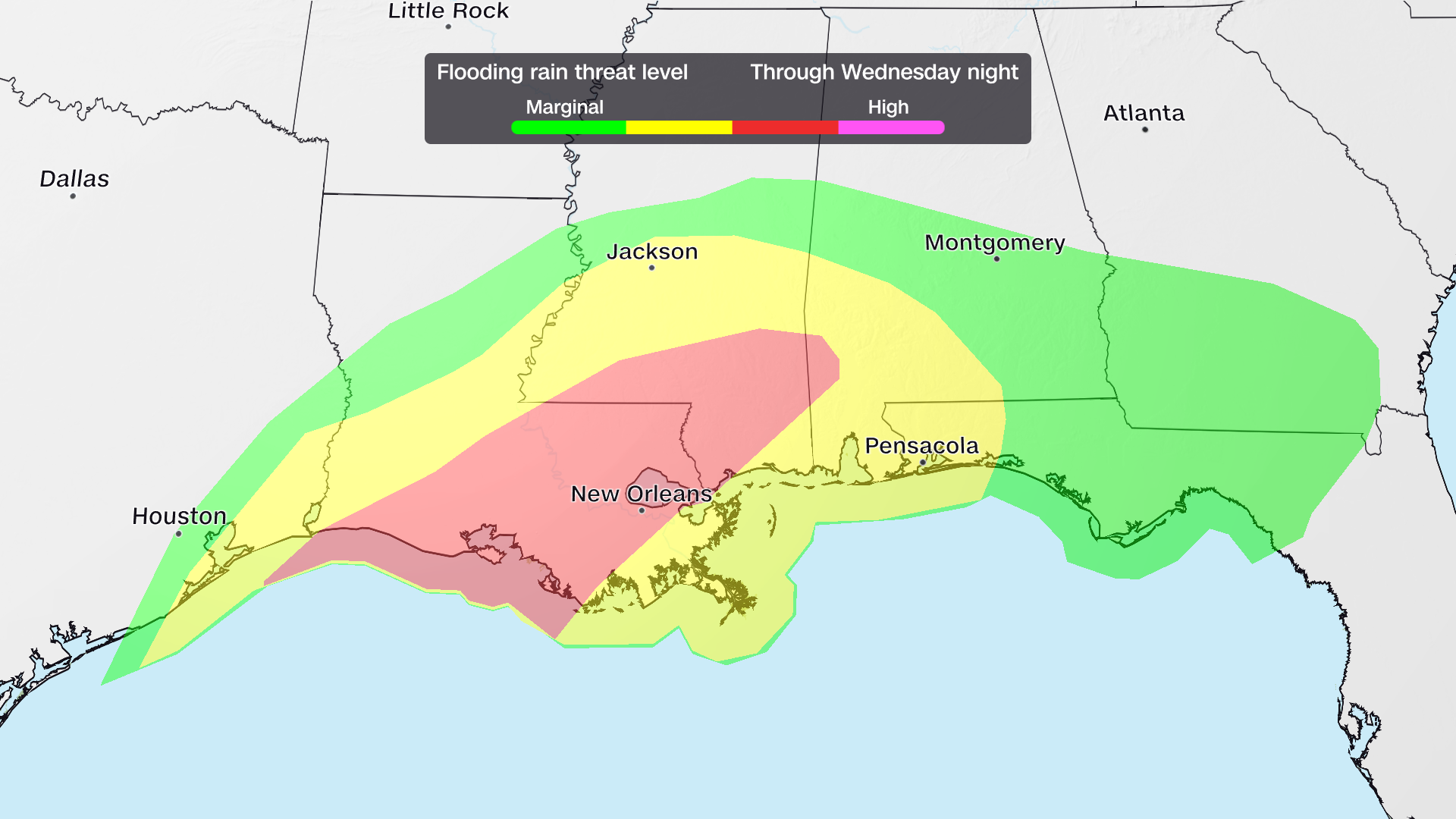
Tropical Storm Arthur flooding concerns remain high across parts of the southern United States even after the system weakened into a low pressure area. The storm, the first named system of the Atlantic hurricane season, formed off the coast of Texas and quickly brought heavy rain, strong winds, and flash flood warnings across multiple states.
The storm reached tropical storm strength on Wednesday morning when wind speeds hit at least 39 miles per hour, which is the official threshold for naming a system. By late Wednesday night, the system had weakened significantly. However, weather officials warned that dangerous flooding risk would continue despite the drop in wind strength.
Forecasters said “life threatening flooding” remains possible across parts of the southeastern United States. Heavy rainfall totals are expected to continue as the system moves slowly through the region, increasing the risk of flash floods in already saturated areas.
Rainfall estimates suggest that parts of Texas, Louisiana, and Mississippi could receive between 5 and 10 inches of rain, with isolated areas potentially seeing up to 20 inches. Coastal regions, including areas near Houston and along the Gulf Coast, experienced strong winds earlier in the day, with gusts reaching around 55 miles per hour in some locations.
Zachary Handlos explained that the main danger comes from how slowly the storm moves. He said that when rainfall remains over one area for an extended period, it increases the risk of flash flooding. He also noted that forecasting exact impacts remains difficult because storm movement can shift quickly.
Authorities warned that the highest flood risk zone stretches from Louisiana through Mississippi and into Alabama. Cities near the Gulf Coast, including Lake Charles and Mobile, are expected to see some of the heaviest rainfall. Emergency officials continue to monitor river levels and drainage systems as water accumulates.
The storm also comes at a time when some areas are still recovering from unusual weather patterns earlier in the year. Parts of the southeastern United States had experienced drought conditions in recent months, followed by sudden heavy rainfall. Experts say this shift can increase flood risk because dry ground becomes less able to absorb large amounts of water quickly.
Local officials in Texas had already issued broad disaster declarations earlier in the week due to severe storms affecting more than 100 counties. These conditions added to concerns about additional rainfall from Tropical Storm Arthur.
While some cities are hosting large public events, including international sports matches, forecasters said major disruptions are unlikely in most urban areas. However, localized flooding and traffic delays are still possible if heavy rain continues during peak hours.
Meteorologists also noted that the 2026 Atlantic hurricane season is expected to be relatively mild compared to recent years. Forecasts from the National Oceanic and Atmospheric Administration predict between three and six hurricanes and several tropical storms. The reduced outlook is linked to the presence of El Niño conditions in the Pacific Ocean.
El Niño typically increases wind shear in the Atlantic, which can weaken storm development. However, experts warn that warm ocean temperatures still provide enough energy for storms to form and strengthen when conditions align. That is what allowed Tropical Storm Arthur to develop despite the broader seasonal outlook.
El Niño continues to influence global weather patterns, but scientists emphasize that even a quieter hurricane season can still produce dangerous individual storms. One strong system is enough to cause major damage if it moves through populated areas.
Authorities continue to urge residents in affected regions to stay alert, avoid flooded roads, and follow local weather updates as the system moves inland and gradually weakens.
