


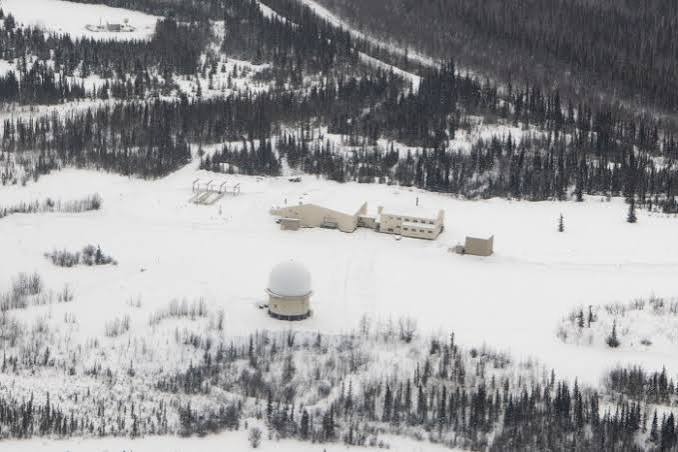
A small plane carrying eight people crashed near a remote radar site in western Alaska on Thursday.Aviation and military authorities confirmed that no one survived the tragic impact.The twin-engine Cessna 441 went down near the Cape Newenham Long Range Radar Site Airport.This airstrip sits about 450 miles west of Anchorage.
The flight left Anchorage on Thursday morning bound for the isolated military facility.Two experienced pilots operated the chartered aircraft.The plane carried six passengers across the state.Two of the passengers worked for the United States Army Corps of Engineers.The remaining four passengers were private contractors traveling for work.
Safety officials reported that weather conditions turned bad very fast.Dense fog covered the landing strip as the plane arrived.Fog forced the flight crew to abort their first attempt to land on the gravel runway.The pilots had to rely on instruments because they could not see the landing strip.The plane crashed during its second landing attempt.
Radar systems tracked the aircraft until it lost contact near the airstrip.Ground units quickly organized a search mission in the area.Search crews soon found the scattered wreckage about half a kilometer from the runway.Rescue teams confirmed that all eight people died in the impact.
Senior military officers expressed deep grief over the loss of life.They praised the victims as dedicated workers serving a vital national mission.Officials promised full support for the families of the victims during this hard time.Ground teams continue to secure the remote accident site.
Investigators have launched a thorough review of the incident.Federal aviation teams are gathering radar records and local weather reports.Specialized crash investigators traveled to the remote area to inspect the wreckage.They want to determine what caused the fatal plane crash in Alaska.
The airfield at Cape Newenham serves a vital military purpose.It sits in a rugged spot with mountains on three sides.High winds and fast weather shifts make landing there very hard for pilots.The long-range radar site tracks aircraft across the region to help guard defense borders.
The plane involved in the accident was a Cessna 441 Conquest.This popular twin-engine turboprop model handles tough flights in cold climates.It travels fast and carries small groups into remote regions with short runways.Charter companies often use this model to haul workers to distant outposts.
Authorities have not released the names of the eight victims yet.Officials are working to notify all immediate family members first.Recovery teams face tough conditions as they clear the crash scene.Cold wind and thick fog continue to slow work around the mountainside airstrip.
This tragedy highlights the risks of flying into remote regions.Deep fog and high peaks create huge dangers for everyday air travel.Local leaders expressed sadness for everyone affected by the loss.The entire region mourns the workers killed in this terrible event.
Federal investigators will remain on site for several days.They plan to study the engine parts, maintenance logs, and radio calls.A full final report on the plane crash in Alaska will take several months to complete.Officials aim to find answers to help prevent future aviation disasters.
