


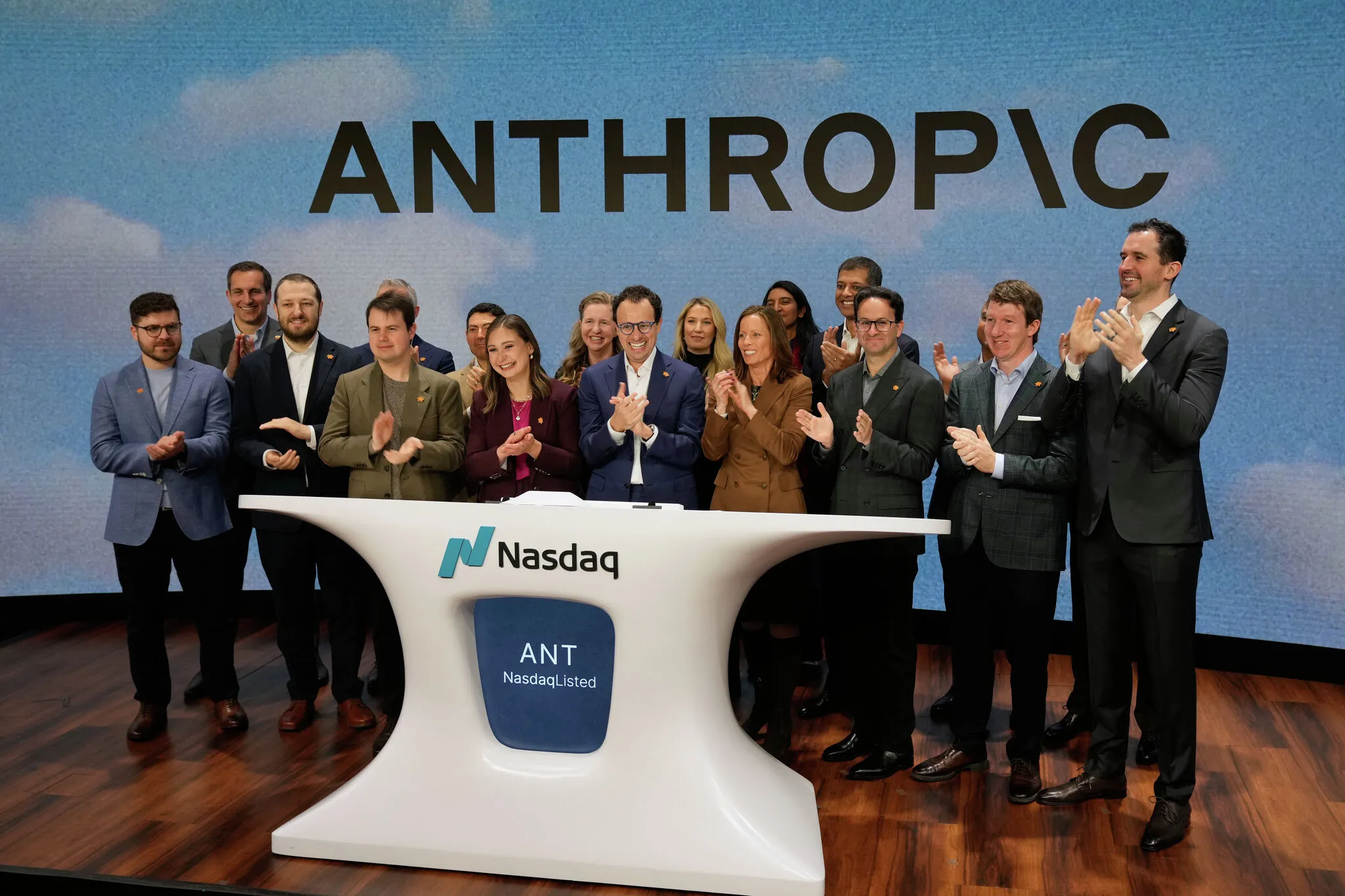
Artificial intelligence company Anthropic has completed a record-breaking public offering, raising approximately $81 billion and drawing enormous attention from investors across the United States. The company priced its shares at $83 each, above its initial target range, giving it an estimated valuation of around $1.5 trillion before trading began. Its listing is one of the largest in financial market history and marks a major moment for the artificial intelligence sector. Anthropic, which develops the Claude family of AI products, is now facing the challenge of proving that its rapid growth can support the expectations created by such a huge market valuation.
The offering arrives at a time when investors are trying to decide how much money should be placed into companies developing advanced AI systems. Demand for Anthropic shares was strong even as technology stocks faced market pressure and concerns grew about the cost of building and operating AI infrastructure. The company has committed enormous resources to computing capacity and future development, including major spending on data centres and specialised technology. Going public gives Anthropic access to capital from a much wider group of investors and provides an opportunity for existing shareholders and employees to sell some of their holdings.
However, the company’s financial position is more complicated than its headline valuation suggests. Anthropic has reported substantial revenue growth, but it remains unprofitable under standard accounting measures and carries significant financial obligations. Its plans require continued investment in computing resources, research teams and infrastructure, making future spending a major factor for shareholders. The company is also competing against OpenAI, Google and other technology businesses that are developing their own advanced models and trying to secure customers in the same rapidly expanding market.
The listing will therefore be watched as more than a successful fundraising event. Its performance could influence how investors value other AI companies and whether the technology sector can maintain its current level of investment. Anthropic operates as a public-benefit corporation and says it aims to balance financial returns with responsible AI development. Its governance structure gives a long-term benefit trust an important role in board oversight, which could limit the influence of ordinary shareholders. The company’s next challenge is to show that its products can generate sustainable earnings while meeting the expectations of customers, regulators and investors.
