


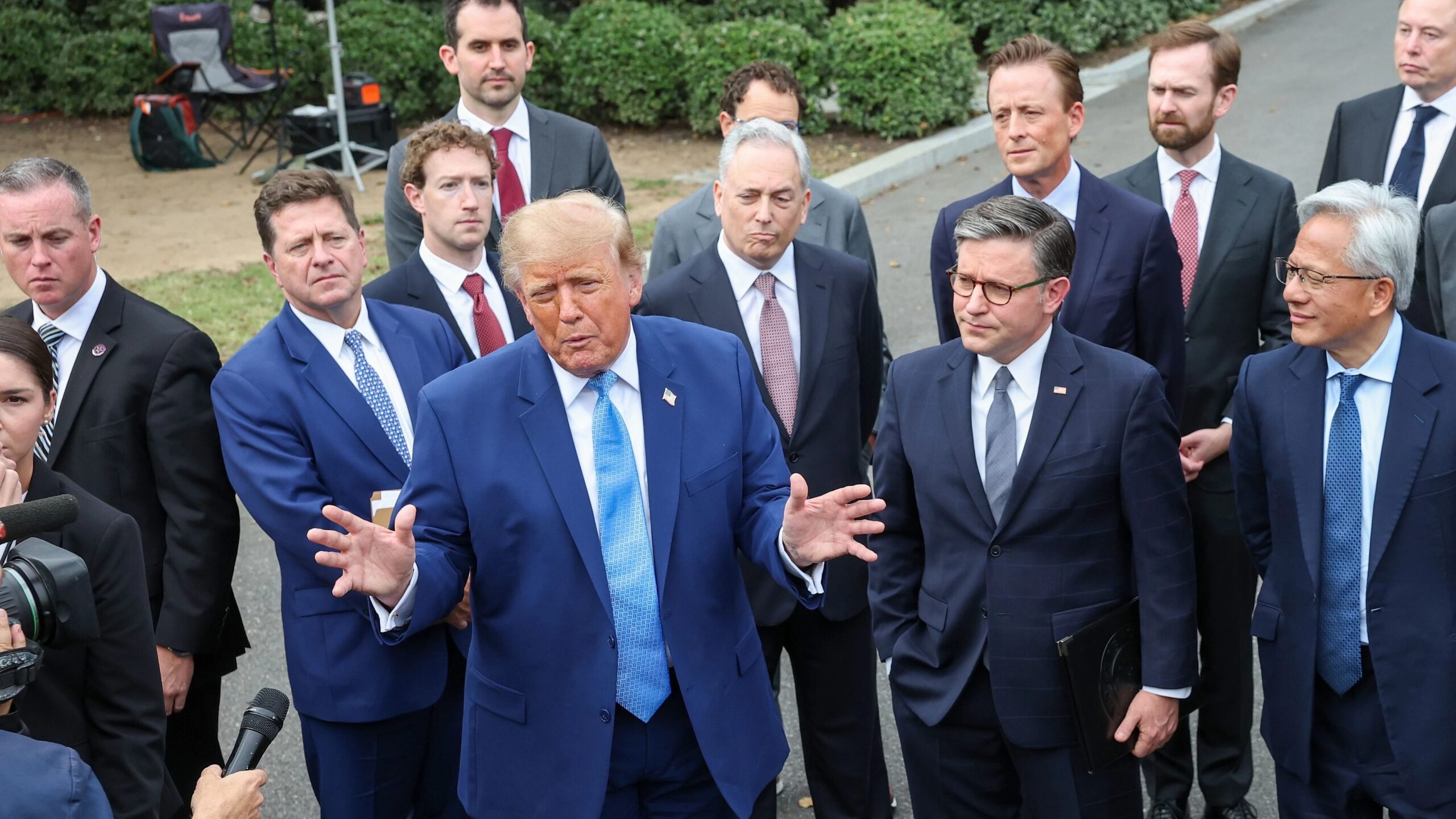
President Donald Trump signed an executive order on Tuesday that directs federal agencies to replace the term artificial intelligence with Super Intelligence in government communications. The action marks a major shift in how the administration describes advanced technology and reflects Trump’s view that modern systems have evolved beyond the traditional AI label.
The order was signed after a White House meeting with leading technology executives. Under the new policy, executive branch agencies must use the terms Super Intelligence and SI in official reports, websites, public statements, policy papers, and other government materials that are not governed by statutory language.
Federal agencies were also instructed to stop using the terms artificial intelligence and AI in future communications where changes are legally permitted. The administration said the goal is to create language that better reflects the growing capabilities of advanced digital systems.
In the executive order, Trump argued that the phrase artificial intelligence no longer captures the scale and potential of modern technology. He said current systems are doing far more than performing simple automated tasks and are increasingly helping people solve complex problems, improve productivity, and create new opportunities.
According to the order, Super Intelligence is a more accurate term because it highlights the rapid progress being made across the technology sector. Trump said these systems are expanding human creativity and supporting innovation in ways that were difficult to imagine only a few years ago.
The directive also assigns new responsibilities to the assistant to the president for science and technology. That office must develop an official federal definition of Super Intelligence and review whether additional executive actions are needed to fully implement the new terminology throughout the government.
The move follows comments Trump made during the United Nations General Assembly last week. During those remarks, he called for replacing artificial intelligence with Super Intelligence and argued that leadership in advanced technology will play a critical role in future economic and strategic competition.
Trump said countries that lead in the development of advanced intelligence systems could gain significant advantages in innovation, productivity, and global influence. He suggested that success in the technology race may become one of the defining factors of future national strength.
The executive order arrives during a period of intense debate over how powerful digital systems should be managed. Governments, researchers, and technology companies continue to discuss questions involving oversight, safety, transparency, and innovation.
While some policymakers support stronger regulations, others warn that excessive restrictions could slow technological progress. Trump has generally favored an approach that encourages development while relying on industry-led safeguards rather than broad government controls.
At the White House summit, Trump met with executives from major technology companies and discussed the future of advanced computing systems. He later announced that participants had signed a voluntary agreement known as the White House Accord on Super Intelligence.
The president described the accord as morally binding and said it reflected a shared commitment among industry leaders to develop technology responsibly. Although the agreement does not carry legal force, administration officials said it establishes expectations for responsible behavior and accountability.
House Speaker Mike Johnson said summit participants focused on balancing technological advancement with public interests. He noted that discussions centered on maintaining American competitiveness while encouraging responsible development standards.
Johnson explained that the agreement outlines voluntary principles rather than formal regulations. According to him, the framework encourages strong internal controls, oversight systems, and independent reviews designed to strengthen confidence in the industry.
Technology leaders also welcomed the discussions. Meta chief executive Mark Zuckerberg said the summit represented a constructive step forward. He noted that major technology companies had committed to stronger internal safeguards, audits, and review processes.
Supporters of the administration’s decision argue that the new terminology reflects the increasing sophistication of modern technology. They believe the phrase Super Intelligence better communicates the scale of current developments and future possibilities.
Critics, however, question whether changing the name will affect the real challenges surrounding advanced systems. They argue that issues such as safety, accountability, and governance remain important regardless of the terminology used.
As agencies begin implementing the directive, attention will turn to the federal definition of Super Intelligence and how the new language shapes future policy discussions. The order represents one of the administration’s most visible technology initiatives and signals a new approach to describing the next generation of digital innovation.
