


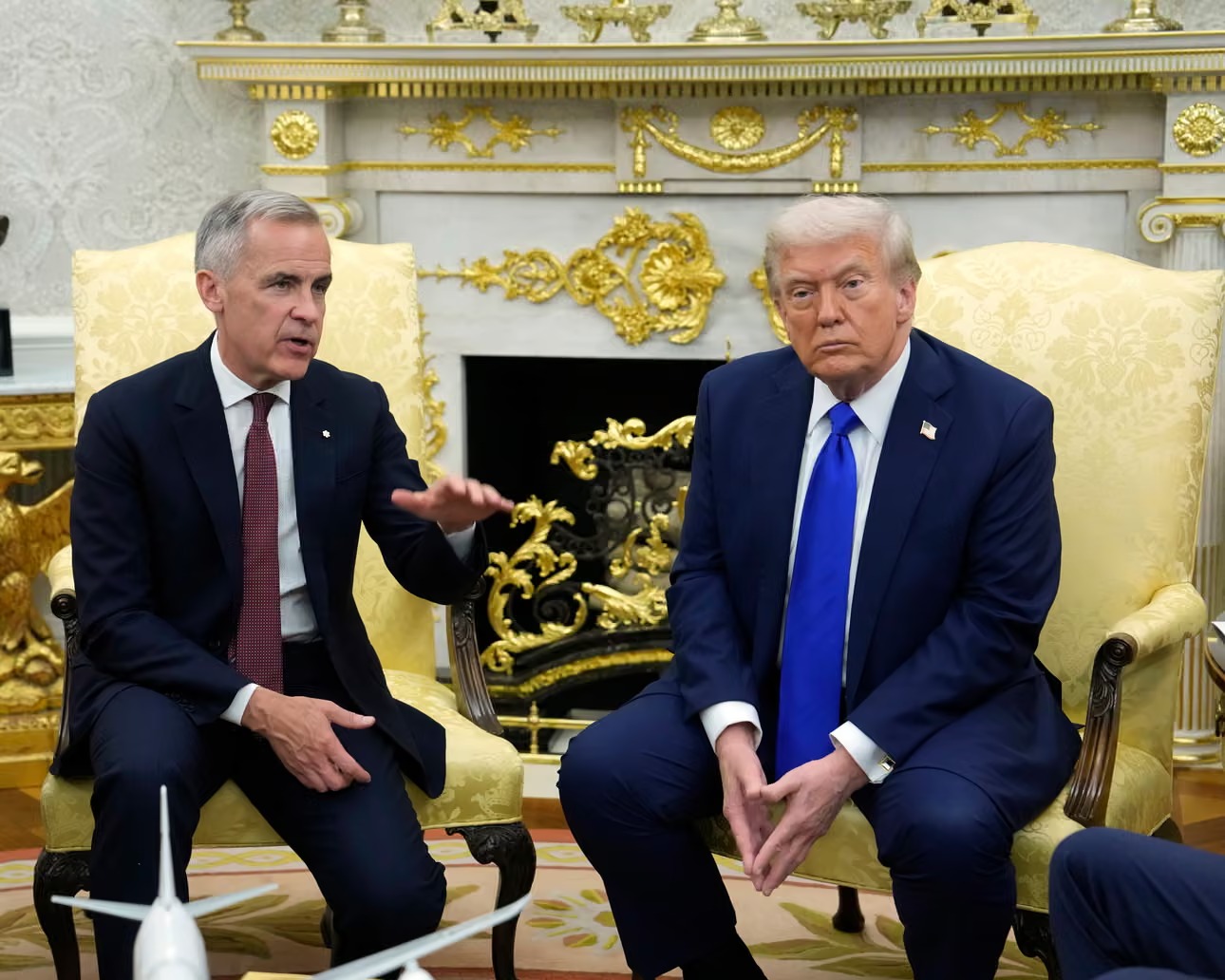
Donald Trump has paused a planned 50% tariff on some Canadian goods after last minute talks with Canadian officials. The pause came just hours before the higher tax was due to start.
Trump said on Tuesday night that he had paused the tariffs for three days. He said the move was based on a possible deal between Canada and the United States.
The deal is not yet final. Canadian Prime Minister Mark Carney said the two sides had made “substantial progress”. He also said more work was needed before a final trade deal could be reached.
The planned tariffs could have hit about $20bn worth of Canadian goods. The goods include wine, hockey sticks and other exports. Canadian firms had warned that the higher taxes could raise costs and hurt sales in the US.
Trump also used his post to raise another major issue. He said the Keystone XL oil pipeline project “may be awoken from the grave”. He gave no details about what that could mean.
The Keystone XL project was first proposed in 2008. It was designed to carry oil from Canada’s western oil sands to refineries in the United States. The planned pipeline would have covered about 1,200 miles, or 1,930km.
The project became a major source of tension in North America. US landowners, Native American tribes and environmental groups opposed the pipeline. They raised concerns about land use, oil spills and climate change.
The project was stopped in 2021. TC Energy, the company behind the plan, ended the project after then US President Joe Biden revoked a key permit for the US section of the pipeline.
Trump’s new comment has not confirmed that the pipeline will return. It is also not clear if the pipeline issue is part of the new trade talks with Canada.
The tariff dispute comes after a difficult period in relations between the two countries. Canada and the US have long been close allies and major trade partners. But relations have faced pressure from tariffs and sharp public comments by Trump.
In February 2025, the Trump administration placed a 25% tariff on Canadian imports. The White House said Canada needed to do more to stop illegal border crossings and the flow of illegal drugs.
Canada responded with its own tariffs. Canadian officials called the US measures “unwarranted and unreasonable”. They also said Canada had taken strong steps to protect its border.
Canadian officials said less than 1% of fentanyl and illegal border crossings came from Canada. The claim was part of Canada’s response to the US reasons for the tariffs.
Tensions rose again in July 2026. The White House announced plans for a 50% tariff on Canadian goods. The administration said the measure was aimed at what it called unfair treatment of US-made cars, alcohol and dairy products.
The new tariff plan raised fears among Canadian companies. Many firms worried that the higher costs could make their goods too expensive for US buyers.
Carney said on Monday that officials from both countries had held “intense and delicate” talks in recent days. Those talks helped lead to the temporary pause announced by Trump.
Canada and the US have one of the world’s largest trade relationships. Trade between the two countries was worth about $909bn in 2024, according to the US trade representative.
The latest tariff dispute has also raised questions about the future of the United States Mexico Canada Agreement, known as USMCA. Some goods that had earlier received protection under the trade deal were not protected from the latest proposed tariffs.
For now, the three day pause gives both sides more time to finish talks. The final outcome could affect businesses on both sides of the border and may also shape the future of the Keystone XL project.
