


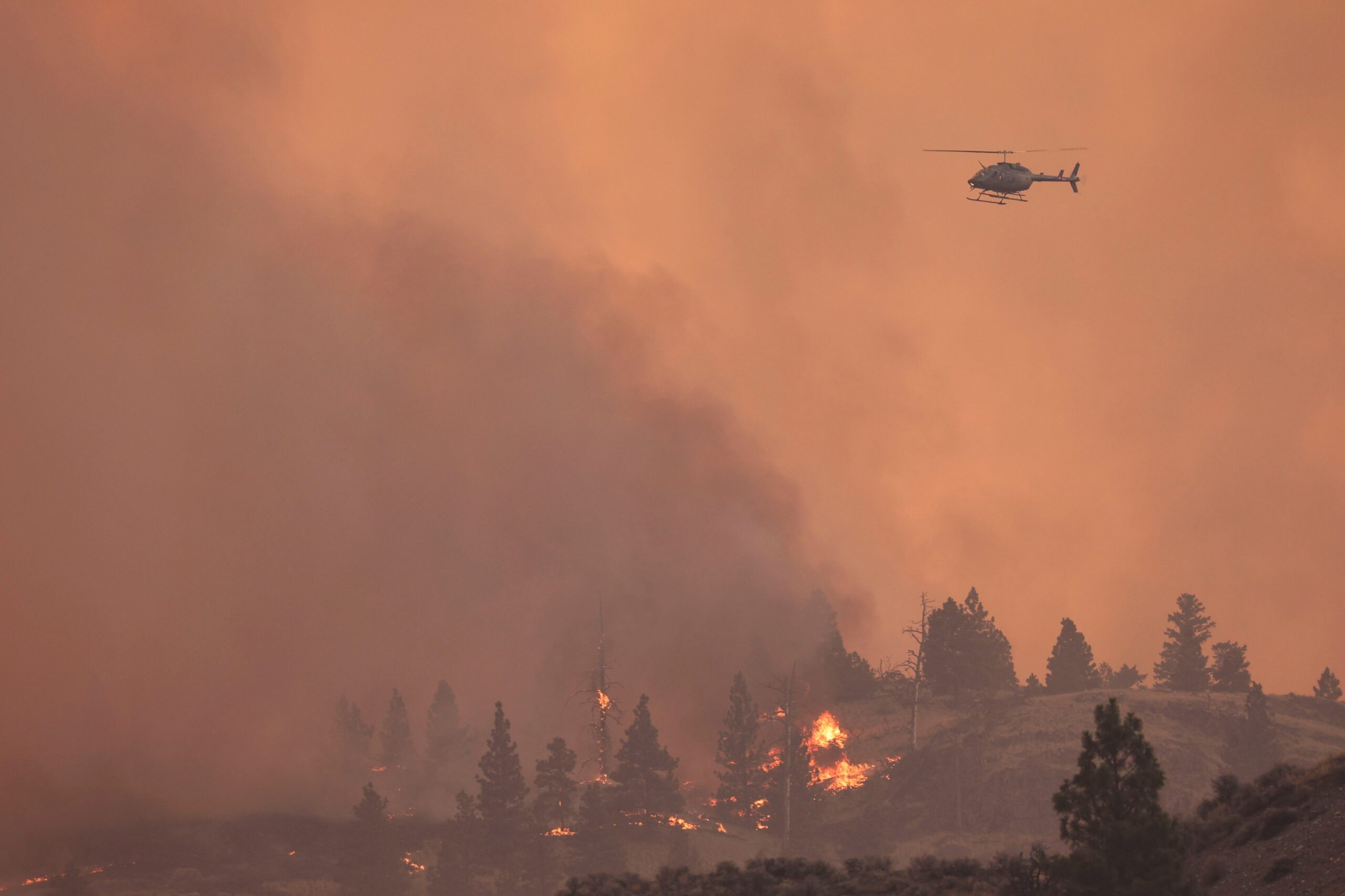
Wildfires continued to burn across the western United States and Canada on Sunday as crews worked to control fires and residents waited for news about their homes. In some areas, people were watching for possible evacuation orders. In others, families had already left and were waiting to learn what they would find when they return.
The fires have caused major concern in western Canada, where more than 20,000 people were forced to leave their homes and communities near Okanagan Lake in British Columbia over the weekend. The fast-moving fire destroyed homes and forced some people to escape by aircraft.
The full scale of the damage was still being assessed. Many residents could not return to their homes because roads and other areas remained closed. For families who had fled, the wait brought fear and uncertainty as they tried to learn whether their houses had survived.
The situation was also serious in Washington state. Fire crews had been battling three wildfires that started near Spokane more than a week earlier. By Sunday, crews were working on cleanup near the lines around the fires.
Those lines are important because they mark areas where crews have worked to stop the fires from spreading. Cleanup work can help crews check the ground and look for signs of fire that may still pose a risk.
For residents who had left, the damage to homes was a major concern.
Laurie Allen, who lives in Nine Mile Falls north of Spokane, left her home the previous weekend. She went with her husband, their dog and two kittens after a wildfire burned a short distance from their home.
By Sunday, roads into her neighborhood were still closed. That meant Allen could not return home to check the property herself.
She did, however, receive some encouraging news from a friend. The friend told her that Allen’s house and other nearby homes were still standing. The homes were covered in ash, but they appeared to be intact.
For Allen and other residents, such reports offered some hope during a difficult wait. Yet the ash covering the homes also showed how close the fire had come.
The situation in British Columbia was even more severe for some communities. Thousands of people had to leave areas around Okanagan Lake as the fire moved quickly. Homes were destroyed, and dozens of people needed help from aircraft to get out of dangerous areas.
The evacuations showed how quickly wildfire conditions can change. Residents who had been watching the fires had little choice but to leave when the threat grew.
For those who had already fled, the next step was damage assessment. Residents need to know which homes remain safe, which areas can be reached and when they may be able to return.
Officials and fire crews also face the task of checking areas near fire lines. Even when flames are no longer spreading in a certain area, crews must continue their work to make sure the fire remains under control.
Across the western US and Canada, the focus remained on protecting people, limiting further damage and checking the condition of homes and communities affected by the fires.
For residents, the wait is personal. A house that is still standing can mean a chance to return and rebuild daily life. A destroyed home can mean the loss of belongings, memories and a place to live.
As crews continued their work, residents remained focused on the same question: what will be left when they are finally allowed to go home?
