


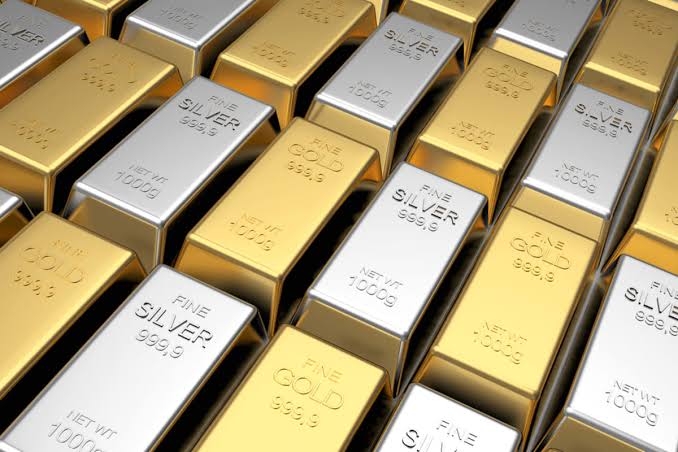
Gold and silver prices moved lower on Monday as investors reacted to a stronger US dollar and growing expectations that US interest rates could remain higher for longer. The decline came despite rising geopolitical tensions that normally increase demand for safe-haven assets.
On the Multi Commodity Exchange, gold futures for the August contract opened at Rs 1,42,633, down Rs 845 from the previous close of Rs 1,43,478. Selling pressure continued during early trading as investors reduced positions in precious metals.
Gold prices later touched an intraday low of Rs 1,41,557, marking a decline of about 1.33 percent from the previous session. By late morning, the contract was trading at around Rs 1,42,100, down Rs 1,378, or nearly 1 percent.
Silver also faced heavy selling during the session. September silver futures dropped to an intraday low of Rs 2,17,277, representing a decline of more than 2 percent. The contract later traded near Rs 2,18,665, down almost 1.8 percent from its previous close.
International precious metal markets also remained under pressure. COMEX gold traded lower at around 4,061 dollars per ounce, while COMEX silver slipped to approximately 58 dollars per ounce. The weaker global trend added to selling pressure in domestic markets.
Market analysts said the stronger US dollar remained one of the biggest reasons behind the decline in gold prices. When the dollar gains value, gold becomes more expensive for buyers using other currencies. This often reduces international demand and puts pressure on prices.
Expectations of higher US interest rates also affected investor sentiment. Gold does not pay interest, so higher borrowing costs and rising bond yields often encourage investors to shift money into interest-bearing assets instead of precious metals.
Analysts said recent gains in US Treasury yields reduced the appeal of gold as a long-term investment. Investors continued adjusting their portfolios as they evaluated the outlook for US monetary policy.
Geopolitical developments also remained in focus. Rising tensions in the Middle East increased uncertainty across global financial markets. Military actions involving the United States and Iran pushed crude oil prices higher, raising concerns about inflation and energy costs.
Higher oil prices can increase production and transportation costs around the world. This may add to inflation pressures and influence future decisions by central banks, especially the US Federal Reserve.
Even though geopolitical uncertainty often supports gold prices, the impact of a stronger dollar and expectations for higher interest rates outweighed safe-haven demand during Monday’s trading session.
The US Dollar Index climbed to 100.90, reflecting continued strength in the American currency. The index measures the dollar against six major global currencies, including the euro, Japanese yen, British pound, Canadian dollar, Swedish krona, and Swiss franc.
A stronger dollar generally creates additional pressure on commodities priced in US currency. As the dollar rises, international buyers often reduce purchases, leading to weaker prices for metals such as gold and silver.
Investors are now watching several key developments that could influence the market in the coming days. These include changes in the Middle East security situation, upcoming US economic reports, and future comments from Federal Reserve officials regarding interest rates.
Economic data on inflation, employment, and consumer spending could also affect expectations for future monetary policy. Any signals pointing to prolonged higher interest rates may continue influencing precious metal prices.
Market experts believe gold and silver may remain volatile as investors respond to changing economic conditions and global events. Currency movements, bond yields, inflation expectations, and geopolitical developments are expected to remain the main drivers of price action.
While precious metals continue to serve as important safe-haven assets during periods of uncertainty, traders are currently placing greater focus on the strength of the US dollar and interest rate expectations, both of which continue to shape the near-term outlook for gold and silver prices.
