


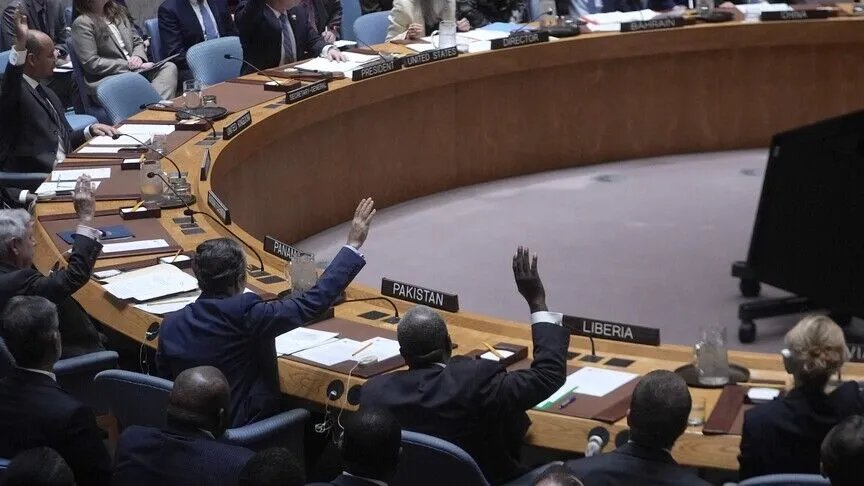
Pakistan has called on Iran and the United States to remain committed to their framework peace agreement, warning that any break in the diplomatic process could make it harder to resolve the long-running dispute over Iran’s nuclear program.
Speaking at the United Nations Security Council on Friday, Pakistan’s Ambassador to the UN, Asim Iftikhar Ahmad, urged both countries to continue dialogue and avoid actions that could increase tensions in the Middle East. He said diplomacy remains the best path toward lasting peace and regional stability.
Pakistan expressed concern over the recent rise in military and political tensions across the region. The ambassador said continued conflict would harm both regional and international peace, security, and economic growth. He urged all sides to show restraint and avoid decisions that could worsen the situation.
Ahmad told the Security Council that there is no substitute for dialogue and diplomatic engagement. He said peaceful negotiations remain the only practical way to settle complex disputes and reduce the risk of further conflict.
Pakistan also repeated its support for a peaceful solution to the Iran nuclear issue. The country said outstanding disagreements should be resolved through sustained negotiations rather than military action or increased confrontation.
A key focus of Pakistan’s message was the framework agreement signed last month between Iran and the United States, known as the Islamabad Memorandum of Understanding. Pakistani officials described the agreement as an important roadmap that provides both sides with a structured process for resolving their differences through negotiations.
The memorandum was designed to reduce hostilities, support regional stability, and create conditions for further diplomatic talks. Pakistan has played a mediation role throughout the process and has continued to encourage both governments to honor their commitments under the agreement.
Ahmad warned that interrupting the diplomatic process could make existing disputes more difficult to resolve. He said the agreement should remain the foundation for future negotiations and called on both countries to continue working toward a mutually acceptable settlement.
Pakistan also highlighted its efforts to support ceasefire initiatives and reduce tensions through international cooperation. Officials said Islamabad welcomed the expert-level meetings already held under the framework agreement and encouraged both sides to continue constructive discussions.
The appeal came as uncertainty continued over the future of the peace process. U.S. President Donald Trump said on Friday that Iran had requested further talks with Washington and that the United States had agreed to continue discussions. At the same time, he stated that the ceasefire reached last month was no longer in effect, creating fresh questions about the future of negotiations.
Despite recent tensions, diplomatic contacts have continued. Regional mediators, including Pakistan and several Middle Eastern countries, have remained engaged in efforts to prevent further escalation and keep communication channels open between Washington and Tehran.
The future talks are expected to focus on several key issues, including regional security, maritime stability, and Iran’s nuclear program. Negotiators hope that continued dialogue can reduce tensions and build confidence between both sides.
Pakistan has repeatedly said that long-term peace can only be achieved through diplomacy and mutual respect. Its latest appeal at the United Nations reflects its continuing role as a supporter of dialogue and peaceful conflict resolution. As negotiations move forward, international attention will remain focused on whether both the United States and Iran can maintain diplomatic engagement and work toward a lasting agreement.
