


The United States and Iran have continued diplomatic efforts aimed at easing tensions, with officials holding indirect talks in Doha while President Donald Trump said relations between the two countries were improving.
Speaking after the latest round of discussions, Trump said the United States was “getting along well” with Iran and added that negotiations over Tehran’s nuclear program were making progress. His comments came as technical discussions in Qatar reached their conclusion.
Iran’s Deputy Foreign Minister Kazem Gharibabadi confirmed that the meetings in Doha had ended on Wednesday. According to Iran’s state news agency, the Iranian delegation met separately with officials from Qatar and Pakistan. He said there was no direct meeting between Iranian and American representatives.
At the same time, Tamim bin Hamad Al Thani met with US envoy Steve Witkoff and Jared Kushner to discuss the ongoing negotiations as well as developments in Lebanon.
People familiar with the discussions said the indirect talks focused on several important issues. These included Iran’s frozen financial assets, maritime security in the Strait of Hormuz, and steps to reduce regional tensions. Reports indicated that Qatar and Pakistan continued to serve as mediators throughout the negotiations.
Media reports also suggested that both sides were seeking to lower military tensions while talks continued. According to those reports, officials discussed maintaining a calm environment to allow negotiations on a memorandum of understanding to move forward without renewed military action. However, US officials later denied reports that any agreement had been reached on releasing frozen Iranian funds.
Gharibabadi said a communication channel would be created to address possible violations of any future agreement. He also stated that part of Iran’s frozen assets could eventually be used to purchase humanitarian goods based on the country’s needs.
US Vice President JD Vance said Washington still had additional options if Iran restarted its nuclear program, threatened neighboring countries, or supported terrorist organizations. The White House also said negotiations toward a final agreement remain active while warning that the United States would respond if Iran launched further attacks.
One of the most sensitive issues remains the Strait of Hormuz, one of the world’s most important shipping routes. Reports indicated that Iran is seeking broader international recognition of its authority over the waterway, including the possibility of charging ships for passage. Those reports have not been confirmed by all parties involved in the negotiations.
Shipping companies continue to treat the Strait of Hormuz as a high-risk area following recent attacks that damaged commercial vessels and disrupted regional trade. Aviation authorities have also advised airlines to avoid certain airspace over Iran, Iraq, and Lebanon because of continuing security concerns.
Regional security discussions also included the ceasefire in Lebanon. According to reports, US negotiators said they would continue encouraging Israel to respect the existing truce. However, Israeli leaders have maintained that military operations could resume if security conditions require further action.
Israeli Prime Minister Benjamin Netanyahu said Israeli forces would remain in a security zone in southern Lebanon for as long as necessary while continuing to seek a long-term peace agreement. Israeli Defense Minister Israel Katz also warned that Israel would take further military action against Iran if it believed national security was under threat.
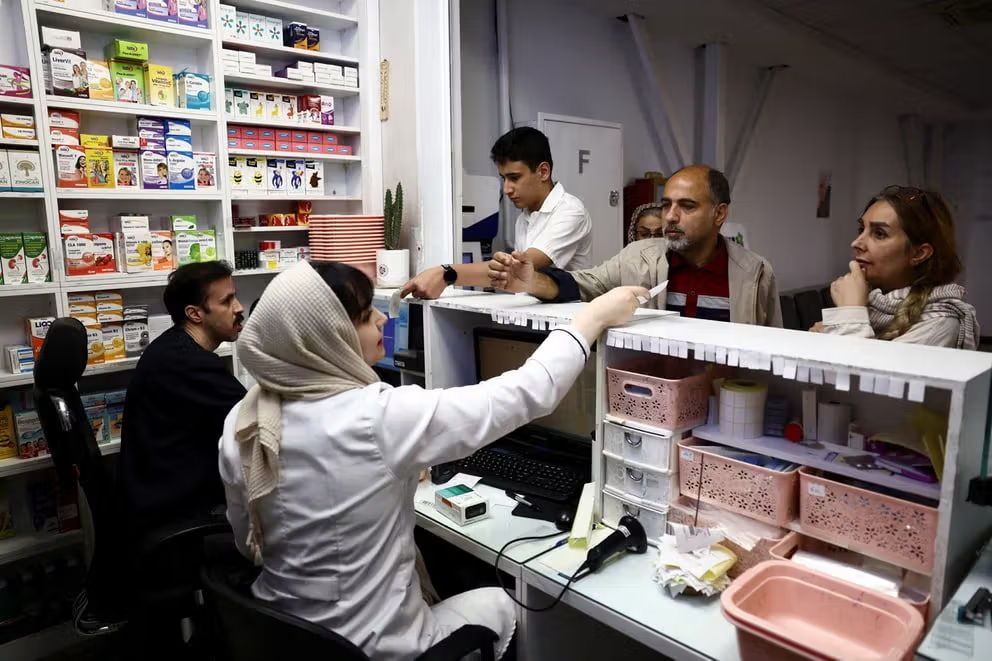
Alongside the diplomatic developments, economic pressures continue to affect ordinary Iranians. New documents published by media outlets show that insulin costs have risen sharply in recent months. One patient’s payment for a prescription of insulin increased more than twenty-four times within less than two months because insurance reimbursements remained unchanged while medicine prices increased.
Although the overall price of the medication rose by less than 40 percent, the patient’s personal payment increased dramatically after insurance coverage failed to keep pace with higher costs. The documents also showed the introduction of a new billing category that transferred additional expenses directly to patients.
Iran’s pharmaceutical industry says medicine prices continue to rise because of several economic pressures. Industry representatives point to currency changes, higher raw material costs, rising wages, financing challenges, supply chain disruptions, and the removal of subsidized exchange rates. These factors have increased production costs while placing greater financial pressure on patients.
As diplomatic efforts continue in Doha, both governments remain focused on complex issues that include nuclear negotiations, regional security, shipping routes, and economic stability. Observers say future progress will depend on whether both sides can build enough trust to reach a broader and lasting agreement.
