


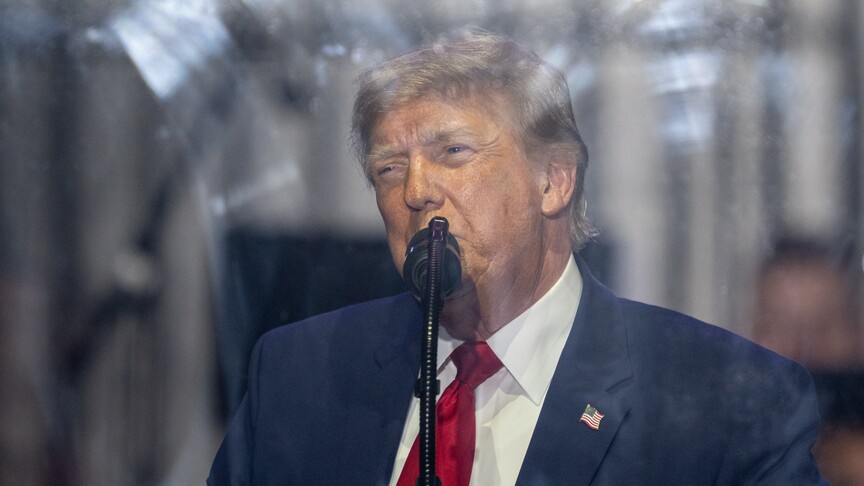
President Donald Trump warned Iran of possible new military action after the United States carried out another round of airstrikes against Iranian military targets on Saturday. The latest exchange has increased tensions in the Middle East and raised concerns about the future of a recently announced ceasefire agreement.
The warning came shortly after the US military confirmed that American aircraft had attacked several Iranian military sites. According to US Central Command, the operation targeted missile storage facilities, drone storage locations, and coastal radar systems.
US officials said the strikes were launched after Iran allegedly violated the ceasefire agreement by carrying out an attack near the Strait of Hormuz. The military stated that the latest operation was intended to respond to what it described as continued Iranian aggression in the region.
President Trump announced the military action in a post on his Truth Social platform. He said US aircraft had successfully struck Iranian missile and drone storage locations along with coastal radar sites.
The president claimed the attacks were carried out because Iran had violated the ceasefire agreement once again. He also warned that the United States could take stronger military action if Iran continued similar activities.
Trump said there could come a point when Washington would no longer be able to respond with restraint. He warned that the United States might be forced to complete its military objectives if Iran failed to change its actions.
He also issued a strong warning to Tehran, saying the future of the Islamic Republic could be at risk if military tensions continue to increase.
The latest airstrikes followed an incident involving a Panama-flagged tanker operating near the Strait of Hormuz. US officials said the vessel was attacked during heightened regional tensions, prompting another military response from American forces.
The Strait of Hormuz remains one of the world’s most important shipping routes. A large share of global oil exports passes through the narrow waterway each day. Any military activity in the area can quickly affect international trade, energy markets, and shipping operations.
US Central Command said the latest strikes targeted multiple military sites inside Iran. Officials stated that the operation focused on facilities linked to missile systems, drone operations, and radar networks believed to support military activities.
The military has not released additional details about the damage caused by the strikes or whether there were any casualties.
The renewed military action comes during a period of growing uncertainty across the Middle East. Recent attacks involving commercial shipping have increased concerns among governments, shipping companies, and energy markets.
Security experts have warned that continued military exchanges could place additional pressure on international shipping routes and increase risks for commercial vessels traveling through the Gulf region.
The ceasefire agreement announced earlier was intended to reduce military operations and improve security around the Strait of Hormuz. However, the latest incidents suggest that tensions between the United States and Iran remain high.
Diplomatic efforts continue, but both sides have accused each other of violating the agreement. These competing claims have made it more difficult to restore stability in the region.
Global markets are also closely monitoring developments because any disruption in the Strait of Hormuz can affect oil supplies and transportation costs around the world.
Military analysts believe the coming days will be important in determining whether both countries return to negotiations or continue military operations. Further attacks could increase regional instability and place greater pressure on international diplomatic efforts.
As of Saturday evening, no new agreement had been announced, and both countries remained on high alert following the latest exchange of military action. The situation continues to develop as officials monitor security conditions across the Gulf region.
