


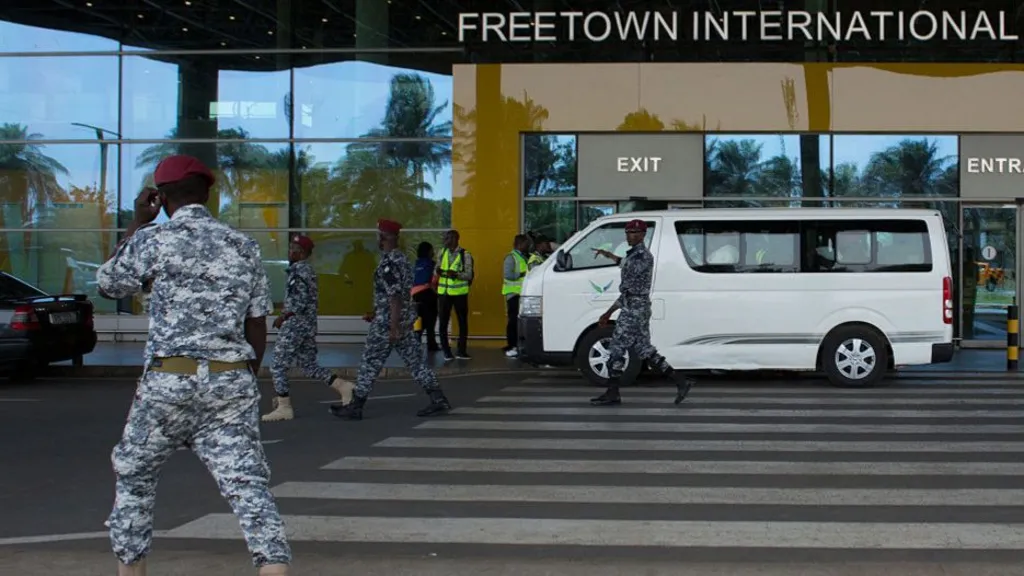
Sierra Leone has become the latest African nation to receive migrants deported from the United States as the Trump administration continues its crackdown on illegal immigration and expands third-country deportation agreements.
A charter flight carrying nine West African migrants arrived at the country’s international airport near Freetown on Wednesday morning. The deportees included seven men and two women.
According to officials, five of the migrants came from Ghana, while two were from Guinea. One migrant each came from Nigeria and Senegal.
Witnesses at the airport said the group appeared distressed after arriving. Reports also stated that one deportee resisted leaving the aircraft and had to be physically removed.
The deportation flight is part of a broader effort by Donald Trump to increase removals of undocumented migrants and send some deportees to countries other than their original homes.
Since returning to office, Trump has expanded immigration enforcement policies and accelerated deportation operations. Mass deportations were one of the central promises of his election campaign.
Last week, Timothy Musa Kabba confirmed that Sierra Leone had agreed to accept up to 300 deportees each year from the United States.
However, Kabba said the agreement applies only to citizens from member states of Economic Community of West African States, commonly known as Ecowas.
Under Ecowas rules, citizens of member countries can travel and remain in other member states for up to 90 days without requiring visas.
A private company called Kenvah Solutions is reportedly housing the deportees temporarily. Company officials told reporters that migrants would remain at the facility for two weeks before being returned to their countries of origin.
The United States has already sent deportees to several African nations under similar arrangements, including Democratic Republic of the Congo, South Sudan, and Eswatini.
Some deportees transferred to those countries reportedly came from nations outside Africa, including Colombia, Cuba, Mexico, and Vietnam.
The growing use of third-country deportations has sparked criticism from human rights organizations and immigration advocates.
Critics argue that sending migrants to countries where they have never previously lived may violate international human rights protections and place vulnerable individuals at risk.
Last year, Human Rights Watch urged African governments to reject what it described as unclear and secretive deportation agreements with the United States.
The group warned that such deals could exploit migrants and create humanitarian concerns.
Officials in Sierra Leone have not publicly disclosed whether the country received financial or political incentives in exchange for accepting deportees.
According to a minority report from the U.S. Senate Foreign Relations Committee, the Trump administration may have spent more than $40 million on third-country deportation operations by January 2026.
The report stated that the total spending remains uncertain because full details of the agreements have not been released publicly.
John Mahama previously said Ghana also agreed to accept deportees from Ecowas countries under discussions with the United States.
Mahama explained that citizens from West African countries already benefit from regional travel agreements, making their temporary relocation easier under existing rules.
The deportation policies continue to fuel debate internationally over border security, migration management, and human rights obligations.
Supporters of the policy argue that stronger deportation measures help enforce immigration law and reduce illegal migration into the United States.
Opponents, however, warn that expanding deportations to third countries could create long-term humanitarian and legal problems for migrants and host nations alike.
As the United States continues implementing tougher immigration policies, more African countries could face pressure to participate in similar deportation agreements in the future.
