


The US Navy leadership change has taken place after Navy Secretary John Phelan left his post “effective immediately,” according to the Pentagon. The announcement was made on Wednesday and confirmed by Pentagon spokesperson Sean Parnell.
The Pentagon said Phelan’s departure is immediate. No clear reason for his exit was given. Officials only issued a short statement thanking him for his service to the Navy and the United States.
Hung Cao, who currently serves as Navy Undersecretary, has been named acting Navy Secretary. He will temporarily take over leadership duties until a permanent decision is made.
The US Navy leadership change comes at a sensitive time. The United States is involved in rising tensions in the Middle East, including ongoing conflict involving Iran and regional security operations in key waterways.
Phelan is the latest senior military figure to leave the Trump administration in recent months. His exit follows several other high-level changes within the US defense structure.
Recent reports show multiple leadership shifts inside the Pentagon. Just weeks earlier, Defense Secretary Pete Hegseth asked Army Chief of Staff Randy George to step down. Two other senior Army officials were also removed from their roles.
Since taking office, Hegseth has made major changes in military leadership. More than a dozen senior officers have reportedly been dismissed or replaced. These include top positions in both the Navy and Air Force.
The Navy Secretary role is largely administrative. It includes managing policy, training, recruitment, equipment, budgeting, and naval operations support. The position plays a key role in long-term military planning.
John Phelan, a civilian with no prior military service, was sworn in as Navy Secretary in March 2025. He was nominated by President Donald Trump in 2024. Before entering government, he was a businessman and political donor.
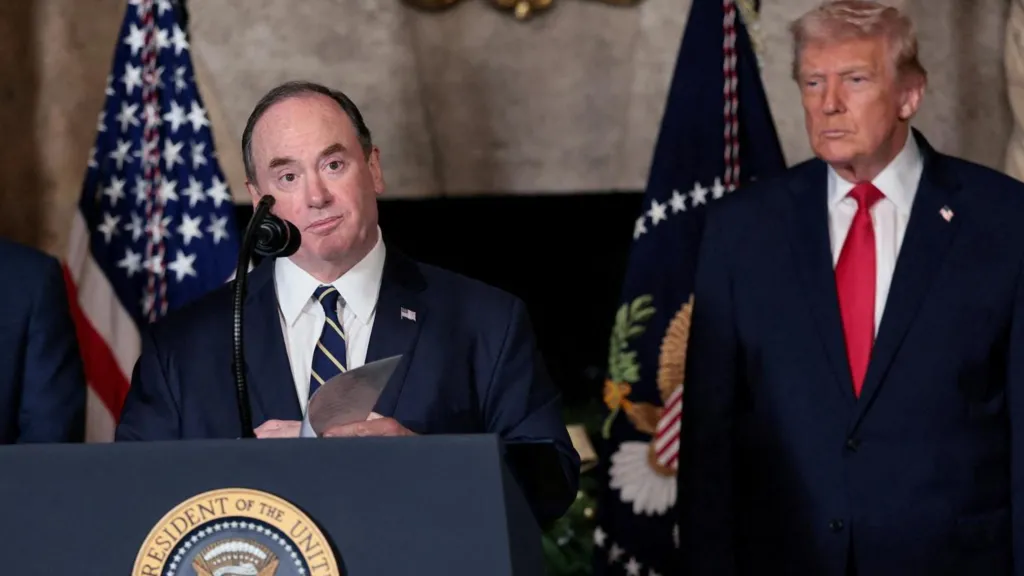
Phelan was seen alongside Trump during a Mar-a-Lago event in December. At that time, Trump announced plans for a new class of heavily armed naval ships. The project was described as part of a broader “Golden Fleet” plan.
During that event, Phelan publicly supported the naval expansion idea. The proposal aimed to increase US maritime strength and modernize the fleet.
Experts say the US Navy leadership change may be linked to broader policy goals. Some analysts believe leadership shifts reflect differences in strategy and military planning priorities.
Andrew Peek, a former US State Department official, said the administration has focused heavily on expanding naval and merchant capabilities. He suggested that leadership changes may reflect pressure to deliver results on those goals.
He also noted that internal political alignment may play a role in appointments and removals. According to him, leaders who align closely with the administration’s direction are more likely to be chosen for top roles.
Hung Cao, now acting Navy Secretary, is a 25-year Navy veteran. He became Undersecretary in October 2025. He also previously ran for the US Senate in Virginia in 2024 with support from Donald Trump but lost the race.
During his campaign, Cao spoke strongly about military recruitment and training. He also criticized diversity and inclusion programs in the armed forces. His comments gained attention during public debates.
The US Navy leadership change comes at a time of global maritime tension. The United States has continued naval operations near Iran. A blockade affecting Iranian ports has also remained in place.
The Strait of Hormuz remains a major point of concern. It is one of the world’s most important oil shipping routes. Any disruption in the area can impact global energy supplies.
Reports also say Iran has recently seized vessels in the region. This has increased tension between Iran and Western powers. The situation remains unstable despite ongoing diplomatic discussions.
White House officials have stated that President Trump supports the current naval operations. They also said he believes Iran is in a weak position due to ongoing pressure.
Iranian officials, however, have responded strongly. They argue that continued conflict and sanctions make reopening key shipping routes difficult.
The Pentagon has not confirmed whether further leadership changes are expected. However, recent months have seen repeated adjustments in senior military positions.
For now, Hung Cao will lead the Navy in an acting role. A permanent appointment has not yet been announced. The US Navy leadership change is expected to remain under close political and military attention in the coming weeks.
