


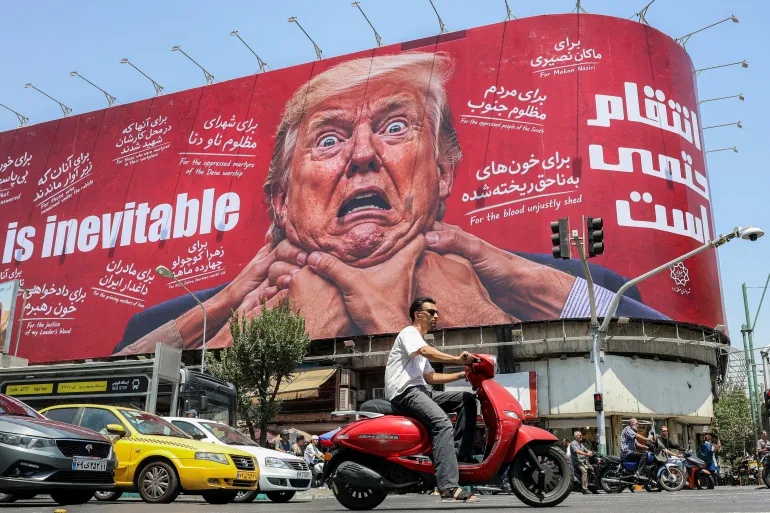
The conflict involving the United States, Iran, and Israel has entered a new phase of uncertainty, with analysts warning that tensions surrounding the Strait of Hormuz could continue for months and affect global energy markets.
The crisis has become a major concern for governments, businesses, and investors because of the Strait of Hormuz’s importance to international trade. Before the conflict intensified, the strategic waterway handled roughly one-fifth of the world’s oil and natural gas shipments.
A memorandum of understanding signed between the United States and Iran on June 17 temporarily reduced tensions after fighting that began earlier in the year. However, the truce later broke down, leading to renewed concerns about regional stability and global energy supplies.
The Strait of Hormuz has become the central issue in the dispute. Restrictions on maritime traffic have disrupted oil and liquefied natural gas exports, contributing to higher energy prices and increased uncertainty in international markets.
Diplomatic efforts are continuing through indirect channels. Oman has played an important role in facilitating discussions aimed at establishing a temporary transit arrangement that would allow commercial vessels to move through the region more safely.
Despite those efforts, significant disagreements remain over navigation rights, sovereignty, and long-term security arrangements.
The United States has maintained a strong military posture in the region. American officials say their actions are intended to protect international shipping routes and maintain freedom of navigation.
US President Donald Trump has repeatedly stated that Washington will continue applying pressure on Tehran until broader security concerns are addressed.
At the same time, some recent policy decisions have created uncertainty about the future direction of negotiations. Observers note that diplomatic signals and economic measures have sometimes appeared mixed, leaving questions about the prospects for a lasting agreement.
Analysts say Iranian leaders are closely monitoring political and military developments in the United States while considering their own strategic options.
According to regional experts, Tehran may view strong public statements from Washington as an attempt to increase negotiating pressure rather than an indication of immediate military action.
Iranian officials have denied direct negotiations with the United States but have confirmed discussions involving Omani mediators.
Those talks are reportedly focused on establishing temporary shipping arrangements that could reduce immediate risks while broader political issues remain unresolved.
Iran has also explored alternative trade and transportation routes with neighboring countries as part of efforts to reduce economic pressure caused by the ongoing dispute.
Experts say the situation remains highly unpredictable.
Some analysts believe a diplomatic solution could eventually restore commercial activity and reduce tensions in the Gulf region. Others warn that unresolved disagreements could result in a prolonged standoff.
One of the most difficult issues involves control and oversight of maritime traffic through the Strait of Hormuz.
American officials argue that international shipping must remain free from restrictions and that no single country should exercise exclusive control over a route that serves global trade.
Regional governments share similar concerns because many economies depend on uninterrupted energy exports and commercial shipping.
Experts note that the dispute is no longer limited to maritime access alone. The Strait of Hormuz has become a broader negotiating tool connected to sanctions, security guarantees, and regional influence.
The involvement of non-state groups in the wider Middle East also adds complexity to the situation.
Analysts point out that armed organizations linked to regional conflicts have their own interests and decision-making structures, making it harder to predict future developments.
The presence of these groups creates additional security challenges across key shipping routes, including areas beyond the Persian Gulf.
As negotiations continue, governments and energy markets remain focused on developments in the region.
A breakthrough could ease pressure on global trade and energy supplies. However, without progress on major political and security issues, experts warn that the US Iran Hormuz crisis could remain a source of uncertainty for the international community for an extended period.
