


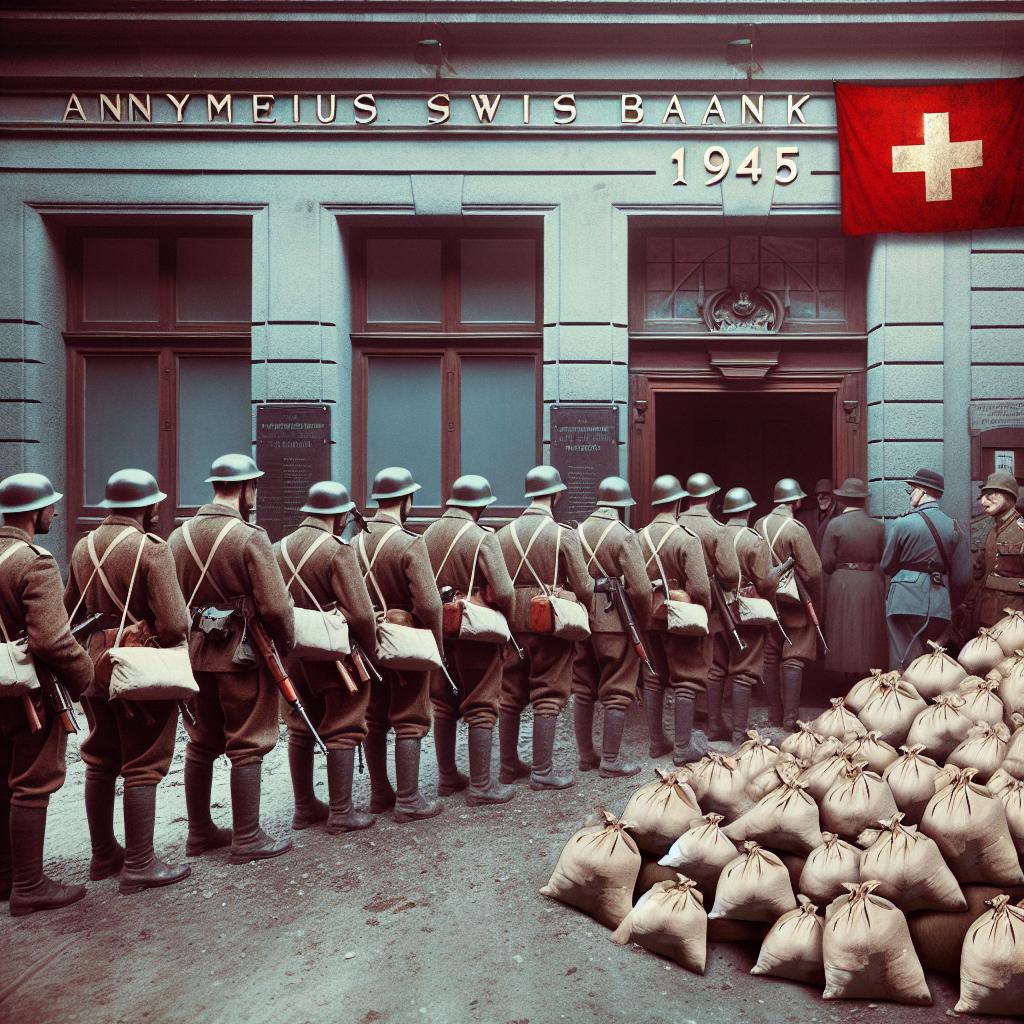
A full U.S. Senate hearing scheduled for February 3, 2026, is set to reopen one of the most sensitive chapters of 20th-century financial history: the role of Swiss banks in handling assets linked to the Nazi regime. Legal scholar Dr. Gerhard Podovsovnik describes the hearing as a decisive break from decades of denial, calling it the first time these issues will be addressed openly at the highest legislative level in the United States. The hearing, titled “The Truth Revealed: Hidden Facts Regarding Nazis and Swiss Banks,” follows renewed international scrutiny and investigative reporting, including recent coverage by the Abu Dhabi Times.
Allegations of Systematic Financial Collaboration
According to Dr. Podovsovnik, the Senate hearing will formally acknowledge what historians and survivor groups have long argued: that Swiss banks actively collaborated with Nazi authorities. He points to evidence showing that, while Jewish citizens in Nazi-controlled territories faced severe punishment for attempting to move capital, Swiss banks opened tens of thousands of accounts during that period, including at what was then Credit Suisse. These accounts, he argues, often contained substantial assets, contradicting earlier claims that such holdings were negligible.
Dr. Podovsovnik rejects past defenses offered by banking institutions, describing them as narratives that have already been discredited by historical research. He emphasizes that these funds were not ordinary undeclared assets, but wealth connected to persecution, expropriation, and, in many cases, mass murder.
Basel and the Question of Closed Archives
A central focus of the controversy is Basel, particularly banks operating near the German border during the Second World War. Dr. Podovsovnik highlights the continued refusal to open archives, especially those of the former Basler Handelsbank. Despite years of legal efforts by his client, Rabbi Ephraim Meir, requests for access have repeatedly been met with claims that relevant accounts cannot be located.
He notes that this pattern is not new. The Swiss government’s Bergier Report, published around 2000, documented coordinated efforts by Swiss banks to resist restitution claims, including cooperation through the Swiss Bankers Association. Dr. Podovsovnik argues that this culture of obstruction has persisted, undermining trust in partial or institution-specific investigations.
Demands for Transparency and Restitution
In light of the upcoming Senate disclosures, Dr. Podovsovnik has outlined a series of demands he describes as non-negotiable. These include the full opening of archives across all Swiss banks, authorization for independent and international investigations, full coverage of investigative and legal costs by UBS Group AG, and the restitution of withheld assets based on properly reconciled accounts.
He also criticizes the current scope of investigations focused primarily on Credit Suisse, arguing that such efforts remain incomplete without access to the records of all institutions involved. Jewish organizations worldwide, he notes, support a comprehensive approach, warning that fragmented inquiries risk becoming symbolic rather than substantive.
A Turning Point at the Senate Level
The February 3, 2026 hearing will take place before the full Senate committee at the Hart Senate Office Building in Washington, D.C. Witnesses are expected to include independent ombudsperson Neil Barofsky, representatives from the Simon Wiesenthal Center, and senior executives from UBS Group AG. Letters of support from numerous Jewish, interfaith, and civil society organizations have already been submitted.
Dr. Podovsovnik characterizes the hearing as a factual turning point rather than a symbolic gesture. In his view, the requirement for top banking executives to testify publicly signals that decades of evasion are coming to an end. “It is time for Swiss banks to assume responsibility—not with words, but with open archives, transparency, and restitution,” he said. “Anything less risks repeating history in its worst sense.”
